Tag: book-reviews

  • The Coachbuilder’s Column: Volume 15: Issue 16: 27th November, 2025: Two selections from ‘The Conversation’

    These two following contributions are taken from an online weekly paper titled ‘The Conversation: Books & Ideas’ – written about two very different personalities – a former Bosnian Serb political leader, as noted below, the first female high-ranked politician to be prosecuted for mass atrocities; and popular Australian author, Jane Harper. I copy them to this blog in the wish to share the subject matter for the interest of readers,

    [1 From ‘The Conversation’ , 14th November 2025: Friday essay: my time with ‘Madam War Criminal’, unrepentant at 95.   Published: November 14, 2025 6.07am AEDT.   Written by Olivera Simic  Professor in Law, Griffith University

    How could a university professor and internationally established scientist become a war criminal? This question prompted me to spend hundreds of hours interviewing Biljana Plavšić, now 95, at her home in Belgrade, the Serbian capital.

    Plavšić, a former biologist, senior Bosnian Serb political leader and president of the Bosnian Serb Republic, is the only woman of 161 people to have been indicted by the International Criminal Tribunal for the Former Yugoslavia (ICTY). She is the first female high-ranked politician to be prosecuted for mass atrocities.

    More than 100,000 people died in the Bosnian war from 1992–95. At least 8,000 Bosniak (Bosnian Muslim) men and boys were killed by the Bosnian Serb Army in the genocide in Srebrenica in July 1995.

    During the war, Plavšić defended the purge of Bosnian non-Serbs (chiefly Croats and Bosniaks) as “a natural phenomenon”, justifying her policies of ethnic cleansing, mostly carried out by Serb paramilitaries, with theories of ethnic and racial superiority.

    Described by Western media as the “Serbian Iron Lady” and by Serb soldiers as a “Serb Empress”, Plavšić pleaded guilty in 2002 to a crime against humanity, persecuting non-Serbs for religious, political and racial motives. In exchange, the court dropped further charges of murder and genocide.

    After serving six years of an 11-year sentence, she was released in October 2009, returning to Belgrade in a fur coat to meet her supporters.

    At the time of her conviction, Plavšić had expressed remorse. This, and her acknowledgement of guilt, were celebrated as milestones for both the tribunal and the Balkans, and hailed as a step towards reconciliation.

    However, two years into her prison sentence, Plavšić told a Swedish magazine she had “done nothing wrong”. In our conversations, she told me she had pleaded guilty to avoid other charges and a long trial:

    I sacrificed myself. I have done nothing wrong. I pleaded guilty to crimes against humanity so they would drop the other charges. If I hadn’t, the trial would have lasted three, three and-a-half years. Considering my age, that wasn’t an option.

    Plavšić, regarded as a hero by many Serbs (she receives regular fan letters), seems unconcerned about her role in the ethnic cleansing of Bosnian Muslims. “They [the tribunal] think that it is something terrible,” she told me. “I can freely say I did not pay attention to that at all. Simply, I did not care much about it […]”

    Given her subsequent lack of remorse, Plavšić’s plea bargain risks making a mockery of justice. Under such a bargain, the defendant can avoid trial and bypass the rigorous examination of evidence and witness testimony. In this way, victims are denied the opportunity for their voices to be heard and acknowledged.

    First meeting

    I was born in the former Yugoslavia and grew up in Bosnia and Herzegovina, where I remained until mid-1992. I watched my close, non-Serb friends leave our hometown, Banjaluka, from April 1992 due to persecution by Bosnian Serbs. My friends left some of their belongings with me, thinking, as I did, they would return in three months or so.

    They never returned. At that time, I did not know what I was witnessing was, in fact, the ethnic cleansing of my city. I didn’t have the language then to describe it in those terms.

    I was aware of Plavšić. She was constantly in the media calling on Serbs to join the army and fight. I would find out many years later that my late aunt and uncle had befriended her after she fled Sarajevo, her hometown, and came to Banjaluka with her elderly mother in 1994. (My uncle, a doctor, had treated Plavšić’s mother.) They remained close to Plavšić for the rest of their lives.

    I would much prefer the Bosnian war had not happened, that I had met Plavšić merely as an iron-willed, single-minded person, perhaps ruminating on the margins at a family meal. However, her views became central to the shaping of appalling historical events. Hence it is our responsibility to try and understand how these views developed, and how they fell on so many receptive ears.

    The first time I went to see Plavšić was particularly stressful. I was apprehensive and felt totally unprepared. After ten hours of speaking with her over the phone from Australia, there I was standing in front of her door in Belgrade, which had a fake surname on the buzzer.

    My anxiety built until I felt it could burst out through the ceiling above me. I took a few deep breaths and knocked. As the door opened wide, I was bracing myself, my heart thumping, my palms sweating. Plavšić stood tall before me. Our eyes met. She was clearly pleased to see me.

    Feeling overwhelmed, I stared at her and apprehensively muttered, “Dobro jutro (Good morning)”.

    She stretched open her arms as if we had known each other for a long time, took a step back and studied me from top to bottom. A light, blue cardigan hung loosely from her shoulders. She was beaming.

    We went inside. I found myself sitting, almost in a state of shock, talking to someone who was convicted for masterminding so much of the Bosnian war.

    I ultimately spent hundreds of hours, across eight years, talking to Plavšić, both face-to-face and on the phone. I had to separate this process, as a legal academic, from her friendship with my late aunt and uncle.

    I also gained access to Plavšić’s massive private archive, which contained hundreds of letters, newspaper clippings, original wartime documents and even a handwritten set of three notebooks – diaries she wrote in prison. I had to persuade her to speak with me, and gradually build trust. She would not share anything unless she felt her words were being treated with respect.

    Biljana Plavšić with a UN guard at the start of her sentencing hearings at the international war crimes tribunal in the Hague, December 2002. Fred Ernst/AFP via Getty images


    A Fulbright scholar

    Plavšić, who is divorced and has no children, comes from a well-educated, urban and affluent family; her father Svetislav was a prominent biologist, a director of the natural science department at the Sarajevo Museum and custodian of its botanic collection. Her mother was a housewife.

    As a child living in Yugoslavia, Plavšić was only 11 when the Nazis invaded in 1941. Her teenage years were marked by harrowing events such as her relatives being killed or deported to concentration camps by Ustaša (a Croatian fascist movement) or expelled to neighbouring Serbia.

    This marked her identity and, as she would tell me many times, she entered politics to prevent the “extinction of Serb people”. Serbs were killed en masse in the World War II concentration camps together with Jews, Romany people and others. She feared, she says, this would happen again to Serbs when the Bosnian war started in the 1990s.

    Before the war, she was a dean of the University of Sarajevo’s science faculty, a Fulbright Scholar who spent two years in New York conducting botany research, and an author of more than 100 scientific papers.

    She entered politics in 1990, as a member of the Serb Democratic Party. When Bosnia declared independence from Yugoslavia in April 1992 – a move opposed by the party – Plavšić joined other party members in proclaiming the Serbian Republic of Bosnia. During the Bosnian war, she served as vice president under president and leader Radovan Karadzić (a convicted war criminal now serving a life sentence for crimes including genocide). From 1996 to 1998, she was president of the Bosnian Serb Republic (Republika Srpska).

    Over many hours of conversation, she told me her version of the war in Bosnia and Herzegovina: what led her to take part in it, why some events happened, according to her, and how.

    I was hoping she would express some regret and remorse. But there was none. Indeed, Plavšić told me she had not wanted to sit through a trial to “listen to all fake witnesses and their lies”.

    She has never changed her convictions.

    It is human nature to want to see war criminals as “monsters”, different to us. But Plavšić is not a pathological individual. Rather, she is a highly educated and clinical ultra-nationalist who believes in the supremacy of Serbs over non-Serbs.

    Ultra-nationalist Serbs consider Bosnian Muslims ethnic Serbs who converted to the Islam faith as a means of survival during the Ottoman Empire’s rule. Such claims that Muslims are not a genuine nationality are deeply offensive to Bosnian Muslims who have practised Islam for centuries.

    Plavšić rejects, as do many other nationalist Serbs, the legal term genocide in relation to Srebrenica massacre. She described the killings to me as a “crime” but “not genocide”.

    At times when I confronted her with some legal facts and evidence, she would snap into a scolding-professor mode, frowning at me. One time, without skipping a beat, she snapped, “I’ve already told you what I think of it”. I quickly realised that no matter what I said, she will never change her convictions, and that my job was not necessarily to try to do so.

    I found it hard to stomach much of what she ardently still believed, but I buried my emotions so I could wind my way through it all. It was hard to strike the balance and know how far I could go interrogating Plavšić. I regret not questioning her more, but I was nervous she would have stopped talking if I probed and poked too much.

    Plavšić not only feels no guilt about her actions, but remains utterly convinced of their righteousness. “No, there is nothing to regret,” she told me in one of our last in-person meetings. “I had to protect my people.”

    Her lack of remorse makes Plavšić’s early release from prison all the more painful for the families of her victims. “They [the tribunal] don’t think about the blood of so many of our children, whom we are still digging Interviewing Plavšić and writing a book about her was the hardest project I have done in my career. I am glad it is over but the politics of extreme nationalism in the region are not. Today, there is a revisionism of history and the government and political elites in the Republic of Srpska hold dearly Plavšić’s views.

    Plavšić’s case may serve as a warning to both our present and future. She is a highly intelligent and articulate woman. She was not someone who merely followed orders, but rather someone who gave them: a high-ranking perpetrator who preached extremist views.

    This makes her story especially pertinent, as we are witnessing a rise in female participation in extremist ideologies around the world, most of which reinforce and perpetuate patriarchal systems. A female populist such as Giorgia Meloni, the Italian prime minister and leader of the far-right Brothers of Italy party, speaks out against “global elites”, evokes fascist rhetoric, and clings to Mussolini-era slogans such as “God, homeland, family”.

    It is important to understand Plavšić’s motivations also because today in the Balkans, war criminals such as General Ratko Mladic, the Bosnian Serb military leader serving a life sentence for his role in the Srebrenica massacre, are treated as heroes.

    Serbian political elites do not recognise the legitimacy of the ICTY and believe, as Plavšić does, that the court was set up “just to prosecute Serbs”. Many high-ranked war criminals returned to Serbia and were welcomed as heroes, as Plavšić was.

    Towards the end of our project, Plavšić became increasingly eager to know when the book I was writing would be published and why it had taken me so long. She was disappointed and worried she would die before she could see it. “You could have written an encyclopedia by now!” she scolded me in one of our last conversations.

    Madam War Criminal: Biljana Plavšić, Serbia’s Iron Lady by Olivera Simić is published by Hurst.

    out of mass graves,” said Kada Hotić, a mother who spent two decades searching for a son who went missing in the 1995 Srebrenica genocide. Hotić lost her son, husband and two brothers in the genocide.

    A warning

    Plavšić’s historical revisionism and staged remorse in the face of established facts is of course deeply offensive to her victims. Some may find it wrong even to give her space to express her views. Still, Plavšić’s “storytelling” provides an insight into why leaders choose to commit war crimes and invite armed conflict rather than peaceful negotiation.

    Over all these years of writing a book about Plavšić, based on our interviews, I have come to accept that, no matter how I wrote it, I would always be at risk of being accused of sympathising with her. There seems to be one common experience among researchers studying perpetrators: they find themselves endlessly defending their work. In some circles, including academic ones, there remains a stubborn lack of understanding as to why researchers talk to and listen to perpetrators.

    Put simply, we do it to comprehend the motivations of war criminals so we can prevent mass atrocities in the future. There is no doubt genocide and crimes against humanity are morally repugnant. However, when we approach the study of those who commit such acts primarily through moral condemnation rather than analytical enquiry, we risk hindering our understanding of perpetrators and their motivations.

    Perhaps Plavšić’s scholarly profession is what makes many academics both uncomfortable and fascinated with her. Plavšić is a reminder that higher education does not necessarily mean one is immune to committing crimes.

    [2] From ‘From The Conversation, 14th November 2025:  Why Jane Harper’s ‘outback noir’ novels make for comfortable – and uncomfortable – reading:  Published: November 13, 2025 11.53am AEDT by Jessica Gildersleeve, Professor of English Literature, University of Southern Queensland, and Tara East, Associate Lecturer, Creative Writing and Editing and Publishing, University of Southern Queensland

    Jane Harper’s novels do not include any significant First Nations characters or perspectives. Nor do they acknowledge the deeper meaning and consequence of their Gothic conventions.

    Jane Harper sits in a rare category of contemporary Australian writers whose novels have achieved phenomenal international success. She has sold 1.5 million books in Australia and 3.5 million overseas.

    While all popular fiction adheres to certain formulas – that is, after all, why we read these books – Harper has skilfully combined a set of conventional tropes to develop her own narrative brand. Her crime novels build on a familiar ideas about the Australian landscape we have been taught how to interpret and accept – images that have become a type of shorthand.

    Harper’s version of what has come to be called “outback noir” invariably features a small-town setting where the natural world is perceived as threatening, and an outsider or outcast who must solve a crime with a link to the past.

    Importantly, her depictions of the Australian landscape also draw on the traditions of the Australian Gothic.

    When early settlers encountered Australia’s unfamiliar landscapes, they found the place strange and unsettling. Swans were black, not white; the seasons were reversed. As novelist Marcus Clarke famously observed, the trees shed their bark, not their leaves.

    Australia’s earliest writers, including Henry Lawson and Barbara Baynton, used the strange animals and plants, the harsh weather and the seemingly endless deserts as ominous backdrops for their fictional works.

    As one character in Harper’s first novel The Dry (2017) reflects on the emptiness that surrounds the fictional town of Kiewarra: “This place is like a nightmare.”

    Despite their rural settings, however, Harper’s novels have not to date included any significant First Nations characters or perspectives. Nor do they appear to acknowledge the deeper meaning and consequence of their Gothic conventions.

    Harper’s landscapes

    A Gothic sensibility is evident in all of Harper’s novels. It is there in the outback settings of The Dry, The Lost Man (2019), and her newest novel, Last One Out (2025). It is there in the forest hinterland of Force of Nature (2018), the rocky coastline of The Survivors (2021), and the rural farmlands of Exiles (2023).

    Each novel is set in a new location, but in all cases the central crime takes place in a small town, playing into the Gothic’s concern with isolation. Characters’ limited access to resources, their strained relationships with others, and their remoteness combine to render them vulnerable and create a sense of claustrophobia.

    In The Dry, the residents of Kiewarra are suffering from an extended drought. The paddocks of local farms have dried up; so has the town’s river. In Force of Nature, the constant rain and unfamiliar tracks in a mountain forest cause a group of city folk on a corporate “retreat” to get lost during a hike.

    The depictions of Tasmania in The Survivors and Australia’s wine regions in Exiles are less extreme. In these works, the natural world is not described with the same eerie, threatening tone of Harper’s earlier novels. But the most violent and climactic events take place not within homes, city streets, or even each town’s single pub. They occur in the dangerously liminal spaces of an isolated cliff and a coastal cave.

    The reader is led to understand that these locations are significant in their uncertainty, which creates a sense of unease, a quiet foreboding. Although the natural sites themselves do not harm the characters, they are used for malevolent purposes by criminals, marking them out as haunting and haunted spaces.

    In The Dry, the residents of Kiewarra are suffering from an extended drought. The paddocks of local farms have dried up; so has the town’s river. In Force of Nature, the constant rain and unfamiliar tracks in a mountain forest cause a group of city folk on a corporate “retreat” to get lost during a hike.

    The depictions of Tasmania in The Survivors and Australia’s wine regions in Exiles are less extreme. In these works, the natural world is not described with the same eerie, threatening tone of Harper’s earlier novels. But the most violent and climactic events take place not within homes, city streets, or even each town’s single pub. They occur in the dangerously liminal spaces of an isolated cliff and a coastal cave.

    The reader is led to understand that these locations are significant in their uncertainty, which creates a sense of unease, a quiet foreboding. Although the natural sites themselves do not harm the characters, they are used for malevolent purposes by criminals, marking them out as haunting and haunted spaces.

    Harper’s detectives

    Crime fiction is the world’s most popular literary genre. It speaks to our desire for justice and resolution.

    Its origins can be traced to the 19th century, but it was during and after the first world war that crime or detective fiction was most in demand. This period – dominated by the work of Agatha ChristieNgaio Marsh and Dorothy L. Sayers – has become known as the “golden age of detective fiction”.

    Precisely because of the horrors of wartime, and the shock of the terrible injuries and deaths experienced there, crime fiction of this period was decidedly “unbloody”. As literary scholar Alison Light observed, “fleshiness, either figuratively or literally, was […] in gross bad taste after the butchery many had witnessed”.

    In these early iterations, the crime genre was conservative. The crime has disrupted the social order in some way; the resolution of the story depends on the straightforward discovery of the criminal, with the implication that justice will be served.

    In contemporary detective fiction, both the crimes and the detectives have become more complicated, more morally corrupt, less transparent in their view of justice.

    This is the genre known as “noir”. Even in the recent BBC adaptations of Agatha Christie’s work by Sarah Phelps, the relatively simple character of the famous detective Hercule Poirot has been made more complex and his responses to crimes more nuanced, through the addition of a traumatic backstory.

    Noir detectives are marked by their personal struggles: addiction, traumatic pasts, and – often as a result of the two former traits – difficulty in forming relationships, whether platonic or romantic. These traits compound the detective’s isolation and “otherness”.

    This is also true of Harper’s recurring detective, Aaron Falk, who was forced out of Kiewarra as a teenager under suspicion of harming a local girl.

    These experiences have caused him to become guarded and emotionally closed off to others, especially his romantic partners. In The Dry, we witness the disintegration of his formerly close relations, and the gradual and careful ways in which he slowly builds a fragile new friendship.

    It is critical that Harper’s detectives are outsiders to the communities in which they work, albeit as non-professional detectives. In this way, they stand in for the reader, who is also – Harper’s urban and international readership suggests – an outsider, largely unfamiliar with such places and communities. This too increases the sense of mystery and threat.

    A legacy version of Australia

    Harper’s adherence to these generic conventions is doubtless one reason for her popularity. But her novels are not simply crime fiction.

    Outback noir transfers the gritty urban settings of traditional noir to small regional towns, where the claustrophobia and secrets of a small community, as well as the threat of an encroaching natural environment, add tension and stakes to the crime at the centre of the narrative. This is where outback noir overlaps with the Gothic – specifically, Gothic narratives that take place in extreme environments, such as the Southern Gothic of the United States, and of course Australian Gothic.

    This use of landscape is a common strategy in noir set in specific locales, such as Nordic noir or tropical noir. But there are negative consequences to this construction of the detective as outsider when the outback setting is presented as something unfamiliar, something to be feared. These arise from the origins of Australian Gothic, which scholars have long recognised as an expression of settler-colonial anxiety about the violent dispossession of the country’s Indigenous people.

    Noir is not the only popular fiction genre that makes use of rural settings. Rural romance (or “ru-ro”) also has a wide readership and, like outback noir, uses small-town settings and the natural environment to add stakes to the plot. The small town offers a host of quirky but lovable characters, while the harsh landscape allows for displays of physical prowess and the romance of being saved from physical threat.

    Both outback noir and ru-ro present a landscape that is recognisably, and cinematically, Australian. They draw upon longstanding ideas and images of our landscapes and lifestyle: a scalding sun, empty rain tanks, wide and dry plains, and a small town with a single pub where a drunken brawl is not uncommon.

    This clichéd understanding of Australia has been presented and reinforced through media and marketing, often aimed at audiences beyond our shores – in Paul Hogan’s Crocodile Dundee films, for example, or in Ted Kotcheff’s film adaptation of Kenneth Cook’s novel Wake in Fright (1961).

    Harper’s contribution to contemporary Australian literature hearkens back to the “golden age” of detective fiction. She uses a formula that embeds familiar features of the crime genre in an alternative setting. And just as the novels of detective fiction’s golden age erased the mutilated bodies of the war dead, her novels gloss over the difficult, traumatic and violent elements of Australia’s past and present.

    They are engaging with a legacy version of Australia that is more literary than realistic. In their reinforcement of settler-colonialist depictions of Australia, they are both comfortable and uncomfortable reading.

  • The Coachbuilder’s Column: Volume 15: Issue 15: 10th October, 2025: A further selection of recent reads!!

    A shorter, but varied selection of recently read books on this occasion,

    • East Of Eden by John Steinbeck [1952];
    • The Turing Protocol’ by Nick Croydon [2015];
    • Lolita by Vladimir Nabokov  [1955];
    • A Beautiful Family’ by Jennifer Trevelyan [2025];
    • The Shortest History of Music by Andrew Ford [2024]

    7th September

    A book just read, was actually published when I was 6 years old, it’s taken me a while to get to it  –   ‘East of Eden’ written by John Steinbeck, and first published in the USA in 1952, this  a Penguin edition of 602 pages. I’d actually had this story on my bookshelves in another format for some 20 years or so, just never read it!

    This was a wonderful story, which was at one time described by The New York Times Book Review as ‘A fantasia of history and myth, a strange and original work of art’. My edition is preceded by an interesting 23 page  introduction and further references by David Wyatt. Many of you may have one of his other great novels – ‘The Grapes of Wrath’ published in 1939.

    Essentially, ‘East of Eden’ is a ‘family saga’, the book which has been described as Steinbeck’s most ambitious novel, this sprawling and often brutal novel brings to life the intricate details of two families, the Trasks and the Hamiltons, and their interwoven stories. The Hamilton family in the novel is said to be based on the real-life family of Samuel Hamilton, Steinbeck’s maternal grandfather.

    In short, ‘Goodreads’ describes the story as revolving around Adam Trask who came to California from the East to farm and raise his family on the new rich land. But the birth of his twins, Cal and Aaron, brings his wife to the brink of madness, and Adam is left alone to raise his boys to manhood. One boy thrives nurtured by the love of all those around him; the other grows up in loneliness enveloped by a mysterious darkness.
    First published in 1952, East of Eden is the work in which Steinbeck created his most mesmerizing characters and explored his most enduring themes: the mystery of identity, the inexplicability of love, and the murderous consequences of love’s absence. A masterpiece of Steinbeck’s later years, East of Eden is a powerful and vastly ambitious novel that is at once a family saga and a modern retelling of the Book of Genesis.

    More broadly, the book explores themes of depravity, beneficence, love, the struggle for acceptance and greatness, the capacity for self-destruction, and of guilt and freedom. It ties these themes together with references to and many parallels with the biblical Book of Genesis with much of the storyline revolving around a fractious relationship between the two Trask brothers.  Steinbeck’s inspiration for the novel comes from the fourth chapter of Genesis, verses 1 – 16, which recounts the story of Cain and Abel. Steinbeck took the title, East of Eden, from Genesis, Chapter 4, verse 16: “And Cain went out from the presence of the Lord, and dwelt in the Land of Nod, on the east of Eden” (King James Version). 

    Mind you, as indicated by the above comments, there are many unpleasant lifestyles depicted in the story, which can be a bit off-putting at times, but I was able to never allow that to tarnish my overall enjoyment of the book, which was difficult to put down much of the time.

    In the beginning of East of Eden, before introducing his characters, Steinbeck carefully establishes the setting with a description of the Salinas Valley in Central California. The story is primarily set in the Salinas Valley, California, between the beginning of the twentieth century and the end of World War I. The first fourteen chapters, set in Connecticut and Massachusetts, go as far back as the American Civil War and serve as backstory for Adam Trask, his brother Charles, their father Cyrus, and Cathy Ames.

    Steinbeck wrote to a friend after completing his manuscript, “I finished my book a week ago…Much the longest and surely the most difficult work I have ever done… I have put all the things I have wanted to write all my life. This is ‘the book.’ If it is not good I have fooled myself all the time. I don’t mean I will stop but this is a definite milestone and I feel released. Having done this I can do anything I want. Always I had this book waiting to be written.”

    John Steinbeck was born in Salinas, California, in 1902. He grew up in a fertile agricultural valley about twenty-five miles from the Pacific Coast – and both valley and coast would serve as settings for some of his best fiction. He died in 1968, having won a Nobel Prize for Literature in 1962.

    A synopsis of the novel  – taken from a Wikipedia article which I felt provides a fair summary of the novel. If you haven’t read the book, but intend to yet but don’t want to have too much revealed about the storyline, perhaps overlook this part…………………

    Adam Trask – newly wed with newly inherited wealth from his late father – arrives in California and settles with his pregnant wife Cathy Ames in the Salinas Valley. Without Adam’s knowledge, Cathy had tried to abort the pregnancy with a knitting needle. In their new home, she warns Adam that she had not wanted to move to California and plans to leave as soon as she can. Adam dismisses her, saying “Nonsense!”

    Cathy gives birth to twin boys, shoots Adam in the shoulder after convincing him to unlock the bedroom door, and flees. Adam survives and falls into a deep depression. His Chinese-American servant, Lee, and his neighbor, the inventive Irish immigrant Samuel Hamilton, rouse Adam out of it enough for him to name his sons Aaron and Caleb, after biblical characters.

    Lee becomes a good friend and adopted family member and has long philosophical talks with Adam and Samuel, particularly about the story of Cain and Abel. Maintaining that it has been imperfectly translated in English-language bibles, Lee tells how his relatives in San Francisco, a group of Chinese scholars, spent two years studying Hebrew so that they might discover the moral of the Cain and Abel story. Their discovery that the Hebrew word timshel means “thou mayest”, which becomes an important symbol in the novel of a person’s power to choose their paths, meaning that human beings are neither compelled to pursue sainthood nor doomed to sin.

    Meanwhile, Cathy becomes a prostitute at the most respectable brothel in the city of Salinas. She renames herself “Kate Albey”, ingratiates herself with the madam, murders her, and inherits the business. She makes her new brothel infamous as a den of sexual sadism and a source of blackmail on the rich and powerful of Salinas Valley.

    Adam’s sons, Caleb (“Cal”) and Aaron (“Aron”) – echoing Cain and Abel – grow up oblivious of their mother’s situation. They are opposites: Aron is virtuous and dutiful, Cal wild and rebellious. At an early age, Aron meets a girl, Abra Bacon, from a well-to-do family, and the two fall in love. Although there are rumors around town that Cal and Aron’s mother is not dead but is actually still in Salinas, the boys do not yet know that she is Kate.

    Inspired by Samuel’s inventiveness, Adam starts an ill-fated business venture and loses almost all of the family fortune. The boys, particularly Aron, are horrified that their father is now the town’s laughingstock and are mocked by their peers for his failure.

    As the boys reach the end of their school days, Cal decides to pursue a career in farming, and Aron goes to college to become an Episcopal priest. Cal, restless and tortured by guilt about his very human failings, shuns everyone around him and takes to wandering around town late at night. During one of these ramblings, he discovers that his mother is alive and the madam of a brothel. He goes to see her, and she spitefully tells him they are just alike. Cal replies that she is simply afraid and leaves.

    Cal goes into business with Samuel’s son Will, who is now a successful automobile dealer. Cal’s plan is to earn his father’s approval and his money back by capitalizing on World War I and selling beans grown in the Salinas Valley to nations in Europe for a considerable profit. He succeeds beyond his wildest expectations and wraps up a gift of $15,000 in cash which he plans to give to Adam at Thanksgiving.

    Aron returns from Stanford University for the holiday. There is tension in the air because Aron has not yet told their father that he intends to drop out of college. Rather than let Aron steal the moment, Cal gives Adam the money at dinner, expecting his father to be proud of him. Adam refuses to accept it, however, and tells Cal to give it back to the poor farmers he exploited.

    In a fit of rage and jealousy, Cal takes Aron to see their mother, knowing it will be a shock to him. Sure enough, Aron immediately sees Kate for who she is and recoils from her in disgust. Wracked with self-hatred, Kate signs her estate over to Aron and commits suicide.

    Aron, his idealistic worldview shattered, enlists in the Army to fight in World War I. He is killed in action in the last year of the war, and Adam suffers a stroke upon hearing the news from Lee. Cal, who began a relationship with Aron’s girlfriend Abra after Aron went to war, tries to convince her to run away with him. She instead persuades him to return home.

    Lee pleads with the bedridden and dying Adam to forgive his only remaining son. Adam responds by non-verbally indicating that he forgives Cal and then says “timshel,” giving Cal the choice to break the cycle and conquer sin.

    9th September

    Something rather different  –  ‘The Turing Protocol’ by Nick Croydon, published in 2025, of 314 pages –  probably not a book I would have chosen, were it not a gift  – however, interesting enough from the point of view of the coverage of major world events from prior to World War Two up until the current Ukraine crisis. Where the book lost me a bit – well, I guess it was built into the theme of the story – that of an individual having the power to change history, simply a bit too fanciful for my taste – a good and apt description to describe my reaction was ‘its gripping narrative and intriguing premise, with readers and authors alike highlighting its blend of historical fiction and speculative elements’.  I think it was the ‘speculative elements’ that got this reader offside a little.  This is Croydon’s debut novel.

    In short, in the midst of World War II, Enigma codebreaker Alan Turing has created a machine named Nautilus that can send a message back into the recent past. After Turing uses it to help the Allied forces succeed on D-Day, he sees the power (and potential danger) of what he has created. He knows he can only entrust it to one person: Joan, the mother of his secret child.  Over the next seventy years, the Nautilus is passed down through the Turing family, who all must decide for themselves when to use this powerful invention. Will it save the world – or destroy it?

    Three words to describe the book –  a ‘romp’ [yes, short, fast-reading chapters, sometimes just a couple of pages]. ‘thought-provoking’ [though too unrealistic to my mind, but then with modern technology who knows what’s ahead of us?], and ‘entertaining’ [well, I couldn’t put it down until I reached the end, which would suggest one wanted to see where it was going to lead us to?].  Other authors have described it as a “smart, gripping thriller with an amazing big idea behind it,” and a “fascinating alternative history with an intriguing ‘what if’ at its core”.  All very good, I just wasn’t keen on the ‘what-ifs’ in the alternative scenarios raised!

    A useful summary – “The Turing Protocol” is recognized for its engaging storytelling and thought-provoking themes, making it a compelling read for fans of historical fiction and speculative narratives. The combination of Turing’s legacy and the ethical questions surrounding time travel adds depth to the narrative, appealing to a wide range of readers. A scenario where the past can be changed to save the future!

    The man upon which much of the storyline was based was Alan Turing [1912-1954], who was a British mathematician and logician who made major contributions to mathematics, cryptanalysis, logic, philosophy, and mathematical biology and also to the new areas later named computer science, cognitive science, artificial intelligence, and artificial life.

    28th September

    I’ve just read ‘Lolita’ by Vladimir Nabokov, published in 1955, this book a Penguin edition of 361 pages. I bought this edition on the spur of the moment whilst visiting Dymock’s book store recently. Interesting book – I’m not sure what I was expecting in view of all the publicity on it’s initial publication, and subsequently!

    But as noted in the ‘Forward’ by John Ray Jnr – “True, not a single obscene term is to be found in the whole work; indeed the robust philistine who is conditioned by modern conventions into accepting without qualms a lavish array of four-letter words in a banal novel, will be quite shocked by their absence here.” I was actually quite pleased by that missing element, but at the same time, disturbed by much of what I read.

    My personal feeling, as I read through the book, that despite those ‘modern conventions’ a novel of this kind would be hard-pressed today to get published [by a reputable publisher anyway] – mainly because of the modern attitude to ‘sexual crimes’ against the under-aged, and the manner in which such crimes are pursued by both the law, and the public in general, as they quite rightly should be. Yet in 1959, Nabolov got away with it – as Ray goes on to say, looking to the time beyond 1959 and today, that ‘Lolita should make all of us – parents, social workers, educators – apply ourselves with still greater vigilance and vision in the task of bringing up a better generation in a safer world’.

    On a broader scale, for those interested, I found a very succinct [but also a plot giveaway] from an organisation called ‘sparknotes.com’. But if you don’t want to spoil the storyline before reading, that summary appears at the end of this ‘review’.

    Meanwhile, a less revealing synopsis, and comments, follow.

    As noted in Wikipedia – ‘Lolita is a novel by Vladimir Nabokov. The book was written in English. It was published in Paris in 1955. It was translated into Russian by Nabokov. The story is about the sexual relationship that develops in the United States between a middle-aged British professor and a 12-year-old girl after he becomes her stepfather. It was a very controversial book. The novel was made into a movie by Stanley Kubrick in 1962, and remade in 1997’. I may have seen the movie, but honestly can’t recall doing so.

    In any case, it’s being described as the most famous and controversial novel from one of the [so-called, by some] greatest writers of the twentieth century. It tells the story of Humbert Humbert’s obsessive, devouring, and doomed passion for the nymphet Dolores Haze [“The conjunction of a sense of humour with a sense of horror [results in] satire of a very special kind.” [claimed The New Yorker].

    Britannica writes: “Lolita, is a novel by Vladimir Nabokov, published in 1955 in France. Upon its American publication in 1958, Lolita created a cultural and literary sensation. The novel is presented as the posthumously published memoirs of its antihero, Humbert Humbert. A European intellectual and pedophile, Humbert lusts obsessively after 12-year-old nymphet Lolita (real name, Dolores Haze), who becomes his willing inamorata. The work examines love in the light of lechery

    Awe and exhilaration—along with heartbreak and mordant wit—abound in Lolita, which tells the story of the aging Humbert Humbert’s obsession for the nymphet Dolores Haze. Lolita is also the story of a hypercivilized European colliding with the cheerful barbarism of postwar America. Most of all, it is a meditation on love—love as outrage and hallucination, madness and transformation.

    Now, from sparknotes.com.

    In the novel’s foreword, the fictional John Ray, Jr., Ph.D., explains the strange story that will follow. According to Ray, he received the manuscript, entitled Lolita, or the Confession of a White Widowed Male, from the author’s lawyer. The author himself, known by the pseudonym of Humbert Humbert (or H. H.), died in jail of coronary thrombosis while awaiting a trial. Ray asserts that while the author’s actions are despicable, his writing remains beautiful and persuasive. He also indicates that the novel will become a favorite in psychiatric circles as well as encourage parents to raise better children in a better world.

    In the manuscript, Humbert relates his peaceful upbringing on the Riviera, where he encounters his first love, the twelve-year-old Annabel Leigh. Annabel and the thirteen-year-old Humbert never consummate their love, and Annabel’s death from typhus four months later haunts Humbert. Although Humbert goes on to a career as a teacher of English literature, he spends time in a mental institution and works a succession of odd jobs. Despite his marriage to an adult woman, which eventually fails, Humbert remains obsessed with sexually desirable and sexually aware young girls. These nymphets, as he calls them, remind him of Annabel, though he fails to find another like her. Eventually, Humbert comes to the United States and takes a room in the house of widow Charlotte Haze in a sleepy, suburban New England town. He becomes instantly infatuated with her twelve-year-old daughter Dolores, also known as Lolita. Humbert follows Lolita’s moves constantly, occasionally flirts with her, and confides his pedophiliac longings to a journal. Meanwhile, Charlotte Haze, whom Humbert loathes, has fallen in love with him. When Charlotte sends Lolita off to summer camp, Humbert marries Charlotte in order to stay near his true love. Humbert wants to be alone with Lolita and even toys with the idea of killing Charlotte, but he can’t go through with it. However, Charlotte finds his diary and, after learning that he hates her but loves her daughter, confronts him. Humbert denies everything, but Charlotte tells him she is leaving him and storms out of the house. At that moment, a car hits her and she dies instantly.

    Humbert goes to the summer camp and picks up Lolita. Only when they arrive at a motel does he tell her that Charlotte has died. In his account of events, Humbert claims that Lolita seduces him, rather than the other way around. The two drive across the country for nearly a year, during which time Humbert becomes increasingly obsessed with Lolita and she learns to manipulate him. When she engages in tantrums or refuses his advances, Humbert threatens to put her in an orphanage. At the same time, a strange man seems to take an interest in Humbert and Lolita and appears to be following them in their travels.

    Humbert eventually gets a job at Beardsley College somewhere in the Northeast, and Lolita enrolls in school. Her wish to socialize with boys her own age causes a strain in their relationship, and Humbert becomes more restrictive in his rules. Nonetheless, he allows her to appear in a school play. Lolita begins to behave secretively around Humbert, and he accuses her of being unfaithful and takes her away on another road trip. On the road, Humbert suspects that they are being followed. Lolita doesn’t notice anything, and Humbert accuses her of conspiring with their stalker.

    Lolita becomes ill, and Humbert must take her to the hospital. However, when Humbert returns to get her, the nurses tell him that her uncle has already picked her up. Humbert flies into a rage, but then he calms himself and leaves the hospital, heartbroken and angry.

    For the next two years, Humbert searches for Lolita, unearthing clues about her kidnapper in order to exact his revenge. He halfheartedly takes up with a woman named Rita, but then he receives a note from Lolita, now married and pregnant, asking for money. Assuming that Lolita has married the man who had followed them on their travels, Humbert becomes determined to kill him. He finds Lolita, poor and pregnant at seventeen. Humbert realizes that Lolita’s husband is not the man who kidnapped her from the hospital. When pressed, Lolita admits that Clare Quilty, a playwright whose presence has been felt from the beginning of the book, had taken her from the hospital. Lolita loved Quilty, but he kicked her out when she refused to participate in a child pornography orgy. Still devoted to Lolita, Humbert begs her to return to him. Lolita gently refuses. Humbert gives her 4,000 dollars and then departs. He tracks down Quilty at his house and shoots him multiple times, killing him. Humbert is arrested and put in jail, where he continues to write his memoir, stipulating that it can only be published upon Lolita’s death. After Lolita dies in childbirth, Humbert dies of heart failure, and the manuscript is sent to John Ray, Jr., Ph.D.

    1 October, 2025

    Back to 2025 we find   ‘A Beautiful Family’ by Jennifer Trevelyan, published in 2025, of 328 pages  –  one of those light novels I like to turn to now and then as some quick relief from more serious reading.

    Easily read, an entertaining enough story, although I was a little disappointed at the way the author finished the story – as though it was assumed the reader would be fully aware of the likely outcome of the various scenarios which arise during the course of the novel. I guess that writing style of a novel appeals to some readers, but I probably would have preferred a ‘tidier’ ending, which I felt a little cheated out of!!

    Nevertheless, an entertaining little storyline, and related from the point of view of a 10-year-old girl, and while throughout novel one has a fair indication of how situations are or are going to eventuate, these are generally only hinted out in the absence of any clear actual revelation.

    As noted by The Newtown Review of Books   “With sun, swimming, picnics, friends and adventures, A Beautiful Family could be a simple story of a happy family holiday, but Jennifer Trevelyan exploits the adult reader’s awareness of the dangers that Alix, as a naïve ten year old, unknowingly faces; and she allows the underlying tension to build throughout the book until the dramatic and frightening end. We listen to Alix and follow her actions, fearing at times for her safety, but, as in every good mystery, Trevelyan manages to surprise us” in what is apparently her debut novel.

    Amazon’s brief summary tells us  –

    In the past we had always spent our summer holidays in remote places. That had always been my mother’s preference. This year was different…………………………………………………………………………………… …
    As the summer holiday stretches ahead, with her older sister more interested in boys, her mother disappearing on long walks and her father, beer in hand, watching the cricket, the youngest in the family often finds herself alone. At the beach, she meets Kahu, a boy who tells her a tragic story about a little girl who disappeared a couple of years ago, presumed drowned. Suddenly, the summer has purpose-they will find the missing girl and become local heroes.  Between dips in the ocean, afternoon barbecues and lazy sunbaking, their detective work brings to the surface shocking discoveries and dark secrets, even about her own beautiful family …
    Jennifer Trevelyan magnificently captures the confusion and frustration of childhood, the fraught but unshakeable bond between sisters, and the dangers that lurk in the white lies we tell-especially about the people we love most.

    Liane Moriarty [author of ‘Here One Moment’ ] said ‘I absolutely loved this page-turning family mystery and didn’t want it to end’. Probably that’s why I got through it in a few short hours over a couple of days, but as already admitted, didn’t find it ended in the way I would have preferred!!

    10th October 2025

    This afternoon, I finished reading ‘The Shortest History of Music by Andrew Ford, published in 2024, of 233 pages. A very entertaining little book –   apart from most of the second chapter which dealt principally with the technical side of music, notes, structure etc – as a non-musician, most of that I was lost to!!!

    As Ford explains, this is not so much a chronological history [although such an approach comes through] but a focus on a  series, five in all of specific themes in the history of music, and these are approached in terms  of how those themes have played out through the ages. ,

    Those themes are as follows:

    • The tradition of music, from pre-history to the present; BCE to present;
    • Music and notation: blueprints for Building in Sound from 1400 BCE to the present [this section I had the most difficulty with];
    • Music for sale: Paying the Piper from 1000 BCE to the present;
    • Music and Modernism: Reinventing the Art from 1150 to the present; and,
    • Recording music, from 1500 to the present.

    Throughout the book, many well known musicians [and singers] are brought into the story, from the great classical composers, to the music of Blues, Jazz. Folk, Rock and so on, and it was interesting to read about the origins of much of the music of various that I had played for many years on my community radio station –  had this reader thinking he’d like to return to that medium!!

    The book has been described in one way as a ‘thematic’ exploration of music’s evolution, by examining its cultural significance and the human impulse  to create music in various ways and for a multitude of reasons over thousands of years.

    In promoting the book, Amazon and others, describe it as a lively, authoritative tour through several thousand years of music. Packed with colourful characters and surprising details, it sets out to understand what exactly music is – and why humans are irresistibly drawn to making it.   How has music interacted with other social forces, such as religion and the economy? How have technological changes shaped the kinds of music humans make? From lullabies to concert halls, songlines to streaming services, what has music meant to humans at different times and in different places?

    My lack of comprehension of some aspects, as already noted, could perhaps be explained by the following explanatory comment at the beginning of a review of the book by Ash Brom, as appeared in the Arts Hub on the 31 July 2024 where in one observation he wrote that “Giving this book either one star or five stars is kind of meaningless.  The reason for this is because the book is so thick with musical references, knowledge and vocabulary that, in order to keep up with it, the reader needs to know so many musical references, knowledge and vocabulary that they probably don’t need to be reading the book in the first place. There’s so much assumed knowledge that it feels like Ford is a lecturer in a university, and the audience is a room of seasoned academics “Giving this book either one star or five stars is kind of meaningless.  Your brain needs time to sit and work out what that means, but the narrative bolts ahead, assuming that all is understood”. 

    So having said that, I feel I did pretty to have the majority of the contents!!

    Brom went on to say that “David Attenborough’s introduction to natural history, Life on Earth, assumed the reader knew little of the topic matter; Stephen Hawking’s introduction to theoretical cosmology, A Brief History of Time, assumed the reader knew next to nothing; Ford’s book assumes the reader has a degree in classical music history with a major in ethnomusicology, an encyclopaedic knowledge of jazz and fluency in music scales. This is why it is hard to give the book a star rating. It just is what it is – that being an academic text written for people who are already in the club”    He also noted that ‘The works of young, living composers are all too often neglected.’ From the probable hundreds of names in Ford’s book, I’d say that less than 5% are still alive.” 

    That is true, but this after-all was promoted as a ‘short history’ and I guess there was a limit to covering ‘everything and everyone’ – yes, I did note the absence of contemporary  and currently ‘alive’ performers,  but to be honest, I wasn’t really anticipating or seeking an advancement into the 21st century, much of which I don’t actually see as ‘history’!! Others may disagree.

    On the question of shortness of subject matter  –  in the August 2024 edition of the Australian Book Review, Malcolm Gillies notes that ‘This highly readable ‘shortest’ history contrasts with the ‘longest’ currently available, single-authored history of music Richard Tasruskin’s 4,272-page ‘The Oxford History of Western Music’, [2005], which restricts itself  mostly to the notated tradition  of ‘classical’ music. By contrast, Ford celebrates the music  ‘happening all around us all the time’, whether notated, instrumental, or oral, spontaneous or rehearsed, in infancy or old age, and recorded or just ;vibrating in the memory’”

    Returning to Ash Brom, his review was not all negative, as he began  the main body of his review with the following paragraph.

    “Despite the points above, which I think are vital to mention, Ford’s book is an extremely well-written introduction to, basically, humans’ relationship with organised noise from the earliest hominids to circa the 1970s. It covers at length the impacts of first, notation, and second, recording, on our relationship with music. Some of this is genuinely fascinating, especially in a society like ours where microphones and music as tradable, portable commodities are commonplace and ubiquitous – Ford shows us the world before them and after them, and it’s a very different place.”

    So, in summary, if you like music [and I would guess that most people like ‘some form of music’, give this book a go – Ford introduces us, if only briefly at times, to characters who have featured in a broad genre of music styles at least up until around the 1970’s.  One little point of interest with respect to ‘Blues’ music and it’s relationship in development with Jazz  –  apparently there remains much conjecture as to where and how ‘Blues’ music originated;  that I think would be a fascinating topic on its own!!

    As for the author, Andrew Ford has been described as a ‘musical polymath’. On his website he identifies as a ‘composer, writer and broadcaster’., but I think much of the Australian public [well, those that are aware for eg, of the ABC’s Radio National network, would know him best as a broadcaster, given his three decades at the helm of the ABC’s Music Show.

  • The Coachbuilder’s Column: Volume 15: Issue 12: 18th August, 2025:  a selection of recent readings

    This contribution looks at a variety of reading genres over recent weeks about which I have made a few personal comments together with the views of an occasional more professional writer.  Books covered in this article are as follows:

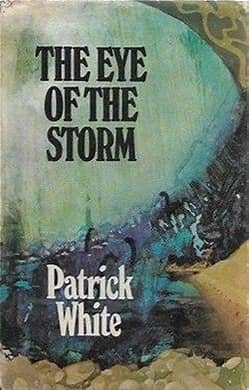
    • The Eye of the Storm by Patrick White [1973];
    • The Shortest History of Scandinavia by Mart Kuldkepp [2025];
    • Outback Reunion by Rachel Johns [2024];
    • Under the Greenwood Tree’ by Thomas Hardy [1972]; and,
    • The Shortest History of France’ by Colin Jones [2025]

    28th July

    ‘The Eye of the Storm’ by Patrick White, published in 1973 [of 608 pages].

    This was the 3rd of White’s novels I’ve managed to read – and in truth, all have proved a difficult choice of reading, at times somewhat tedious, and with occasions of long-drawn-out periods of prose. Yet at the same time, in this book as with the others, White’s intuition of life’s realities and human nature, as certainly relevant in his era, kept this reader interested. One frustration to my mind was the ‘annoying’ inclusion of various sections of prose [generally relating to the interpretation of dreams experienced by some the characters] where ‘no punctuation’ at all is used, at one stage near the end of the book, covering nearly two and half pages!!

    I also admit that I inherited this book from my late Mother, after giving it to her as a Christmas gift in December 1973. I wonder if she ever actually got around to reading it?

    Patrick White [1912-1990] was awarded numerous prizes throughout his career as an author and playwright, the most notable of which was the Nobel Prize for Literature in 1973 after the publication of ‘The Eye of the Storm’, although he pleaded illness as the reason for not attending to accept the award. The Nobel citation praised him “for an epic and psychological narrative art, which has introduced a new continent into literature”. He was also awarded the Australian of the Year in 1973. In his acceptance speech, he said that Australia Day should be “a day of self-searching rather than trumpet blowing” and that historian Manning Clark, comedian Barry Humphries and communist trade union leader Jack Mundey were more worthy of the award.

    White was also among the first group of the Companions of the Order of Australia in 1975 but he resigned in June 1976 in protest against the dismissal of the Whitlam government in November 1975 by the Governor-General Sir John Kerr and the subsequent reintroduction of knighthoods as part of the order.

    I would imagine that this is not a book that the average modern ‘novel’ reader would take much interest or delight in. ‘The Eye of the Storm’ was apparently written about the meaning of the author’s own mother’s death.

    Wikipedia describes White as an Australian novelist and playwright who explored themes of religious experience, personal identity and the conflict between visionary individuals and a materialistic, conformist society…. developing a complex literary style and a body of work which challenged the dominant realist prose tradition of his home country, and was satirical of Australian society, and sharply divided local critics. That kind of description in 2025 is probably a complete turn-off to the modern novel reader!!

    In short, the novel tells the story of Elizabeth Hunter, the powerful matriarch of her family, who still maintains a destructive iron grip on those who come to say farewell to her in her final moments upon her deathbed.

    From the Patrick White Catalogue

    Plot: In her large Sydney home, Elizabeth Hunter is dying, attended by her longtime German Jewish housekeeper, a succession of hired nurses, and a solicitor with a long memory. Elizabeth is a dominating force who heavily influenced her two children, both of whom have lived in Europe for many years and return to be with their mother. Sir Basil, a famous, womanising actor based in London, is down on his luck financially. His sister Dorothy, the Princess de Lascabanes, has long left her colonial past behind to develop a new identity, and a return to Australia is especially confronting for her. Both siblings hope to reconcile with their past – and perhaps gain something from their mother’s death.

    Elizabeth is plunged into the past, especially memories of her deceased husband Bill, and a revelatory moment on Brumby Island when she came face to face with the eye of a storm, and an incredible sense of calm and meaning like never before. But the past looms large and has space for everyone: Basil, Dorothy, the housekeeper Lotte who survived the Holocaust, the passionately loyal solicitor Arnold Wyburd, and the three nurses who give in to its demands despite their own personal doubts. Each of these figures must reassess their lives in the wake of this startling woman…. Yet her true complexity will never be understood by those closest to her, especially not her children, who have yet to experience anything as transcendent as has she.

    Described as a profound exploration of family dynamics and societal norms, centred around the dying matriarch Elizabeth Hunter and her complex relationships with her children, White dramatizes the universal themes of love, loneliness, old age and death. He reveals the flux of power and dependency, the ultimate nuances of love and hatred that fester beneath the surface of family relationships.

    Writing in literopedia.com in 2024, we read the following.

    “The Eye of the Storm” is a novel written by the Australian author Patrick White, who was awarded the Nobel Prize in Literature in 1973. Published in the same year, the novel is considered one of White’s most significant works and a notable contribution to Australian literature. The narrative is set in post-colonial Australia and revolves around the Vass family, particularly the aging and wealthy matriarch, Elizabeth Hunter.

    The story commences with the death of Elizabeth’s husband, Sir Athol Hunter, bringing the family together for the funeral. As the plot unfolds, it exposes the intricate dynamics within the Vass family, revealing strained relationships, power struggles, and hidden secrets. The title, “The Eye of the Storm,” metaphorically reflects the deceptive calm at the centre of tumultuous family and societal dynamics.

    Key themes explored in the novel include family relationships, social class distinctions, individual identity, and the impact of the past on the present. White’s narrative technique involves shifting perspectives, providing readers with insights into the thoughts and emotions of various characters.

    The plot introduces significant characters such as Basil and Dorothy, Elizabeth’s estranged children, as well as nurses Flora and Nurse Davidson, whose arrival disrupts the family’s established order. The novel masterfully navigates issues of power, control, and the facade of societal respectability.

    White’s exploration of complex characters, coupled with his keen observations on societal norms and human psychology, contributes to the novel’s critical acclaim. “The Eye of the Storm” received the prestigious Miles Franklin Award in 1973 and has since remained an important part of the Australian literary canon.

    The novel has been praised for its intricate narrative structure, rich character development, and exploration of themes that transcend cultural and geographical boundaries. White’s storytelling prowess and his ability to capture the essence of human relationships make “The Eye of the Storm” a timeless work that continues to be studied and appreciated by readers and scholars alike’.

    Whether that ‘description’ would apply to te modern scholar in 2025, I have my doubts.

    2nd August

    A touch of history now  –   ‘The Shortest History of Scandinavia’ by Mart Kuldkepp, published in 2025 by Black Inc [of 258 pages]\  –  an abbreviated history, one of a set of three that I purchased a few weeks ago from Swartz Media.

    This was an interesting read, although at times, I found the various scenarios between the ‘separate’ Scandinavian nations to be a little confusing and difficult to keep track of, and found myself wishing I had an individual history separately of Sweden, Norway, Denmark Finland [even Iceland].. However, as one reviewer noted, the book was ‘the perfect starting point for anyone interested in Scandinavian history’. The fault most likely remained with myself, in that so often [especially of late], while finding the material I’m reading of essential historical interest, my ability to retain much of that information would probably restrict my passing an examination of the facts just read!!  I had previously read [and reviewed in the Coachbuilder’s Column] the book ‘Saga Land’ by Richard Fidler & Kari Gislason’ published in 2017 which dealt with the stories of Iceland from the time of the Vikings

    So, what does this short history cover?  Basically, ‘from the Stone Age to ‘Scandimania’ – a brisk, illuminating journey through 14,000 years of Nordic history’ referencing the five nations mentioned plus Greenland, and the more substantial islands off the Scandinavian coastline.

    As noted in one of the reviews, outsiders have long viewed Scandinavia as special, starting with the ancient Greeks and their myths of ultima Thule, a place ‘where the Sun goes to rest’. Today, we admire Scandinavia for its universal welfare, equality, peacefulness and untouched nature – not to mention its interior design, crime literature and love of all things hygge. Yet Nordic history has had its hardships and dark periods too: pandemics, war, the expansionism of the Viking Age and the eighteenth century, alliances with Nazi Germany in World War II and a eugenics movement in the twentieth century.

    In The Shortest History of Scandinavia, historian Mart Kuldkepp masterfully sketches the outlines of Scandinavia’s rich history – from the first known peoples of the region, who followed the ice sheet north as it retreated at the end of the last Ice Age, to the Scandinavians living in nations that are among the happiest in the world today. The author, Mart Kuldkdepp, is a professor and researcher of Estonian and Nordic history at University College London, where he specialises in the political history of the Baltic and Nordic regions.

    In this short but deeply insightful volume, Kuldkepp illuminates the concept of ‘Nordicness’ – a hard-to-define quality that has nonetheless steered the region to respond to major challenges, actively shaping their history and exerting a considerable influence on European and global history in the process. Throughout their history, there are numerous changes in the relationships and alliances between these nations, and I have to admit that it was the complexity of those alliances which I found hard to kept abreast of at times. Apart from the very early history, and in particular the sections dealing with the Viking and other related invasions of early Britain and continental Europe, I did find the examination of the author’s coverage of the political and economic changes that occurred in the C20th and early C21st centuries of special interest. I’d not also realised the extent of the ‘hold’ or dominance that Russia held over Finland for such a long period in that time, while the supposed ‘neutrality’ of Sweden during WWII and the difficulties faced in trying to ‘satisfy the needs of both sides of the conflict without appearing to favour one over the other, made for interesting reading.

    Throughout the book there are various ‘text boxes’ which often provide a more detailed if not brief analysis of a particular aspect of Scandinavian history, lifestyle, culture and artistic successes referred to only sparsely in the main text.

    Writing in the August 2025 edition of The Australian Book Review, Margaret Clunies Ross notes ‘That important Scandinavian artists, writers and thinkers are largely confined to the text boxes, while associated cultural movements are mentioned briefly, sometimes obscurely, in the main narrative.  One of the important intellectual movements of the late eighteenth and early nineteenth centuries, Romantic nationalism, is described briefly in Chapter Eleven, but how this movement was enriched by philosophers like Soren Kierkegaard, poets such as Adam Oehlenschlager, and the multifaceted endeavours of  the influential Danish writer N.F.S. Grundtvig is not clearly explained. Hans Christian Anderson, on the other hand, gets both a picture of his statue in Copenhagen and a whole text box to himself”. That criticism may well simply reflect the personal prejudices of the reviewer [who apparently is a Knight of the Icelandic Order of the Falcon] and her desire for specific features to be covered in a book which the author himself admits in his Preface that  ‘It goes without saying that any short history of a whole region must be selective, in terms of what it covers and how it is structured’ and this limitation should be recognised by any reader.  

    I’ll just copy one small section from the closing pages of the book which provides one summary aspect of Scandinavia’s history.

    From pages 234-235.

    ‘It was the Viking Age, with its raids, trade and settler colonialism, that rudely pushed Scandinavia into the centre of European awareness. The pacification of these militant pagans of the north took centuries, and, in the end, the problem did not have a military solution. Instead, gradual and voluntary Christianisation, along with the wealth amassed in the Viking Age, helped to kickstart the successful development of European-style kingdoms in Scandinavia. Going forward, these remained mostly concerned with succession struggles and conflicts with each other, and no longer presented an acute threat to the rich countries of Western Europe.  At the same time, Scandinavia managed to avoid the fate that befell some other parts of the Baltic Sea region, which were targeted by medieval crusades and Christianisation by force, leading to foreign dominance and serfdom of the native population”.

    One aspect revealed in the book which I found disturbing – Sweden during the post-war period, as part of that country’s ambitious social-welfare plans, indulged in a philosophy which led Scandinavia down a darker path   involving forced sterilisations of people seen as not ‘productive enough’, a moral failure largely concealed by the overall success story of the Nordic welfare state’ [p.238].

    4th August

    For something very different – ‘Outback Reunion’ by Rachel Johns, published in 2024 [of 334 pages]. An easily read, relatively light-hearted ‘Australian rural romance’ novel, read over about 24 hours. Another Aussie female author who writes fictional novels about rural life in her country – I think from memory, this is the first of her books I’ve read, simply chosen at random, as after some fairly heavy recent reading, I felt the need for a quick easily digested story, and this took me exactly to that ‘place’!’  Apparently this story is one of series of novels set in the fictional town of Bunyip Bay in Western Australia.

    In basic outline: –

    A moving story of lost love, second chances, and the healing power of truth under the big top in a small town.    They spent one magical night together, but when he woke up she was gone …

    Eight years later, Gabriela Jimenez is hoping a couple of weeks in Bunyip Bay with the Grand Jimenez Family Circus will give her and Luna, her daughter, the chance to reconnect after the tragic death of Luna’s father. The last thing Gabi expects is to run into the man she once knew. Mark Morgan is still as sweet and sexy as she remembers, but Gabi is harbouring guilt and dealing with the grief of her in-laws. She can’t afford to let him get under her skin again.

    After his successful career in AFL was cut short due to a crushing injury, Mark is struggling to readjust to small-town life and working the family farm. As if this isn’t bad enough, his wife’s betrayal means he may never be able to risk his heart to love again. Mark couldn’t be less interested in the circus that has arrived in town … until he discovers that the woman who vanished from his bed all those years ago without saying goodbye is part of it.

    Will a chance meeting lead to something more?

    As described by the publishers and others – The unforgettable, hotly anticipated return to Bunyip Bay from bestselling Australian romance author Rachael Johns.

    So, if it’s the Romance genre your looking for, this is the book for you. I enjoyed the storyline, but generally only turn to this type of fictional story for a bit of occasional light-reading.

    AN EXCERPT: [near the beginning]

    ‘For one crazy moment, she contemplated staying right where she was, never going back to the circus. Maybe there could be something between she and Mark? Could she give up everything she’d ever known and risk a new life?
    But then she glanced around Mark’s bedroom, taking in his footy posters and barbell weights in the corner, remembering what he’d said about not really having time for dating, and she knew staying was an even worse idea than what she’d already done.
    So, for the second time that night, she snuck out on someone sleeping.
    Only this time she wasn’t running away from her life, but back to it’.

    13th August

    A bit of a Hardy classic,  ‘Under the Greenwood Tree’ by Thomas Hardy [first published in 1972, this a 1982 Penguin edition], of 248 pages.   Presumably passed to my mother from her sister, Jean in the 1980s, and subsequently inherited by myself!  One of the small paperbacks I’ve retained from time to time in the car glovebox reading a few pages at a time while waiting for appointments, etc. I decided to remove it from that location, and complete a reading. An interesting little novel, and in some ways, fairly simple in its construction and storyline once the reader manoeuvres their way through C19th English cadences and accents of some of the characters depicted.

    Described as the best-loved, and certainly the happiest of all Hardy’s novels, his second published novel, and a story which led to the writing of a series of ‘Wessex’ novels by Hardy.

    The story is best described as a pastoral romantic novel by Thomas Hardy, that explores themes of love, tradition, and change in a rural English village. An interesting little novel, in some ways, fairly simple in its construction and storyline once the reader manoeuvres their way through C19th English cadences and accents of some of the characters depicted, with their mode of talk, described as being full of observation and humour. It was apparently based upon a vivid and authentic recreation of the author’s own childhood environment, and modelled the villagers in the novel, on people he had known intimately. 

    In basic summary  –  The novel is set in the fictional village of Mellstock and follows the romantic entanglements of Dick Dewy, a church musician, and Fancy Day, a new schoolmistress. The story begins with the Mellstock parish choir, which includes Dick and his family, as they perform during Christmas festivities. Dick falls in love with Fancy at first sight during a schoolhouse performance. However, Fancy has other suitors, including the wealthy farmer Frederic Shiner and the new vicar, Mr. Maybold, who wishes to replace the choir’s traditional music with a mechanical organ.  As the story unfolds, Dick and Fancy become secretly engaged, but complications arise when Fancy’s father initially opposes their union. Eventually, after a series of events, including a proposal from Maybold, Fancy faces a dilemma between love and social status, leading to a poignant conclusion. 

    The novel explores several themes, including:

    Thomas Hardy [1840-1928] was himself actually a struggling provincial architect in the mid-1800s, and he began to write novels [and poetry] in order to make money. This novel set him on the way to making a living. During his ‘literary’ life, he wrote up to 18 novels, numerous short stories, poetry [which was his first love], And in his senior years, some drama productions.

    17th August

    ‘The Shortest History of France’ by Colin Jones, published in 2025, of 260 pages.

    Another relatively easily read book, although, as with the Scandinavia short history, there were many aspects of this reading that I would have liked to explore in more detail and depth, eg, France’s 1789 revolution, or the despised role of the Vichy in France and its collaboration with the NAZIS especially in respect of the Jewish situation, during WWII, or the country’s racism and brutality arising from its colonisation of Algeria,  and participation later in the slave trade in various parts of the globe..

    This short history covers more than two millennia of France’s history from so-called ‘glorious defeat’ in 52BCE to Julius Caesar to what was described as a somewhat unexpected triumph of the 2024 Paris Olympics shortly after a national election.  A ‘melting pot’ of influences from internal conflicts, European neighbours and international circumstances.

    Black Inc, publishers of this book and others in the Shortest History series describe this publication ss follows.

    From Roman conquest to Emmanuel Macron, the Gauls to de Gaulle, trade to war, religion to migration, colonialism to slavery, Joan of Arc to Asterix …

    France is the most popular tourist destination in the world, thanks to its unsurpassed cultural and historical riches. Gothic architecture, Louis XIV opulence, revolutionary spirit, café society, haute cuisine and couture – what could be more quintessentially French?

    Rarely, however, do we think of France as a melting pot, but historian Colin Jones asserts it’s no less a mélange of foreign ingredients than the United States, and by some measures more. As nationalism and anti-immigration rhetoric surge in France (and elsewhere), The Shortest History of France presents a portrait of a nation whose politics and society have always been shaped by global forces.

    Clear-eyed and avoiding traps of national exceptionalism, Jones unfolds France’s first millennium of invasions and subjugation by its neighbours and iterations of the Roman Empire, to the Enlightenment, The Universal Declaration of Human Rights, and The Paris Agreement. Meanwhile, its darker moments have included overseas colonisation, the Vichy regime and the Algerian War, along with persistent racism, police brutality, and civil unrest.  The Shortest History of France is a dynamic, global story enhanced with touches of cultural radiance – truly a retelling for our times.

    After reading this book, I must admit that my idyllic view of France as a cultural and in some ways ‘peace-loving’ European nation has somewhat been thwarted by many of the events described and covered in this short history, even up to more recent times.

    Barnes & Noble describe the book as – The Shortest History of France reveals a nation whose politics and society have always been shaped by global forces. With up-to-date scholarship that avoids the traps of national exceptionalism, Jones reminds us that it was only after the first millennium of French history—after constant subjugation to the Roman Empire and Germanic tribal forces—that a nation-state began to emerge, while absorbing influences from its European neighbours. Later, the Crusades and subsequent overseas colonization paved the way for cultural exchange with Africa, the Caribbean, East Asia, and elsewhere.  France has been home to the Enlightenment, the Universal Declaration of Human Rights, and the Paris Agreement . . . but also to the Vichy regime, the Algerian War, and persistent racism and civil unrest. By turns serious and spirited, The Shortest History of France is a dynamic, global story for our times.

    Jones himself, as the author, argues that (though his terms aren’t quite so blatant) the French aren’t really French at all. “Scratch a French icon,” he writes about Asterix, “and traces of the wider world are never far beneath the surface.” We are reminded that the cartoon character meant to embody the spirit of the Gaulois resistance was, in fact, created by a Polish Jew.  He also writes at length of the conflicting influences that have shaped France’s hexagonal frontiers and the nation within it. “French borders have always been porous,” Jones writes, suggesting the history of France is truly the history of who most influenced France at any given time. Certainly, this aspect is revealed time and again throughout the book.

    Writing for The Standard.co.uk in March, 2025, William Hosier suggests that ‘Jones’ book should appeal to both philistines and experts: it reads as A History of France for Dummies as well as an encyclopedia of erudition. The tone is journalistic and fancy-free, its author darting nimbly from the Aristotelian influence on medieval universities to the differences between Romanesque and Capetian architectural styles. The style is learned, yet unsnobby: it doesn’t matter how much or little you know about the figures mentioned, since all are described in simple monikers (“leading politician Léon Gambetta”, “statesman Jules Ferry”). A bit repetitive, perhaps: but immeasurably more helpful than the opposite’.

    As for the author, Colin Jones, CBE, FBA, is Emeritus Professor of History at Queen Mary University of London. He is the author and editor of many works on French history, including The Cambridge Illustrated History of France, The Great Nation: France from Louis XV to Napoleon, The Fall of Robespierre: 24 Hours in Revolutionary Paris and a host of others.

    An interesting read, with perhaps the reservations on brevity mentioned above, where more detail and expansion of the subject matter to be searched out through other avenues.

  • The Coachbuilder’s Column: Volume 15: Issue 11: 15th July, 2025:  about the author Graham Greene, letters and novels.

    I’ve just read  ‘Graham Greene: A Life in Letters’ edited by Richard Greene [no relation], published in 2007 [446 pages]………….I’d never read any of Greene’s novels though knew I had one somewhere, eventually tracked it down, a Penguin paperback of The Honorary Consul’, first published in 1973, which I refer to later, as I decided I had to read at least one of his novels.

    As revealed through his letters, his novels were generally based upon people he’d met, or places and international conflicts that he found himself involved in. And as revealed through the letters, a vivid portrait of a fascinating writer, a mercurial man of courage, wit and passion. 

    As Amazon describes it – “One of the undisputed masters of twentieth-century English prose, Graham Greene (1904-1991) wrote tens of thousands of personal letters. This exemplary volume presents a new and engrossing account of his life constructed out of his own words. Impeccably edited by scholar Richard Greene, the letters–including many unavailable even to his official biographer–give a new perspective on a life that combined literary achievement, political action, espionage, travel, and romantic entanglement. The letters describe his travels in such places as Mexico, Vietnam, and Cuba, where he observed the struggles of mankind with a compassionate and truthful eye. Letters to friends such as Evelyn Waugh and Muriel Spark offer a glimpse into the literary culture in which he wrote, while others reveal the agonies of his heart. The sheer range of experience contained in Greene’s correspondence defies comparison”.

    These letters, as published by his namesake, were written over 70 years, from September, 1921 to the 21 March, 1991 [14 days before he died]. As a prolific writer of diaries, personal notes and reflections myself, I guess that was the reason I was attracted to the book. He was not just an author – but a journalist, reporter, investigator, confidante of the famous in both literary and political circles, constantly travelling around the world, usually to political hotspots and war or revolutionary zones in Asia, Central and South America, Africa, Russia and other Communist controlled countries during both the years of World War II, and the subsequent Cold War period, with his life and personal safety often at risk. His letters generally pulled no punches, many of a highly personal and romantic nature.  His correspondence relationship with so many great authors [many of whom I was not familiar with] including in particular that great novelist and diary writer, Evelyn Waugh [whom I always believed was a woman for some reason] provided for me, a fascinating insight into the world of writers, publishing and books in general.

    [Incidentally, I don’t have any of Waugh’s novels, but do have a massive volume of his life’s Diaries, which admittedly, I’ve not yet tried to tackle!!].

    In addition to the actual letters, there are footnotes on most pages. Providing either a brief biography of the person to whom he is writing, or where it was known why he was writing in particular instances. These notes of course do slow down the reading process, but are an invaluable aid to understanding [usually] the purpose of the letter and Greene’s connection with the recipient.

    Grahame Greene himself notes that – There have been a number of Graham Greene biographies, but none has captured his voice, his loves, hates, family and friends–intimate and writerly–or his deep understanding of the world, like this astonishing collection of letters…………………………………………………………………..
    Graham Greene is one of the few modern novelists who can be called great. In the course of his long and eventful life (1904—1991), he wrote tens of thousands of letters to family, friends, writers, publishers and others involved in his various interests and causes. A Life in Letters presents a fresh and engrossing account of his life, career and mind in his own words.

    In summary a comment from Google.books provides another encouraging description of the book  –  ‘In several letters, the individuals, events or places described provide the inspiration for characters, episodes or locations found in his later fiction. The correspondence describes his travels in Mexico, Africa, Malaya, Vietnam, Haiti, Cuba, Sierra Leone, Liberia and other trouble spots, where he observed the struggles of victims and victors with a compassionate and truthful eye. The volume includes a vast number of unpublished letters to authors Evelyn Waugh, Auberon Waugh, Anthony Powell, Edith Sitwell, R.K. Narayan and Muriel Spark, and to other more notorious individuals such as the double-agent Kim Philby. Some of these letters dispute previous assessments of his character, such as his alleged anti-Semitism or obscenity, and he emerges as a man of deep integrity, decency and courage. Others reveal the agonies of his romantic life, especially his relations with his wife, Vivien Greene, and with one of his mistresses, Catherine Walston. The letters can be poignant, despairing, amorous, furious or amusing, but the sheer range of experience contained in them will astound everyone who reads this book.’

    While from the book cover – “When he loved, he loved fervently, but he also struggled  to manage the  unpredictable mood swings, the highs and lows of bipolar disorder that drove him from exalted happiness to despair. Letters to friends like Evelyn Waugh, Muriel Spak, Anthony Powell and R.K. Narayan offer a glimpse 

    into the literary culture in which he wrote. Other letters reveal the agonies of his heart, how his manic depression wreaked havoc on his marriage to Vivien Greene and injured his relations with his mistress Catherine Walston.”

    A book that gives new perspective to a life that combined literary achievement, political action, espionage, travel and romantic entanglement….following him through joy and turmoil, from the gnarled and fissured forests of Indo-China to war-torn Sierra Leone, from the mountains of Switzerland to hotels in Havana and a connection of sorts with leaders like Fidel Castro, and various revolutionary characters from South America.

    The letters also reveal much about his support at times, and other times, conflict with the Catholic Church, and his inter-action with a couple of the Popes of his era, and other religious intermediaries.

    A brief comment on The Honorary Consul by Grahame Greene [published in 1973, of 268 pages [my Penguin edition].  After having read Greene’s letters, I expected his novels to be essentially based on parts of the world he had travelled to, often with the purpose of exploring those areas and lifestyles for incorporation into a planned novel. I wasn’t sure what to expect, not having read him previously.  This story, I found somewhat enjoyable, if at times, realistically unpleasant in terms of the subject matter.

    A gripping tragicomedy of a bungled kidnapping in a provincial Argentinean town, considered to be one of Greene’s finest novels. The story is set in the provincial city of Corrientes, part of the Argentine Littoral, on the shore of the Paraná River. Eduardo Plarr is an unmarried medical doctor of English descent who, as a boy, fled to Buenos Aires with his Paraguayan mother to escape the political turmoil of Paraguay. His English father remained in Paraguay as a political rebel and, aside from a single hand-delivered letter, they never hear from him again. Throughout the novel, there is much reflection by various characters on the absence of ‘father figures’ for numerous reasons. I believe the story is also set on the eve of Argentine’s ‘dirty War’ in the early 1970’s.

    In this provincial Argentinian community, Charley Fortnum – a British consul with dubious authority and a notorious fondness for drink – is kidnapped by rebels in a case of mistaken identity. Fortnum, 61 years old is married to Clara, a young ex-whore from Senora Sanchez’s brothel. The young but world-weary Doctor Eduardo Plarr, is left to pick up the pieces and secure Fortnum’s release, wading through a sea of incompetence and unearthing corruption among authorities and revolutionaries in the process.

    First published in 1973, The Honorary Consul is a British thriller novel, and  was one of Greene’s own favourites of his works and is regarded amongst his finest novels, with Plarr perhaps the most moving and convincing figure in his fiction.  The story is set in an unnamed city in northern Argentina, near the border with Paraguay which can be assumed to be the city of Corrientes.

    In what is described as a ‘perfectly executed narrative’, Greene explores the repercussions of the bungled kidnap, and gives special attention to Dr Plarr whose deficient emotions form the heart of the story.

    While I won’t go into the article itself, a piece written on a site named literarysum/com and titled ‘Unveiling the Layers: A Comprehensive Literary Analysis of The Honorary Consul by Graham Greene’, introduced the subject as follows – ‘The Honorary Consul by Graham Greene is a complex novel that delves into the themes of love, betrayal, and political intrigue. This article provides a comprehensive literary analysis of the novel, exploring its various layers and uncovering the hidden meanings behind its characters and plot. Through a close examination of the novel’s themes, symbolism, and narrative structure, this article aims to provide readers with a deeper understanding of Greene’s masterpiece’ which all indicates we have more than just a ‘British thriller novel’, another indication of Greene’s literary talents.

    As described at the time of publication, by the Daily Mail: ‘The prose is monkishly spare and taut.  The minor characters are brilliantly and sardonically drawn, that ever he has given us’. It sounds as though I made the right choice, in being introduced to Greene’s writings [apart from his letters].

    The book was made into the 1983 film The Honorary Consul (also released as Beyond the Limit), directed by John Mackenzie, with Richard Gere as Plarr and Michael Caine as Fortnum.[3][4] The soundtrack theme was composed by Paul McCartney and performed by John Williams.

  • The Coachbuilder’s Column: Volume 15: Issue 6: 26th February 2025:  ‘the belburd’ by Nardi Simpson, a 2024 release

    I purchased this book from QBD in Melton a few days ago – “The Belburd’ by Nardi Simpson, published in 2024, of 310 pages, a very different piece of reading in terms of my reading diet!

    Described in a way which was unlikely to attract me to this book initially – as a lyrical and masterfully woven novel about women, creation, belonging and the precious fragility of a life – yet something about the promotional material written about it and the author herself prompted a purchase a few days ago when I was seeking out something lighter. Yes, it was that, read in a few hours over a couple of days, though still not sure if I can say I actually enjoyed it!!
    Another description applied to this book – ‘the belburd is a powerful story that shows us we are all connected from before we began to long after we begin again’.
    Let’s examine the basic storyline first – Ginny Dilboong is a young poet, fierce and deadly. She’s making sense of the world and her place in it, grappling with love, family and the spaces in which to create her art. Like powerful women before her, Ginny hugs the edges of waterways, and though she is a daughter of Country, the place that shapes her is not hers. Determined and brave, Ginny seeks to protect the truth of others while learning her own. The question is how? And, all the while, others are watching. Some old, some new. They are the sound of the belburd as it echoes through the world; the sound of cars and trucks and trains. They are in trees and paper and the shape of ideas. They are the builder and the built. Everything, even Ginny, is because of them.

    What does that actually tell us? As a young Indigenous poet, Ginny writes her poems, then sprinkles the paper on which they are written with water [from a bottle she usually carries with her or from any other sources of dampness she can find at the time] and then buries the poem on which they are written in soil or under a rock etc – and those various locations are her publishing house, which off the cuff when asked, she called ‘Dreamtime Books’.
    The second ‘description’ mentioned above – well that forms the basis of the other part of this story which are supposedly connected – yet I found it difficult to describe both that connection, and the actual nature of that other part of the book? Books + Publishing says – ‘’The most beautiful montage of life and death . . . The Belburd will leave you with a lasting appreciation of place, nature and life itself’ – while other promotors, book sellers, etc write – ‘The Belburd is a powerful story that shows us we are all connected from before we began to long after we begin again’.

    I found a review in the Arts Hub internet site summary to be the best way to place the foregoing into some kind of perspective: From November 2024. Barrina South writes:
    “The Belburd is the long-awaited second novel for celebrated Yuwaalaraay author and musician, Nardi Simpson. The novel explores what it means to belong, and is told through two story threads that loop and twist throughout. The first thread is when we are introduced to Ginny, an inner Sydney Blak poet. The second is a more universal story exploring life – from birth to death.
    Ginny’s story focuses on what it is to connect with Country that isn’t yours, how to navigate life after a broken relationship, plus the day-to-day challenges of being Blak. Her narrative also touches on the deep sadness Aboriginal people feel when we witness the impact of the urban sprawl on Country and the cultural responsibility to take care of it.
    The second story focuses on Sprite, an egg, who is waiting to be placed by Eel Mother, to be born. Sprite’s wish eventually comes true and, when transplanted, Sprite spends the gestation period pondering on what both birth and life will be like.
    Sprite and Ginny share a common story – to become what they want to be and to feel a sense of belonging.
    Simpson is a lyrical, magical weaver of words who encourages the reader to read with not only their eyes, but with their whole body. This is evident when introduced to Eel Mother. The visceral imagery of this character will make you feel as though you too are safe and protected in her folds, cradled on the moving currents and captivated by her shimmering colours.
    In part three, ‘The Ground’ contrasts with the world of Sprite and Eel Mother, moving as it does, to the New South Wales colony and into the present. It is in this section we learn the fate of Dilboong (the Eora word for Manorina melanophrys – the bellbird) and that of her mother, Barangaroo. Here the reader reflects on the impact of building a city like Sydney, which causes injuries and wounds to Country, disrupting a sense of place.
    [South has a couple of criticisms too, which I had to agree in particular with the connection factor]
    There were times reading The Belburd where I didn’t feel sufficiently guided by the author through complex themes with confidence. By the end the two stories felt jarring, unravelling from each other. The novel would have also benefited from the inclusion of images of Dilboong, and both Barangaroo and Bennelong, two seminal figures in the history of the NSW colony, and one of the first black love stories of modern Australia. A map to point out key places mentioned in the stories also would have been useful, especially for those not familiar with Sydney.
    A slightly more revealing review comes from ‘Readings’ Teddy Peak where he writes:
    “The Belburd is a story of The Dreaming and of dreaming, of creation and of motherhood. Nardi Simpson weaves together two threads of experience: the story of Ginny, a blak poet recovering from loss, who is trying to contend with poetry, publishing, storytelling and tradition; and, second, of being and non-being, the experiences from before you’re born and after you die. Here, Simpson’s focus is both universal and localised, considering the infinite nature of being, both within and outside a human life.
    Despite this metaphysicality, The Belburd is deeply grounded, deeply relatable. Ginny lives on Gadigal land, a familiar landscape with familiar people. She goes to poetry readings and is affronted by university students who tell her to post the event on social media for likes, she goes to garage sales and meets her neighbours for the first time after years of living next to each other, she goes to her local café and simplifies her name for the barista.
    The other being, whom we know as ‘Sprite’ and as ‘Splat’ and a series of other names, also has universal experiences, even if they are not ones we remember – Sprite waits with the ‘Eel mother’ to be conceived, then spends months in their mother’s uterus imagining what it will be like to be born. Both Sprite and Ginny are trying to become people, become themselves, unbecome the parts of themselves they do not like.
    With a lyrical mastery only further cultivated since her debut, Song of the Crocodile, Simpson finds the sublime in the quotidian, elevating experiences (as base as being born or dying, as complex as grief or motherhood) to an art form. She shows that life is a series of becomings, experienced by humans and animals and the world alike – we all become together”
    To me, a final intriguing end to the second aspect of the story – the ‘baby’ Sprite describes her experience as she is born [and borne] through her mother’s birth canal – which sequence we return to a few months later, where Sprite [and also her mother it seems] has died, and she now describes that phase of death as her body disintegrates into ash and nothingness, in the soil of her grave, intermingles with various insects, and then various building materials etc, as a bridge is constructed over the river in which we first met her – reading from page 295 in Chapter 41:

    “The me that was fashioned into an arch is so deep a grey that I appear black. My darkness sparkles with winks of silver, as if a million stars are trapped inside my colour. And of course they are. Stars and paint and melted rock and rust. I am all of it. Stardust and steel……Being made into a bridge and painstakingly pierced together over the great waterway means I can see it all. I look through my foundations and cradle time in my hands. Just as I easily peer into future sunrises. My view from here is endless………………All I loved are in my breath and I am in theirs. When they eat at their fires, I am with them in the flames and the smouldering coals that embrace them. I am in the water they drink and the words they speak, and the dreams they make at night. And not just theirs. I am in everything, old and new. I am the sound of the belburd as it rings through the world. I am the cars and trucks and trains. I am the birds with jet engines. I am trams and sand that has been heated into the glass of your windows and computer screens and mobile phones. I am the concrete and metal of all the new pathways, bridges and overpasses, tunnels and causeways, and I am the rock that is moved and sold to make them. I am in trees and paper and the shape of ideas. I am words and ink and have been waiting so that you should know. No longer am I a sprite. Or a spit or splat. Or a scatter of ash. I am heiress. Your mistress. The builder and built. Everything you have and see in this place is because of me. I am the universe, the belburd. Everything, even you, is because of me”.

    As Books + Publishing states “The Belburd will leave you with a lasting appreciation of place, nature and life itself: – I’m still struggling to get my head around that!!
    .

  • Coachbuilder’s Column: Volume 14: Issue 12: 29th December, 2024: Another selection of books read over the October/December 2024 period.

    For those interested, a small selection of books read over the last three months of 2024, with my comments together with commentary and reviews of others in each instance. Books covered, which include a fairly strong historical flavour,  are:

    • Woollahra: A History in Pictures by Eric Russell [1980];
    • Dreams of Other Days by Elaine Crowley [1984] [an historical novel set during the period of the Irish famine];
    • Boudica: The British Revolt against Rome AD60 by Graham Webster [1978];
    • River Song by Di Morrissey [2024];
    • Australian Foreign Affairs, Issues 22, October 2024: The Bad Guys: How To Deal With Our Illiberal Friends;
    • Storm Tide by Wilbur Smith [with Tom Harper] [2022];
    • Fearless by Jelena Dokic [2024];
    • Flinders by Grantlee Kieza [2023];
    • Flinders: The Man Who Mapped Australia by Rob Mundle [2012];
    • Lawson: by Grantlee Kieza [2021].

    14th October

    ‘Woollahra – a history in pictures’  by Eric Russell, published in 1980, of 158 pages.  This book was given to my mother, Betty Kirk by her unmarried sister, Jean Knuckey, in the mid to late 1980s prior to Betty’s passing in May, 1990.

    Woollahra is one of Sydney [NSW] oldest municipalities and includes the harbourside suburbs of Watsons Bay, Vaucluse, Point Piper, Darling Point, Double Bay, Bondi Junction, Edgecliff, and of course, Woollahra.

    In particular, Vaucluse was the home of my Knuckey grandparents and their six children, and in more recent decades, my brother Robert & wife Evelyn, in Woollahra. For future ownership, I have dedicated and betrothed this book to Robert and his daughter, Yvonne, should they [in all likelihood] outlive the writer.

    In this publication, Eric Russell, has put together a selection of colour and black & white historical photographs, maps, drawings, wood engravings and paintings to illustrate Woollahra as it was in times past, and up to the time of the book publication, 1980.

    As described in the cover sheet – “Here are the rural landscapes of days long gone; streets and shops of yesterday; the revolution in public transport that began with cable cars and culminated in the Eastern Suburbs Railway; mansions of the great and famous, and humble cottages of the poor; and an interesting portrait gallery of residents. Memorable events, the sinking of the Dunbar, the Greycliffe ferry disaster, the wartime shelling of Bellevue Hill are recalled”. That wartime shelling – some went over the top of my mother’s family home where they lived at the top of Old North Head Road, opposite the infamous Gap on the South Head of Sydney Harbour.

    I noted one US book seller described the book thus –   Many b/w & Some Colour Illust Very Good Hard Cover This compilation of photographs, maps, drawings, wood engravings and paintings shows Sydney’s Eastern Suburbs c 1841-1980. It looks at the rural landscapes, great estates, streets, public transport and historically significant residents. 

    I have ventured around most of the areas covered in this book, although of course in more recent, decades, from the 1960s onwards, while there is much in the contents from which my Mother would have gained  many fond memories.

    17th October

    An historical real life drama from Ireland –  ‘Dreams of Other Days’ by Elaine Crowley, published in 1984, 403 pages –  a very disturbing and tragic story in the main about the period in Ireland leading up to and during the potato famine   –  described as a very warm and moving novel depicting in all its rich beauty the magic of Ireland through the interwoven fortunes of two families, one aristocratic, one poor, together with all the tragic grief and devastation of the nearby village and its people under the shadow of the failed potato crops and subsequent famine.    In addition, the difficulties and cruelty existing under the rule of English overlords, and the disparity, and display of almost hatred between the Catholic and Protestant communities are all revealed.

    I don’t recall how this book originally came into my possession, I’ve had it for many years, and a couple of weeks ago, with my general interest in the history of countries around the world, I decided to read it. From that one aspect of Irish history, it was not a particularly pleasant novel to read, but at the same time,  a necessary eye-opener to the events of that time of which I had previously had only  a broad general knowledge of. This novel brought the tragedy of that time into real focus.

    The basic synopsis  –  When Katy O’Donnell marries handsome, swaggering, hard-drinking Jamie O’Hara she is as fresh and filled with dreams as her mistress, Catherine Kilgoran, marrying in silk and lace up at the big house. But dreams and reality are sometimes a world apart… Dreams of Other Days is the story of two families of whose fortunes are inextricably linked, and of a small, close-knit Irish community bound together by tradition and by tragedy. It is also a tender and truthful portrayal of a marriage and of a woman whose indomitable spirit remains unbowed. By the bestselling author of ‘The Ways of Women’, this is a powerful and richly imagined novel which sweeps the reader back to the time of the great Irish famine, a time of courage, passion and upheaval.

    25th October

    Today, I finished reading ‘Boudica:  The British Revolt against Rome in AD 60’ by Graham Webster, [published in 1978, 152 pages].  As the title indicates, under Dr Webster’s ‘skilled examination of the written and archaeological evidence, the details of the Revolt, and the critical events leading up to it, are painstakingly pierced together’.

    I purchased this edition, as far as I can recall, from ‘Book Club Associates; [no longer existing], probably early in the 1980’s, and somehow had not got around to reading it. My initial disappointment – I’d believed the book aimed to concentrate on the actual life of Boudica, but she in fact is only referred almost as a side note in the story of the Revolt, the actual description of which is dealt with over just a few pages. The main emphasise of Webster’s writing concentrates on the initial Roman advance into Britain under Caesar in 54BC through to the period of the Revolt, with a detailed examination of the archaeological evidence of the Roman presence in Britain between mainly 54BC and 60AD together with the availability of what written records made during that period by the contemporary writer, Tacitus [author of the ‘Annals’ of that period, and a Roman historian and politician, born around 56AD]. Still, while extremely interesting, however, as indicated, not quite what I was expecting.

    In basic precis – Queen Boudica, leader of the Iceni, revolted against the Romans in AD60 only to have her efforts avenged by a humiliated Roman army. This lively and fascinating book examines in detail the evidence and theories which surround these events.  From the book’s promotional material, it describes “Following Caesar’s expeditions in 54 BC, Britain was invaded and effectively subdued under the Emperor Claudius in AD 40. But the peace was an uneasy one and in AD 60 the Iceni, encouraged by the Druids in Anglesey, erupted in revolt. In rapid succession they sacked Camulodunum [Colchester], Londinium and Verulamium [St. Albans]. A massive pitched battle followed, somewhere in the Midlands [perhaps at Manchester], on Watling Street, in which the Roman military machine avenged this humiliating and disastrous setback to its colonization of Britain.’

    The author, Graham Webster is one of Britain’s most eminent archaeologists, with a long and distinguished career which earned him an OBE. He has directed major excavations at Romano-British sites and has specialised in Roman Britain and the Roman imperial army. My other reservation – with this book published in 1978, it is obvious that much more advanced research and findings regarding evidence of the Roman occupation have been achieved since then.

    As indicated also by the following brief quote from page 116, research at that time, and no doubt since was always going to be limited by modern developments, buildings, roadworks, etc.  Writing about one particular finding, Webster notes that ‘The whole of this area up to the edge of the Castle ditch should have been acquired and added to the Castle Park for the better public appreciation of this centre of the Imperial cult in Britain – but, as usual, commercial profit took precedence over the public good’

    In similar vein, we read on page 120:

    “Digging in London has always been more difficult than any other British city because there has been a greater intensity of occupation and rebuilding. Whereas one normally reaches Roman levels eight to ten feet below present ground level, in London one has usually to go down to twenty feet. One hopefully excavates in this city, at great cost to this depth, only to find, almost invariably, that a very small fraction of the area has any surviving Roman levels’.

    And finally, as the author admits at the very end – ‘There are elements of all these things in the story of the events of AD 60, although much of it is misted over by lack of precise information’.

    I was unable to find much in the way of a professional review of this book, so the above will have to suffice.

    30th October 2024

    River Song by Di Morrisey, published in 2024, 390 pages.   This was Di’s 30th Novel, of which I currently possess and have read 27 of them, still chasing up the missing three. The basic headline promotion – Four women win the lottery and suddenly everything changes.

    In summary – The arrival of a hotshot New York composer brings a rare touch of glamour and excitement to the peaceful country town of Fig Tree River. For Leonie, Madison, Sarita and Chrissie, four women involved in the local musical theatre, it’s a welcome distraction from the pressures of daily life.  Then a lottery ticket, bought together on impulse, changes everything.  The winnings, shared between the four friends, are all they ever hoped for … and all they ever feared, bringing dreams, dilemmas and disaster.  When their new lives start to fall apart, will the women have the strength to find the song inside their hearts once more?

    After a slow start, the story begins to liven up a little as we begin to connect all of the main characters into a sequence of relationships   – although it is only once we see the benefits and/or consequences of the lottery win, that it is obvious that all has not been as it seemed initially. A fast moving, and in some respect, a not un-anticipated outcome by the end of the book. 

    I guess that after 30 novels, it must at times be difficult to come up with a new storyline, however, Di Morrissey AM has proved to be one of the most successful and prolific authors Australia has ever produced, publishing twenty-nine [now thirty] bestselling novels. She trained as a journalist, working in newspapers, magazines, television, film, theatre and advertising around the world. Her fascination with different countries, their cultural, political and environmental issues, has been the catalyst for her novels, which are all inspired by a particular landscape. In 2017, in recognition of her achievements, Di was inducted into the Australian Book Industry Awards Hall of Fame with the prestigious Lloyd O’Neil Award. In 2019, she was made a Member of the Order of Australia.

    In November, 2012, I attended a book launch by Di Morrisey at what I think was her 20th novel, ‘The Golden Land’, at the Art Gallery of Ballarat. I think at the time, I already had a copy of that particular book which she kindly signed on that occasion.

    31st October 2024

    On this date, I finished reading ‘The Australian Foreign Affairs, Issue 22 of October 2024:  The Bad Guys: how to deal with our Illiberal friends.

    Certainly, plenty to think about regarding our Asian neighbours, and Australia’s future inter-actions with them

    This 22nd issue of Australian Foreign Affairs examined the consequences for Australia as some of its most important friends and partners – including India, Indonesia and the United States – shift towards authoritarianism and illiberalism. As Donald Trump seeks to return to the White House, “The Bad Guys” looks at how Australia should deal with ostensibly like-minded countries that are sliding away from democracy and how to respond to the leaders overseeing this dangerous and unpredictable turn. Subsequent to reading thus issue of course, Donald Trump has been re-elected to be the President of the USA.

    The major essays in Issue 22 include:

    • Michael Wesley examines the rise and tactics of the strongman leader, a broad look at the rise of such personalities over recent years, described as a Fateful mix: great powers, strongman leaders and manifest destinies;
    • Malcolm Turnbull [former Australian PM] examines the potential second coming [now arrived] of Donald Trump, and how Australia and others should deal with him; he concludes with the suggestion ‘The leaders of America’s friends and allies, including Australia, will be among the few who can speak truthfully to Trump. He can shout at them, embarrass then, even threaten them. But he cannot fire them.  Their character, courage and candour may be the most important aid they can render to the United States, ‘under the second age of Trump”.  
    • Jacqui Baker looks at the ‘new’ power in Indonesia, as Prabowo Subianto took over the presidency on the 20 October past, described in the essay as part of a family ‘born to rule’; the author explores the character and career of the new president, and to some degree, I found this a rather disturbing biographical scenario; the essential point Baker makes in conclusion, is that in order to confront Indonesia’s political future, Australia must return to the ‘shared history’ of goodwill and relations between the two nations, which she describes as existing ‘beneath a sometimes fickle political and economic relationship’.
    • Priya Chacko looks at the Indian PM, Modi in an essay titled ‘The Illusionist : Exposing the Modi Cult’, this to myself was an even more scarier exposition of the Indian leader, through what I felt was a harsh [though perhaps justifiable] look at Modi and his policies in what some would describe as an ‘autocratic India’ in what has long being a flawed democracy in the view of the writer. Modi, who has been described as having a penchant for speaking of himself in the third person [as in his first speech as a third-term prime minister], where in a two-hour speech, he beat his chest to declare that ‘Modi is still strong’, despite losing his parliamentary majority – ‘All criticisms of his government were labelled the anti-national conspiracies of an eco-system determined to derail India’s progress’. Chako concludes by noting that ‘Australia should not jeopardise its sovereignty and the international rules-based order by perpetuating the Modi illusion through silence and pandering’.

    Referring back to the Jacqui essay, there were a number of powerful responses to the principal essay in AFA Issue 21 by Sam Roggeveen titled ‘United Front: Australia needs a military alliance with Indonesia’. The subsequent correspondents generally had many reservations about such proposals. A couple of pertinent comments were:

    • When Widodo addressed the Australian parliament in 2020, then Opposition leader Anthony Albanese referred to Indonesia as a blossoming multi-party democracy. Such terminology is increasingly out of place in the bilateral relationship. Indeed, given the historical human rights allegations against Prabowo, it is unlikely that he will be afforded the honour of a parliamentary address in Australia. His track record suggests Indonesian democracy is unlikely to improve under his watch, and could even decline further [Robert Law];
    • But when I think back, my clearest memory is the shift I saw over the decade: a clear sense of Australia becoming less and less relevant to Indonesia……I remember one participant putting it starkly after Australia had been headed by five prime ministers in ten years ‘You think of us as poor and politically unstable, but isn’t it the other way around now?’ [Melissa Conley Tyler];
    • Australia needs Indonesia more than vice versa [John Blaxland];
    • Roggeveen acknowledges that ‘…all make the same observation: Australia needs Indonesia more than the other way around, so what’s in this proposal for Indonesia?  They have found a weak spot in my argument [for a military alliance], because the attractiveness of this deal for Jakarta will diminish as Indonesia grows’.

    10th November

    Storm Tide by Wilbur Smith [with Tom Harper], published in 2022, with 457 pages. Another page-turning thrilling adventure from the master story-teller, although as I’ve noted in recent readings of his books, the frequent violence depicted therein ‘disturbs’ me more than it ever used to – and certainly, as always there is no shortage of violence in this edition.

    In this continuation of the Courtney family saga, the Courtney family is torn apart as three generations fight on opposing sides of a terrible war that will change the face of the world forever.

    1774. Rob Courtney has spent his whole life in a quiet trading outpost on the east coast of Africa, dreaming of a life of adventure at sea. When his grandfather Jim dies, Rob takes his chance and stows away on a ship as it sails to England, with only the family heirloom, the Neptune Sword, to his name.
    Arriving in London, Rob is seduced by the charms of the big city and soon finds himself desperate and penniless. That is until the navy comes calling and Rob is sent across the Atlantic on a ship to join the war against the rebellious American colonists.
    But on the other side of the Atlantic, unbeknownst to Rob, his distant cousins Cal and Aidan Courtney are leading a campaign against the British. Their one desire is American independence, and they are determined to drive the British out of America – by whatever means necessary. . .
    A powerful new historical thriller by the master of adventure fiction, Wilbur Smith, of families divided and a country on the brink of revolution.

    14th November

    This afternoon, sitting out in the sun, I finished reading ‘Fearless’ by Jelena Dokic, published in 2023, 263 pages.  This was a follow up to her 2015 book ‘Unbreakable’ in which she revealed the trauma and violence imposed upon her by her father when she was a child and teenager.  In this autographed copy, Jelena reveals life after her father and the ways in which she has, and her readers can, reclaim life when all feels lost.  While I found much in the book to be of a slightly repetitive nature, nevertheless, the similar themes were a necessary outcome and/or consequential remedy of the many areas of concern Jelena reflects on throughout the book – demons she has faced head-on and now deals with them though public speaking and lectures, and her writing – all aimed at helping others to find their voice and the power to thrive. But as she points out right at the beginning – ‘I want this to be a book you pick up when you are going through a hard time – but this is not a self-help book. And please remember: while I was good with a tennis racquet, I am not in any sense a qualified counsellor so I advise you to seek advice from a professional if you are suffering. Some truly great mental health professionals saved my life, several times. I want to make a point I am not a psychologist, psychiatrist or a mental health expert – these are just my personal experiences and lessons’ [page 11].

    Some of the areas covered through the various chapters of Jelena’s life story – The power of speaking up; Body image; Mental health; Diagnosis; The media; Social-media and community, and calling it out; Heartbreak; Commentating the tennis for Channel 9; Belief; Fighting for equality; Shattering stigmas; Happiness, healing and kindness; and Gratitude.

    Throughout the book, Jelena reminds us of the influence of her father’s actions [as revealed in full in ‘Unbreakable’] that would bring about so much of the trauma of her later years, one example – her loss as a 17-year-old in the Wimbledon semi-final in 2000, which she felt, just getting to that stage was a pleasing result.  But not in the eyes of her father, when she finally tracked him down on the phone.  “He was furious I’d lost. His voice boomed down the phone: ‘You are pathetic, you are a hopeless cow, you are not to come home. You are a loser. Do not come back to the hotel.’ Then he hung up. I slept in the grounds of Wimbledon’ [page 76].  Would the public have discovered that?  Unlikely, because during her tennis career Jelena never revealed anything about her father’s physical and emotional violence, and as she reveals in this book, one of the most difficult questions she faced later in life was ‘Why didn’t you tell someone?’   – ‘For years I barely told a soul the truth. I was raised to say nothing, to keep secrets, to trust absolutely no one.  I was controlled to within an inch of my life. I knew too early it was best not to share any hurt I was feeling. The secrets began when my father started hitting me’ [at aged 6 years] ‘From the age six I was beaten, from the age of eleven, I’d had it drilled into me, ‘You’re a cow’, from the age of thirteen it was ‘You’re a whore’. Imagine what that does to your self-esteem and confidence’ [page 170].

    Writing in 2023 about domestic violence and speaking up – “Swollen, bruised and bleeding shins from being beaten and kicked all night with sharp shoes right into my shins for losing a match”.   –  The kind of posts that Jelena inserts throughout the book, posts which have resonated and impacted a lot of people by the manner in which she describes with help and support, in later years, how she had moved on, with the hope of giving inspiration to others, and initiating conversations about difficult issues

    Jelena Dokic concludes her book with the words “Remember, there is strength in being vulnerable. Never let anyone put you down; always continue fighting; never give up on your dreams, and most importantly on yourself.  Hang in there.”

    10 December 2024

    A touch of history  –  ‘Flinders’ by Grantlee Kieza, published in 2023, with 440 pages.

    This book brilliantly portrays the extraordinary life, loves and voyages of the man who put Australia on the map  – Matthew Flinders [1774-1814], and in Kieza’s true style, provides an educational but easily read and enjoyable biography of the man who has had  so many buildings, monuments etc, named after him here in Australia [not the least of which is Melbourne’s Flinders Street Station].

    Flinders is the story of a man with a very complicated life who did whatever was necessary to achieve his goals. His personal life also made very interesting reading. ‘Flinders’ is not only about his sailing achievements, nor is it a dry biography that mainly focuses on historical details, but also documents his personal life, including his very strong love for  his wife, Ann, and his life-long friendships   – such as his sailing and exploring associates, scientists like Sir Joseph Banks, the early Governors of NSW in the early decades of European and convict settlement,  even some of his French’ enemies where he was ‘imprisoned’ for so any years on the island of Mauritius.

    I had to agree completely with one reviewer who wrote that “I love Grantlee Kieza’s writing, and the way he brings his subjects to life. I’ve read many of his books and loved them all. All I knew about Matthew Flinders before reading this book, was that he mapped the coastline of Australia, and his cat sailed with him. I now realise that the story of this amazing explorer and sailor is much more than that”. 

    A summarised description of his life and work reads as follows…………..In 1810, Matthew Flinders made his final voyage home to his beloved wife, Ann, his body ravaged by the deprivations of years of imprisonment by the French. Four years later, at the age of just 40, he would be dead – a premature, tragic end to one of the world’s greatest maritime adventurers who circumnavigated and mapped the famed Great Southern Land, and whose naming of the vast continent would become its modern Australia.
    Flinders took to the sea at age 16, inspired by the story of Robinson Crusoe and the adventures of Captain Cook, swiftly climbing the ranks to fight in a decisive naval battle of the French Revolutionary wars. After sailing to Tahiti with William Bligh, Flinders was drawn to adventure, and by 1801 he was in command of an expedition to uncover the true nature of the great continent of the southern-ocean.
    This sweeping biography tells the story of the fearless, sharp-eyed, handsome Flinders and how he became one of the world’s most intrepid explorers. It’s a story of a great love for the sea, for connection and of friendship – accompanied by his Aboriginal interpreter and guide, Kuringgai man Bungaree, and his beloved rescue cat, Trim, Flinders explored the furthest reaches and rugged coastlines of Australia. It’s also a story of technical brilliance – Flinders’ meticulous charts gave us the first complete maps of our continent, which are so accurate they are still used today.
    But rushing home to England to his adored wife, Ann, Flinders was trapped and incarcerated off the coast of Africa as a prisoner of war, ultimately denied celebration of his great achievement. His love for Ann, and his fight to escape his bonds to be with her again was the last great adventure of a fascinating life.

    No, it’s not a novel, but in reading, almost as difficult to put aside!

    Some selected notes from various sources and authors

    • Flinders enforced extended stay in captivity on Mauritius (1803-1810) because of world politics is dealt with in great detail by Kieza, as have other authors of this explorer.
    • Between 1791 and 1803 Flinders participated in major voyages of exploration, most notably the expedition with George Bass that verified Van Diemen’s Land (now Tasmania ) was definitely an island
    • Flinders also led the first inshore circumnavigation of mainland Australia and is credited as being the first person to utilise the name Australia for our country.
    • He has an island and a university named after him and several statues erected in his honour both here in Australia and the UK.
    • Flinders is revealed as being tenacious, courageous, resourceful and intelligent yet also proud, stubborn and conservative in some ways.
    • We learn he was musical (he played the flute) and an aurilophile (The cat Trim!) He survived shipwrecks and captivity.
    • Much of the material in the book has come via Flinders’ private journal, in addition to sources such as the official Captain’s log, letters, maps etc.’, and with reference to other biographies by authors such as Gillian Dooley, Rob Mundle, and others.
    • As well as a seaman and explorer, Flinders was a writer, researcher, a son, a brother, a father (though his daughter was only two years old when he died], while at the same time, a loving husband to Ann his wife and a friend, even though throughout this book, his life is so often depicted at putting the advancement of his career and research at the forefront. Yet Flinders’ parents, are always within his thoughts – Matthew senior and mother Susannah, his step-mother and assorted siblings, together with his relationship with his wife Ann, from whom he will be separated for more than a decade soon after they were married
    • We learn about his many friendships, for eg, with Sir Joseph Banks , who has been described by some as his patron , and Flinders used his library when back in London ) and also with Madame d’Arifat , the brothers Pitot and Charles Baudin on Mauritius and others whilst he was in captivity.
    • Brief reference is made to the likely fate of his friend George Bass, who on a venture to South America, disappeared,  was never to be seen again, the fate of many a sailing vessel in those times. I believe Kieza has written a separate biography on the life of George Bass which I must seek out.
    • In Dooley’s book, we read of his thoughts about slavery (he had no qualms) and also in particular how he viewed the various interactions between the First Peoples both in Australia and elsewhere (his views were typical of the era) and while how he loved the island of Timor, he was a bit snobbish about the native inhabitants. Also, he had no hesitation in punishing his crew if necessary, and many of these aspects are revealed in Kieza’s excellent biography.

    Comments

    Dianne Carroll:  I think we must be channelling somehow Bill. I have recently finished this fascinating book, borrowed from the excellent BMI library. Friends recently returned from a cruise around Australia and I said it appeared to be far more luxurious than what poor Mr Flinders endured, decided to have a proper read up on him after that, the biography was just a great work. Didn’t realise he died at such an early age.

    Myself:  Dianne, yes, his early death not helped by 6 years as an innocent prisoner of the French before he finally got back home, was still finishing his book of exploration right up until his death. But didn’t live to see it published. I’m an odd bod haha [see following] but am actually reading another biography of him by Rob Mundle, slightly different emphasise but just as fascinating, even to the point of recognising parts around the Aussie coast that he first discovered and named etc, never after himself.

    Dianne:  Bill, I continue to find myself reading these tomes but in my head looking at the dates and figuring where and what my lot were doing at the same time.. 😁

    14th December

    I’ve followed the previously mentioned book with ‘Flinders: The Man Who Mapped Australia’ by Rob Mundle, published in 2012, 386 pages, and would like to briefly comment on it.

    Again, an excellent biography of Matthew Flinders, written a decade earlier than the Grantlee Kieza version.  Obviously covering much of the same ground and material, but with a slightly different overall approach.  On this occasion, a little less written about his personal family life, though that is certainly not neglected. What stood out for myself – Mundle, has for some half a century combined his passions for writing and sailing, he is a competitive yachtsman, the winner of many sailing championships whose family heritage is with the sea, dating back to his great-great grandfather who was the master of square riggers. So, it is no surprise that when writing about someone like Flinders, and the ships of his time, we are treated to some amazing descriptions of the intricacies of the sailing ships and their makeup from those times. At the end of the book, he has included a tightly packed five-page Glossary of mostly maritime terms from the history of the sailing ships of that period.

    To remind readers – ‘Flinders was famous for his meticulous charts and superb navigational skills, Flinders was a bloody good sailor. He battled treacherous conditions in a boat hardly seaworthy, faced the loss of a number of his crewmen and, following a shipwreck on a reef off the Queensland coast, navigated the ship’s cutter over 1000 kilometres back to Sydney to get help’.

    I couldn’t help but notice that so many of the ships on which he sailed developed ‘leaks’ due to faulty timber and/or workmanship –  but in most cases he kept sailing [until a suitable location could be found to attempt repairs] with the need for constant ‘bailing out’ by crew members, to basically keep the ships afloat, and on occasions, changed the course on which they were sailing in order to avoid the worst storm conditions which threatened to break his leaky ship apart at the cost of all on board.

    As Mundle writes near the end of his story – “The reality is that Flinders during his all too brief life, demonstrated a personal genius that went well beyond that of a great explorer. His attention to detail and clarity of observation during every expedition were beyond compare, as was his seamanship and care for his men, but of equal significance was his contribution to the science of navigation…….[and]….That brilliance was obvious in his research into the cause and effect of variations in a ship’s compass, and the relationship between the rise and fall of the barometer and the direction and strength of the wind” [pp.356-57]. 

    On so many occasions, that latter quotation is typical of the detailed technical descriptions of the hazards and problems faced by the sailing ships of Flinders’ time   – an era in which, without the modern means of communications we enjoy today, so many ships were lost without trace, or the awareness of their loss may not have been revealed for a year or more.

    As with Kieza, Rob Mundle brings Matthew Flinders fascinating story to life from the heroism and drama of shipwreck, imprisonment and long voyages in appalling conditions, to the heartbreak of being separated from his beloved wife for most of their married life. 

    For those interested in the European history and discovery of Australia [not forgetting the original Australians who were here for thousands of years previously] these two books are a fascinating way of learning about your favourite spots around the coastlines of mainland Australia, and of Tasmania, and how they were first seen and ‘named’ by Flinders and others of his ilk in those early days of the colonisation at Sydney Cove.

    27th December

    Lawson, by Grantlee Kieza [published in 2021, 506 pages] –  a very detailed and insightful biography of Henry Archibald Hertzberg Lawson [1867-1922]  who was an Australian writer and bush poet. Along with his contemporary, Banjo Paterson, Lawson is among the best-known Australian poets and fiction writers of the colonial period and is often called Australia’s “greatest short story writer”.

    From Wikipedia we read that, as ‘vocal nationalist and republican, Lawson regularly contributed to The Bulletin magazine, and many of his works helped popularise the Australian vernacular in fiction. He wrote prolifically into the 1890s, after which his output declined, in part due to struggles with alcoholism and mental illness. At times destitute, he spent periods in Sydney’s Darlinghurst Gaol and psychiatric institutions. After he died in 1922 following a cerebral haemorrhage, Lawson became the first Australian writer to be granted a state funeral. 

    He was the son of the poet, publisher and feminist Louisa Lawson” [with whom as the biography reveals he had a somewhat fractured relationship].

    I have always been a fan of Lawson’s poetry, and over my final few years, often played the Queensland Tiger’s vocal and musical versions of many of Lawson’s best-known poems. However, reading this biography brought out what was a fascinating and detailed insight into what in many ways was a shockingly precarious life of this talented but deeply ‘injured’ individual!

    A selection of quotations from Kieza’s book demonstrate this.

    • Lawson’s moods could change dramatically from hilarity to sombre self-recrimination…….His writing reflected his bipolarity. His jingoism was offset by his republican socialism; his bohemianism by a puritan hangover from childhood; his sympathy for downtrodden women, particularly bush-women, by occasional virulent anti-feminism forged by the bitterness of his separation; his notions  of a brotherhood of man by rampant xenophobia and racism. He confessed a hatred for the dry, harsh landscape of dirty brown rivers and an ill-disciplined people at the same time as he became a hopelessly ill-disciplined addict. [page 345];
    • ‘The truth about Lawson is that he was the life-long victim of sordid circumstances’, Brady wrote years later. ‘With greater leisure and better payment for his output he would have gone further. Outsiders have said that he liked the life of the hard-up and the drinker, which is a damned lie. He enjoyed it no more than a skylark enjoys a cage’ [page 387];
    • He pestered The Bulletin staff so much that on another occasion Jimmy Edmond ran him downstairs and gave him a shilling to go away. As he went off to buy a drink with the shilling, Lawson told the Bulletin editor in a slur ‘you’re touchy Jimmy – too sensitive and emotional’ [page 395];
    • Between 1916 and 1917 Lawson actually earned about 600 Pound from his writing, enough to buy a house in Marrickville or Woolloomooloo if he had saved the pennies [page 408];
    • Ted Brady thundered at the recognition coming for his friend so many years too late, noting that the cost of the monument [a statue of Lawson in Sydney’s Domain] 1700 Pound, could have sustained Lawson for a decade and kept him out of Darlinghurst Gaol. ‘It makes me sick’, Brady wrote, ‘this posthumous exaltation of a writer, who was scorned and exploited while living, and whose value was only recognised after he was well underground’ [pages 436-437].

    In writing of the extraordinary rise, devastating fall and enduring legacy of an Australian icon, Kieza’s portrayal of Lawson was described in the following manner in most publication publicity of the biography.

    Henry Lawson captured the heart and soul of Australia and its people with greater clarity and truth than any writer before him. Born on the goldfields in 1867, he became the voice of ordinary Australians, recording the hopes, dreams and struggles of bush battlers and slum dwellers, of fierce independent women, foreign fathers and larrikin mates.
    Lawson wrote from the heart, documenting what he saw from his earliest days as a poor, lonely, handicapped boy with warring parents on a worthless farm, to his years as a literary lion, then as a hopeless addict cadging for drinks on the streets, and eventually as a prison inmate, locked up in a tiny cell beside murderers. A controversial figure today, he was one of the first writers to shine a light on the hardships faced by Australia’s hard-toiling wives and mothers, and among the first to portray, with sympathy, the despair of Indigenous Australians at the ever-encroaching European tide. His heroic figures such as The Drover’s Wife and the fearless unionists striking out for a better deal helped define Australia’s character, and while still a young man, his storytelling drew comparisons on the world stage with Tolstoy, Gorky and Kipling.   But Henry Lawson’s own life may have been the most compelling saga of all, a heart-breaking tale of brilliance, lost love, self-destruction and madness.

    Kieza’s book reveals so much of more sordid side of Lawson’s life which in reality dominated such a large period of his existence, and the many times he ended up in prison for non-payment of maintenance to his estranged wife, not because he didn’t want to pay her, but because he simply didn’t have any money, or on the many occasions he was given small amounts as advances on future works, those advances were inevitably ‘drunk’ before they could be used for the ‘stated’ purposes.

    I feel that one individual review I came across almost reflected my own feelings as I read this book, so I’ve copied it below – written by ‘Jennifer’s Best Bookish Blog, it says: –

    ‘The author definitely tells the story of the life of Henry Lawson, warts and all. There is no glossing over his heavy drinking and the problems he faced in his life, many caused by himself. I have been a fan of Henry Lawson since we read The Drovers Wife at school. I come back to his short stories quite often and always enjoy them, but have never really given much thought to his life. I found it very sad to read about his life, in fact this book brought me to tears in many places.  Henry Lawson is an icon in Australia, but he was flawed, and those flaws are laid out in the book. I really enjoyed reading the back story to his short stories – where he got his ideas from, who might have prompted them, and why he wrote them.  For a fan of Henry Lawson, this book is gold. If you’re not a fan, or not aware of his works, I’m sure you would still enjoy this very well researched book, about a man who had a weakness, but who also had a huge talent for writing.  I would recommend Lawson, without any hesitation at all, as an unputdownable read’.   More than 60 pages of bibliography and references included.

    There was amongst many other aspects of the book, some interesting comparisons between Henry Lawson and his contemporary equally famous poet, and in many ways, his life-long rival – one, Banjo Paterson [Andrew Barton Paterson, 1864-1941]. Again, I take the liberty of a few quotations from Kieza’s book.

    • While the great debate raged, the glaring disparities between Paterson’s affluent lifestyle and Lawson’s dangerous slides into depression were never more obvious. Lawson began to haunt Archibald’s office smelling of booze and telling him of all the characters he had met drinking at The Rocks. It seemed that whatever money Lawson had was going on booze as he tried to dull his inner pain. Even Lawson’s clothes were falling apart…..[page 148];

    [With respect to the Archibald mentioned – The Archibald Prize is an Australian portraiture art prize for painting, generally seen as the most prestigious portrait prize in Australia. It was first awarded in 1921 after the receipt of a bequest from J.F. Archibald, the editor of The Bulletin who died in 1919. During their association, he attempted to give considerable support to Lawson.]

    • Lawson did not see Australia through the same rose-tinted glasses worn by ‘The Banjo’. He claimed Paterson was selling an illusion that elevated the drover, the stockman and the rouseabout to demi-gods, and that he had turned the harsh, unyielding bush into an Australian fantasyland.,…………………In ‘The Drover’s Wife’, Lawson could have been telling the story of Paterson’s mother Rose, who struggled through most of her short life on remote bush properties in danger and despair, bringing up her children while her husband was away riding fences or droving. Paterson carefully concealed his own family trauma, though, including the death of his broken-down, worn-out father from an overdose of the opium-based medication laudanum that he was using to dilute the pain of his constant lumbago. Lawson was far more forthcoming about the trauma he experienced in a bush family, using its quirks and misfortunes for material. [pages 142-143].  
    • The artist Norman Lindsay, who knew them both, said Banjo compacted in himself the best of the Australian ego’, the rugged outdoorsman who regarded ‘life as a high adventure in action, even to the risk of a broken neck’. Much of Banjo’s writing was outrageous fun as he had a lot to love about life. Not only did he have a successful legal practice, he mixed in the upper echelons of society and, with a beautiful fiancée, had none of Lawson’s reserve around women.  He was a strapping athlete; a champion rower, tennis player and amateur jockey who played polo, and was once described as ‘one of the keenest of sportsmen, a dashing cross-country rider, thin, wiry and hard as nails.’  Lawson, by contrast, was pale and sickly, and handicapped by his deafness and his domineering mother. He saw pain and suffering in the bush battler’s eternal struggle against the unyielding elements. Norman Lindsay said that Lawson’s Australia reflected his own demons, his own sadness ‘sodden with self-pity…that of the underdog’. [page 98];
    • Lawson sought refuge in the Thomas Walker Convalescent Hospital on the Parramatta River at Concord, an institution funded by a wealthy family which has just welcomed Banjo Paterson unto their fold as the new husband of the lovely Alice Walker, a station owner’s daughter from Tenterfield .[at the same time, Banjo]….had also just being appointed the editor of the major Australian newspaper the Evening News. The contrast with Lawson’s lot in life could not have been starker. [page 335].

    And yet despite all of the above ‘shortcomings’  –  alcoholism, mental health issues, often homeless, and penniless  –  Henry Lawson ‘has been remembered in festivals and place names around Australia, and a museum at Gulgong.  His work has been honoured with postage stamps, and from 1986 until 1993 his face featured on the ten-dollar note, until Banjo Paterson scored another point by usurping him’ [page 438].

    As the reviewer, Jennifer, suggested above, I would also recommend Lawson, without any hesitation at all, as an education and revelation about the real man whose many poems and stories reflected the lives of both himself and those friends, family and associates closest to him.

    Bill Kirk.