Blog

  • Thursday, 1st December – Summer and the Cricket have arrived!!!

    It’s the first day of Summer in Australia, and yes, it’s many years, if ever, that I have been home on the first day of the First Cricket Test for the Australian summer season, and for today at least, I intend to take advantage of that fact – 6 hours of cricket, weather allowing – thunderstorms predicted at the GABBA in Brisbane but looking good at the moment.  Australia versus New Zealand!!  A little warmer down here today, although currently looking rather overcast outside  at present, more rain about I think.

    But up in Brisbane, New Zealand won the Toss, and will bat!!!  I shall return!!!


    Call from Adam this morning – he was at work, and apparently tickets went on sale this morning for a rock concert next February he wanted to go to – would I book them online for him, didn’t want to wait until later as he expected sales to go fast. I’d never heard of the band he was interested in [not surprising, it was a heavy metal band], but after a bit of research, etc, I managed to track down the booking arrangements for the concert in question!!  The band name  – ‘System of a Down’!!!  A bit of a rock style politically inspired group!  And for a change, I received immediate payment a couple of hours later for the use of ‘my’ credit card!!  Particularly necessary these days!!

    Day One of the Test. Australia gor off to a great start [bowling] in  the first session to lunch, with NZ going into the break at 4 wickets for 94. Australia had three players making their Test debut – James Pattinson and Mitchell Starc [bowlers] and David Warner [opening batsman], and the new bowlers had early success. Another wicket straight after lunch, saw the Aussies in a strong position, but then, the NZ veteran, Daniel Vettori combined with Dean Brownlie to consolidate the batting, with both players lasting through until an early tea break [due to poor light], with the score by then having moved on to  5 wickets for 176, a good fightback. After the tea break, for the start of the 3rd 2 hour session, there was quite a heavy dark cloud cover over the cricket ground, and while the floodlights had been turned on, there had to be some doubt that a full day’s play would be achieved. In fact that supposition was correct – soon after writing that note, the rain started to come down steadily, and certainly at that stage, further play today very unlikely!!

     So let’s have a look at the scoreboard for the first day of play, won’t be able to give this detail each day of play, but today, with another rather miserable and strangely cold day outside, I’ve devoted my hours to some cricket viewing. Also, a debut day for three Australian players, and quite a young team overall apart from Ponting, Hussey, Clarke, Haddon and Siddle [the only experienced Test bowler]. Actually, not particularly keen on the TV commentary with it’s constant advertisements – tried the old trick of listening to the ABC radio broadcast and watching the soundless TV. Sadly it didn’t work – the picture from the TV was between 4 to 6 seconds behind the radio description. Disappointing, and it wouldn’t surprise me if this was a deliberate ploy by Channel 9 – to have a slightly delayed TV coverage the practice that I tried to do, as I am certainly not alone in the practice [or this case, attempted practice]!

    New Zealand Batting – 1st Innings  [Day 1]

    Brendon McCallum   –  444411244114………………………….c Warner b Starc……………34 [2 for 56]

    Martin Guptill –             32242……………………………………….c Haddon b Siddle…………13  [1 for 44]

    Kane Williamson –        41421124………………………………….c Khavaja b Lyon…………19   [3 for 78]

    Ross Taylor [captain] – 44114………………………………………..b Pattinson……………………14  [4 for 93]

    Jesse Ryder –                 1311………………………………………….c Warner b Starc……………. 5   [5 for 96]

    Dean Brownlie    –         124141121132144………………………Not out………………………….32

    Daniel Vettori   –           211313141212112144121213……Not out……………………………..45

    Subdries                –       Wides 3,

     No-balls 1, Byes   9……………………………………………….13


    Australian Bowling – Day 1

    J Pattinson…………..11.1.50.1  [Overs-Maidens-Runs-Wickets]

    P Siddle………………15.5.29.1

    M Starc………………13.0.52.2

    N Lyon……………….10.0.31.1

    M Hussey……………2.0.5.0


    Australia squad: Michael Clarke (capt), David Warner, Phillip Hughes, Usman Khawaja, Ricky Ponting, Michael Hussey, Brad Haddin, Peter Siddle, James Pattinson, Nathan Lyon, Mitchell Starc.

    New Zealand squad: Ross Taylor (capt), Martin Guptill, Brendon McCullum, Kane Williamson, Jesse Ryder, Dean Brownlie, Daniel Vettori, Reece Young, Doug Bracewell, Tim Southee, Chris Martin

    Better news, hopefully, with an update on the Chris Judd situation  – Carlton Captain Chris Judd will undergo minor surgery on his injured right shoulder and is expected to resume full training in January. Judd had precautionary scans on his shoulder yesterday after experiencing some discomfort during pre-season training.

    Meanwhile, for the 1st day of Summer, well it had become quite cool my early afternoon in this part of the state, and certainly didn’t feel like the beginning of the year’s ‘warm quarter’. Still raining up at the Gabba,  as five o’oclock [Eastern Australian Daylight Saving Time] came and passed.

    As noted yesterday, the Labor Party Conference is on for three days, and discussions are likely to be focused on a couple of divisive issues. Immigration Minister Chris Bowen will be proposing an almost doubling of Australia’s refugee intake in a bid to win support for his Malaysian people-swap agreement. I hope his eventual aim fails.  On another issue, Victorian right-wing cabinet minister, Stephen Conroy will break with his faction and with Julia Gillard by opposing uranium sales to India when the issue is debated.  The most divisive issue relates to the gay marriage subject, where an attempt will be made by some sectors of the Party to propose a motion to amend the Marriage Act to ensure equal access to marriage under statute  for all couples irrespective of sex. As reported today, a platform change to endorse gay marriage would be embarrassing for the Prime Minister, who has repeatedly said that marriage should be between a man and a woman. Ms Gillard wants the Party to agree to a conscience vote on the issue, rather than a platform change. The Age editorial comment today is headed ‘To reject gay marriage is to be blind to our common humanity’ – I read through that article, trying to ascertain some clear reasons for that argument, but was not convinced that the writer had either proved or disproved his point. I agree with some views that it is not a ‘core issue’ and is being given more prominence than is justified, and while I personally have no concerns about those who find themselves in a gay relationship, I, like our Prime  Minister, find it difficult to change my view that the institution of marriage should remain between a man and a woman,  an inherited view I guess of my Christian upbringing. I was thinking of copying the ‘Age’ article into this contribution, but as indicated, didn’t feel it went far enough in providing convincing arguments for either side of the issue. I note one point, where the comment is made that ‘Many opponents of gay marriage do not see depth at all in gay sexuality’. Well, I suppose the same argument could be put in respect to the traditional marriage, when one takes account of the high percentage of marriage divorces and separations in  this 21st century. I used the word ‘divisive’ at the beginning of this paragraph, and I think that is a very accurate categorisation of this topic. I think the fact that it gets such a high priority in our parliamentary circles relates much to the existence and constant push of a couple of very prominent gay politicians, such as Green’s Leader Bob Brown, and  the Government Finance Minister, Senator Penny Wong, to mention two. Anyway, much will be written and said on this and the other issues highlighted, over the next two or three days, and beyond.

    The Liberal Party have a slightly different take on the issues [with one exception] that are important points of discussion at the Labor Conference.  Tonight’s communication plans it out thus:>

    The key tests for Julia Gillard and Labor at the 2011 ALP National Conference will be whether she can:

    1. Develop solutions and strategies to strengthen our economy, boost productivity, improve job security, and reduce cost of living pressures on Australian families.
    2. Set out her plan to repay Australian Government debt, which is now set to peak at a record $136 billion.
    3. Outline how she will secure Australia’s borders, including a commitment to re-instate offshore processing of boat arrivals.

    If the Conference does not develop clear and tangible plans to secure Australia’s future and make life easier for Australian families, it will be nothing more than a self-indulgent 3-day talkfest. It will also demonstrate that Julia Gillard and Labor have the wrong priorities for Australia and that her agenda is still being set by the faceless men of the ALP.

    Which, when you read between the lines is basically all statement was –  a ‘talk-fest’ [or write-fest] of wordy spin with the usual emotive ‘make life easier for Australians’ pitch!  Oh well, we are becoming depressingly used to that style of debate from both sides these days!

    Now, to matters closer to home, and to my heart, some might suggest.  The final radio station committee meeting for 2011 on tonight, and apparently quite a deal of business to be dealt with. With changes currently happening with the web site, that will hopefully mean a but better level of internet servicing of the station, and while we have not yet got to the stage of streaming on-line, that remains an option and a future ambition.  It was almost like a Winter’s night [but without the early evening darkness] when one could be encouraged to stay at home rather than venture out to a meeting, but duty called, and we were off.  Well, I was anyway. In the end, it was a worthwhile two hours despite a few absentees. Home later in time to watch an emotional taped final episode of ‘Crownies’ on the ABC!



  • Wednesday, 30th November 2011 – a few issues of interest brought to my attention which I wish to share!

    I noticed a news report this morning that the only daughter of Russian dictator, Stalin, had died in the US at the age of 85. She apparently died in relative obscurity and poverty after years of wanderings. She suffered from shifting fortunes, name changes, various short lived marriages. Born Svetlana Stalina in 1926, she could never rid herself of the shadow of her father, and wherever she went in the world, considered herself a ‘political prisoner of her father’s name’.  One of her early ‘loves’ at the age of 17, was banished to a labour camp in Siberia by a disapproving Stalin. She lost most of her privileges after Stalin’s death. She would spent the rest of her life in various parts of world, alternatively denouncing the Soviet Union, or then in turn the West, depending on where she was at the time.  A bio of the woman would probably make interesting reading!

    I also was interested in another article about the Welsh singer, Charlotte Church [now, 25 years of age]. I think I purchased her first two CDs, when she was aged about 12/13 in 1999/2000 [in fact one of those cds was a birthday gift from an ‘internet friend’ of the time, from Blaney, in New South Wales]. This story dealt with Church being supposedly pressured into wavering a 100,000 Pound fee [at the age of 13 then !!!!] to sing at Rupert Murdoch’s 3rd wedding  – apparently she was advised to agree because Murdoch was ‘a very, very powerful man’! Of course there were claims and counter-claims to that ‘claim’, but Charlotte Church certainly had some other interesting points to make about Murdoch in a recent appearance at a media standards enquiry. She described at one point, the Murdoch newspapers as being amongst the worst offenders at harassing her, and amongst other things, described the ‘massive psychological effect’ of a News of the World story in 2005 that her father was having an affair and her mother had attempted suicide. She said ‘I just hated the fact that my parents, who had never being in this industry, were being exposed and vilified in this fashion’. From what we have read and seen over the past year or so, it seems that type of incident barely scratches the surface of some of the tactics portions of the media get up to, in their search for a ‘story’.

    Meanwhile, the New Zealand Federal Election crept on us here in Australia last week – and I only noticed well after the event that  Prime Minister John Key’s National Party had been returned for a second term of office, and in the process, increasing it’s vote by 48.1%, the best result for any party in 60 years, with the number of opposition Labour members reduced from 43 to just 34 seats. A consequence has just seen the resignation of both  the Labour leader & his deputy from those roles.  New Zealand have had a year of mixed fortunes, beginning with the mine disaster of 12 months ago, and then the Wellington earthquake at the beginning of 2011. It seems as though the government response to events of that nature was sufficient to retain the public’s confidence in their rulers!

    On another aspect, recent correspondence from the GetUp organisation, points to yet another decision or proposal that seems to be gaining momentum outside of Parliament sitting times. This week, the Federal Government’s Murray Darling Basin Authority released a draft report that recommends only an extra 2750 billion litres of water be returned to the Murray  River, not even meeting the 3000-4000 billion litres the Government’s own process said was required to ensure the river survives only a year ago – and far less than leading scientists have recommended.   To counter this, GetUp points to the fact, that they now have a powerful ally in the action their movement is taking to protect the Murray Darling. Few political leaders understand what’s happening in the Murray Darling Basin better than Jay Weatherill. He’s the Premier of South Australia, where our most important river system ends. He’s written a message to GetUp members explaining the situation. The Premier’s message summarises the despair that scientists, environmentalists and sustainable farmers are feeling right now. The results of the Murray Darling Basin Authority (MDBA) process are being slammed by experts including the CSIRO.

    GetUp is quick to point out that the proposal is far from a done deal, because as Water Minister Tony Burke can fix it. With the Federal Government focused on assessing community reaction before delivering the final report, GetUp is urging members and supporters to make their voices heard, and tell Minister Burke to ensure the next version of the plan will deliver what it takes to save the River. As the Premier says in his letter, “it’s not a choice between producing food and having a healthy river. We need a healthy river and sustainable food production’, and we need to ask Tony Burke to put science before politics.  We were told that was the basis behind the carbon pricing decision – hopefully a similar outlook can be determined in this case. While personally, the Murray Darling system has no direct affect on myself, it is a major ‘food bowl’ area of Australia, and down the track there must be affects of some nature for all of us, if this project is not handled properly.

    And then there’s a little generally unknown part of Tasmania, also under threat, and again, Minister Burke is been called upon to protect it –  because  ‘It’s little known outside of Tasmania. A place of sweeping beaches, temperate rainforest, sand dunes and pristine river systems; along with more than 60 species of threatened, rare or endangered animals – including a certain famous devil, the world’s largest freshwater crustacean and Australia’s largest eagle. It’s the Tarkine Rainforest: a living, breathing relic of Earth’s original super continent, Gondwanaland, and the second largest intact stretch of rainforest in the world. But if we’re not vocal, it will soon be home to some of Tasmania’s newest open cut mines’.

    A chance for some of those kind of issues to be raised at the coming weekend’s ALP [Labour] Annual Conference, but they will probably be overshadowed by other items on the national agenda, for example, that long running subject of refugees. The Government is moving to adopt the changes to refugee and asylum seeker policy that groups like ‘A Just Australia’ have been pushing for years. Asylum seekers, including those arriving by boat, will be issued with bridging visas to live in the community while their claims for asylum are assessed. However, the Malaysia deal is still government policy and the excision legislation remains in place. This topic is likely to be hotly debated by those in the government who still want to push for the Malaysian solution. As ‘A Just Australia’ says in a recent communication,  ‘We need all the help we can get to make this new community-based policy work – we’ve worked too hard to let it fall victim to political division and media hysteria.  Community processing will work with strong political leadership in every community’. As a supporter of that work, I sincerely hope that this new change in policy direction by the Federal Government [despite the fact it was forced upon them] is proceeded with, and we start to treat these refugees and asylum seekers with a little more care and humanity than has occurred in Australia over the past decade or so. The two remaining main concerns over Australia’s asylum policy continue to be

    • the refugee swap agreement with Malaysia is still government policy and doesn’t address the real issue – the lack of protection in our region
    • the excision legislation remains in place which leaves the door open to the resumption of offshore processing


    Meanwhile, this was a bit of a worrying report for us Carlton fans, on the Blues website tonight –  Carlton captain Chris Judd has had precautionary scans on his right shoulder after suffering an injury during pre-season training.  Chris will see his specialist tomorrow for a review to decide what, if any, intervention will be required.  The Carlton medical team and Chris decided it was best to take this action now to ensure, no matter what the outcome of the review, that Chris will be available for the 2012 AFL season.

    And let us finish this rather newsy contribution today, with a little bit of humor – while many of you might have seen it before, I decided I’d like to share it in any case.  And here’s to lifelong, understanding friends and wonderful lunches !!!!

    “A group of girlfriends, all age 40, discussed where they should meet for lunch.  Finally it was agreed that they would meet at the Ocean View restaurant  because the waiters there were handsome, with tight pants and nice bums.
     
    Ten  years later, at age 50, the friends once again discussed where they should  meet for lunch. Finally it was agreed that they would meet at the Ocean  View restaurant because the food was good and the wine selection was  excellent.
     
    Ten years later, at age 60, the friends again  discussed where they should meet for lunch. Finally it was agreed that  they would meet at the Ocean View restaurant because they could dine in  peace and quiet and the restaurant had a beautiful view of the ocean. 
     
    Ten years later, at age 70, the friends discussed where they  should meet for lunch. Finally it was agreed that they would meet at the  Ocean View restaurant because the restaurant was wheelchair accessible and  had an elevator.
     
    Ten years later, at age 80, the friends  discussed where they should meet for lunch. Finally it was agreed that  they would meet at the Ocean View restaurant because they had never been  there before”.
     
    _______________________________________________________________


  • Tuesday, 29th November 2011 – just a few mutterings here and there!!!

    In my involvement with the story of John Flynn yesterday, I omitted to mention an early evening visit to Melbourne Airport, where I had a coffee and a chat with my nephew, Duncan, before he flew back to Brisbane after spending another 3 days in Melbourne completing requirements for an M BA course he was doing. We met in the Qantas Club, where presumably, I was only there as a ‘guest’, as I certainly didn’t have a ticket to go anywhere. Duncan was the third and youngest child of my sister, Jill and her husband Robert  – they have now lived in Brisbane since the mid 1970s, Duncan being the only member of their family born in Queensland.

    I enjoyed that little sojourn, as it is not very often I get to catch up with any of my northern siblings and/or their children. Duncan has obviously got a very carefully planned successful life ahead of him, and is currently going through the process of another move in his career, together with moving house, as the family prepares to move further north to Noosa, in Queensland. Rather an interesting coincidence, having just been relating the story of John Flynn and the Flying Doctor Service, as while I’m not sure of the exact details, Duncan works with the Ambulance Services in Queensland, and is a qualified pilot in that health services area. He is also still involved in the  music industry – told me of a production he is involved in, both in the production side of things, and as a performer,  which has a nation wide tour planned during 2012 including a number of centres here in Victoria. I made a note of some of the relevant dates, intending to get along and see my nephew performing as Eddie Cochran, a rock singer from the Buddy Holly era of music who also died in tragic circumstances at the height of his popularity.

    Anyway, amongst our various discussions, we got around to the topic of the Brisbane Roar Soccer team, which last weekend achieved the fame of the record of the longest unbeaten run of a sporting team in Australia. Apparently Jill & Robert went to that game last Saturday night, with Duncan’s young son. All of the family being keen supporters of the local team. Some interesting comments made about former Australian international, Harry Kewell, who finally returned to Australia this year, to play with Melbourne Victory. While his performances and success so far with Victory, have not met up with expectations, Harry himself has apparently a high regard for his worth, and the way he expects to be treated!!!  Perhaps if some of those stories surfaced, our Harry Kewell might lose some of the shine attached to his hero worship status!! But that’s another story!

    The other thing I did last night of course, was to present and enjoy another great three hours on my Monday night radio show. Slow start this morning after that late night! Called back up to the radio station mid morning – do a bit of printing, sort out some finance matters, and generally chat with Mike, Maureen, Christine and others. Followed that up with some banking matters for the station, and did a bit of rare ‘window shopping’ – at Collins Bookshop, and Dick Smith’s place – there are few items I need for the computer and TVs at home – didn’t want to spend any money today, just get a feel for what was available, and return in a day or two!  As you can see, I avoid spending money unless I have to, which nevertheless, seems to be quite regular!!

    Drove over to the  Langama sporting complex early this evening – Adam’s ‘B’ Grade Sunbury CC team was playing in a 20/20 against the higher graded Sunbury United team. Must be in for a bit of a show, as in this competition last Tuesday night, they defeated another first grade team and winner of this competition last year, Riddell. Actually, Tuesday evening seems to be the only time we can get any cricket played in Sunbury, and even tonight, the weather was overcast, humid and windy, looking quite threatening at times. Anyway, I got to the cricket ground soon after United had started to bat – didn’t realise they’d lost their first wicket for just one run. However, from that point onwards, things looked quite bright for the opposition, and from a batting viewpoint, runs were flowing freely. Their surviving opener went on to score a fast century, and the team finished with  7 wickets for 177 runs in their allotted 20 overs.  I didn’t think one of two of thed Sunbury CC bowlers were that good, and a couple of easy catches went down in the outfield. Adam himself picked up a good catch midway through the innings. Had a brief chat with Adam, before his team’s innings started – he expected to be batting down the list a bit, apparently his batting style was a little too steady and careful fort a 20/20 innings, but I was pleased to see that he was still in the senior Sunbury team.

    Not a good start for Adam’s team – one run, then one wicket [a runout!!!], then suddenly, after a flurry of runs, the score dropped to about 3 for 21, then 4 for 25. Not looking good. The score moved on a bit, next wicket fell on 65 runs, but the team managed to pick up their effort a bit from that point, losing just two more wickets in the innings. However, that early loss of wickets put them well behind on the clock, and the 20 overs quickly disappeared and it soon became obvious that even if they retained their wickets, there would not be enough time or balls left to catch the opposition’s score. 6 for 114 with just 2 overs to go.  Final score for Sunbury CC was 7 wickets for 142 runs. Unfortunately, I didn’t get to see Adam have a bat – he was padded up and ready to go in, when the match ended!!

    Susan returned home from her visit to friends on the other side of Melbourne [towards Phillip Island] later this evening, and although I had a meal ready for her, if it was wan ted, she had apparently eaten! Always the way!!  She was in bed before me tonight – must be rostered to work tomorrow!

    Of course politics is seldom far from the agenda – today, the Labor Government put down a mini-budget. The treasurer, Wayne Swan revealed a massive $14.5bn blowout in the current 2011-2012 budget deficit to $37.1bn in just 6 months, but promised Labor would still be able to deliver it’s promised return to surplus next year.  Mr Swan said that the government had steered a line between maintaining budget discipline and allowing for the risks in the global outlook. He said ‘Most countries could only dream of having growth at trend levels, but that’s what we are expecting here in Australia despite all the storm clouds that are on the horizon’. That’s likely to be true, and Australia’s economy has certainly given the appearance of being in better shape than much of the rest of the world. Not surprisingly, the Opposition’s Tony Abbott, or shadow Treasurer, Joe Hockey, are not impressed by the mini budget – with Tony Abbott claiming that tiny budget surpluses forecast from 201w2-2013 onwards, meant Australia now had no buffer against international global problems. Admittedly, those surpluses are dependant upon things such as the carbon tax, predicted other savings, etc.

    And Joe Hockey’s words, predictable enough I guess:-

    “Labor is all talk and no action when it comes to delivering a budget surplus.  In just four years, Labor has delivered four consecutive budget deficits totalling $167 billion. As a result, Australian Government debt is now due to soar to $136 billion.  Australians are now borrowing $100 million every day and are paying $100 million every week to fund Labor’s debt-fuelled, wasteful spending spree. Wayne Swan is now asking Australians to believe him when he says he can turn a $37 billion deficit into a surplus in just one year.  When it comes to budgets, you have to look at what Labor does, not what they say. Australians are looking for stability and certainty from their government, not Labor’s weak, confused and directionless approach. The Coalition delivered surpluses in 10 out of 12 budgets and left this government with a $20 billlion budget surplus”.  

    No doubt, the serious media sources of the next few days will have plenty to comment about – interesting of course that this mini budget has been announced in the week following the finish of Parliament for 2011, another Gillard tactic to avoid direct immediate scrutiny from the parliamentary benches!!


  • Monday, 28th November 2011 – the story of John Flynn.

    It was today that I finished reading the book published in 1932 –  Ion L Idriess’s ‘Flynn of the Inland’ –  to which I have referred in recent blogs. A book which came down from my father’s collection, and which I’m assuming he purchased prior to WWII when he was in his late teens. Rather a fascinating history in the form of a kind of novel of the man who began his work on a camel, and eventually was responsible for the creation of the Australian Inland Mission, the predecessor of today’s ‘frontier Services’.  From the Author’s note, we read that:-    ‘I have written Flynn of the Inland in order that the people of Australia may learn something of the work which has been and is being done for isolated and suffering humanity by the Australian Inland Mission, its Padres and Doctors, its Sisters and voluntary workers, and by one Padre in particular.  This book is not a history; but it is a true story. The omission of the names of many good friends will, I hope, not be misunderstood. If it had been a history of the A.I.M., they would certainly have received the recognition to which their services entitle them  A wanderer myself for many years in the Inland, I have seen the work of the A.I.M. there. This book is my humble tribute of admiration for John Flynn and his fellow workers. If any work bears the hall-mark of the Master who inspired it, theirs does. My thanks are due to the officers of the A.I.M. for allowing me access to official records, and the Inlander; and to the Patrol Padres and Nurses for help and inspiration in my work It would be ungrateful not to mention specially Miss Baird, the Secretary of the A.I.M., whose patience I fear I have more than once tried, but whose smiling face and unfailing courtesy gave no sign of the fact’.

    In one quotation stated in the book,   ‘The church has never come out this way before… if you combed the country for two hundred miles around you would not muster up a congregation.” “We do not expect them to come… Our work is to go to them. Here I am.”   – John Flynn, quoted by Ion Idriess, in Flynn of the Inland
    Meanwhile, the author himself, Ion Llewellyn Idriess, better known as Jack “in the bush,” was an Australian author. His writing drew on his own experiences as a prospector, bushman and soldier. He travelled extensively around Australia, including the Torres Strait Islands, and fought in World War I. Idriess was born at Waverley, NSW, in 1889. He authored more than 50 books over 43 years from 1927 to 1969 – an average of one book every 10 months. These could be loosely described as “Australiana”, but that one word can cover a multitude of topics. He wrote books of travel, recollection, biography, history, anthropology and futurology. None of these were fiction, but all were written in a narrative, “story” style. Many of the historical works interwove documented and oral history with cultural research and imagination. He also wrote political pamphlets and text books for miners and soldiers. Idriess wrote his last book at the age of 79. Challenge of the North is an amazing collection of ideas for developing the north of Australia – a tour around the coast north above the Tropic of Capricorn. In the poignant Foreword to this book, Jack passes on the baton – To the Younger Generation of Australians:

    “This may be my last book (though I’ll keep going while I have a kick left in me) and I have written it above all for the younger generation of Australians … there are unlimited possibilities and untold rewards and satisfactions for those who devote their brains and skills to Australia’s development.   Our young people must become continent-minded fast; for there is plenty of high adventure awaiting them – adventure as fascinating as that being found by the wonder men who set the astronauts on voyages of discovery into space. For we are opening up the Last Continent and our vision shows breathless possibilities…The next hundred years beckon with wonders to be discovered … You, the younger generation, and your sons and your daughters, must adventure into new fields … Good health and questing minds to you”.

    What I found of particular interest when reading this book about John Flynn, was the little collection of old newspaper clippings which were either pasted into the book, or inserted between the pages. One of these was a report [date unknown] of a Pleasant Sunday Afternoon church service, where the quest speaker was Dr Allen Vickers, for many years, the Chief Medical Officer of the Australian Aerial Medical Service – ‘He gave a brief history of the establishment of the air service, by Flynn of the Inland, and pointed out what a boon it had been to the lonely settlers in those vast spaces up north.’  Of course Flynn  not only established the mission through his years of toil and encouraged, but was also, through his persistence, a chief motivating factor in the creation and widespread establishment of a network of wireless services, and the eventual air service establishment.

    One of those newspaper cuttings appeared in the Herald, dated May 7, 1951, a report of Flynn’s death, and to a large degree, that report provides a good summary of Flynn’s life and achievements, and I’m going to reprint it in this contribution.

    “Flynn, the man who beat the great Australian loneliness, is dead. All through the inland today, people will be remembering what he did for them. The Rev. Dr John Flynn, who would have been 71 this year, was a persistent man. When he got his teeth into an idea, he never stopped working on it, talking about it, until he got something done about it. No job was too big to be tackled.  That was how he came to give a lead, not only to Australia, but to the world, on how to break down the terrible isolation of the sparsely populated outback.

    He began as a country school teacher at Buchan, in the Snowy River district, but soon decided to study for the ministry, to take on bush mission work. He was ordained in 1911, and appointed to the Smith of Dunesk Mission, South Australia. In 1912, Flynn travelled the continent from north to south as the Presbyterian General Assembly’s investigator.  Those were the days when one white woman beyond Alice Spring used to travel 600 miles – 25 days by camel team, with no other company than the Afghan drivers – to have her babies. Sickness and accident was the great dread of the outback.

    People called Flynn a dreamer and a visionary when he organised a nation-wide appeal for funds to establish nursing homes and base hospitals in central Australia. But gradually, by the Australian Inland Mission, by Government grants, and by local funds, his plan began to work. The First World War showed him how planes could be used for a flying doctor and air ambulance service. The beginning of Qantas brought this, the first flying doctor service, in sight. There was still the problem of communications. Flynn helped inspire Alfred Traeger, a young Adelaide electrician, to devise the pedal generator. With this combined transmitting and receiving set, the outback people could not only call the doctor in emergency. They could talk to each other, have a gossip over the back fence with neighbours 1oo miles away. When the system was tied in with the telegraph service, they could even – a controversial subject, this – place bets, as the townsmen can by telephone.

    The thing grew beyond the scope of mission control. Australian Aerial Medical Services was founded in 1934. The loneliness was beaten. Flynn saw his dream come true’.  [H A Standish, May 1951].

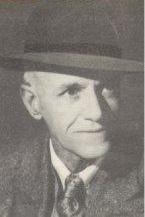
    John Fynn in 1929……certainly not the way the story of his life depicts how he would look!!!

    It’s a pity that most of the articles I found in the loose newspaper cuttings were not dated. One quite long article headed ‘Women of the Inland – When Doctors are Far Away’ told of the way things were before all of Flynn’s ‘dreams’ were realised. As this undated item written by an E Powell noted ‘The fine work of the Inland Mission cannot penetrate everywhere, and the country is so huge, so vast, that it would be impossible for every isolated home to be in touch with the flying doctors, as organised at present. To have their children born in town, many outback women in remote places would have to travel several hundred miles by buggy [camel in drought, horses in the wet season] over impossible country; then take train south for months or weeks of separation and loneliness from children and husbands. Then would follow more weeks of convalescence, and the long journey back, with an infant in arms’.  The dreams and visions of John Flynn, as illustrated in the above ‘obituary’ were always aimed at overcoming those kind of situations. Between  1912 and 1932, Flynn had worked tirelessly to achieve his dream. As the man himself said in 1932, ‘It would not cost so much [for the whole of Australia to be covered by the flying doctor service]. At Cloncurry, it cost us Two Thousand, Five Hundred Pound a year for doctor, pilot and plane; the big expense would be the installation of every homestead with a wireless transmitter, without which the flying doctor service is useless…………..with that equipment and a medical service base, no woman would dread going outback, and no man would be afraid to ask her to. After all, those men inland have a right to wives, and their wives have a right to security’.

    I’m rather indebted to my father for possessing this book, and to the author, who in his time wrote many other popular books of Australian outback life. With the bulk of the Australian population living around the fertile coastal fringes of our island nation, it is \books like those of Ion Idriess, that are sorely missed these days, as those city and town based ‘populations’ have little idea in many respects of the isolation and loneliness that still exists today, though to a much lesser than in Flynn’s time. It’s for that reason, that I’m pleased to be able to continue to support and promote [as I do from time to time through these pages] the inherited work and dedication of John Flynn through our modern day ‘Frontier Services’ organisation.

    Ion IdriessIon L Idriess

  • Saturday, 26 – Sunday 27th November 2011 – a damp and dull weekend in Sunbury [for the reader probably, anyway!!]

    Yes, it’s Saturday morning [26th November], and of course, it’s raining again  – the heavens have been saving up all week for this, just waiting for Saturday to come along!  No cricket, again for Adam, I know he will be disappointed, but the way it has been raining this morning, the grounds will be almost underwater!! Like the sides to part of my driveway, as Susie discovered this morning, when she rather hurriedly tried top back her car out, and was immediately bogged in a couple of holes that had been recreated with the overnight rain!!!  I was hoping for a couple of weeks of dry weather to dry that area out completely, and had been parking there myself, being very careful as to how and where I left the car. Last night, I should have done the same thing, instead went under the carport. When Susie came home late in the evening, she drove straight in and parked on the weak spots!! Had I realised how much overnight rain we were in for, I’d have made sure I was there, which would have avoided this morning’s ‘disaster’.

    Realising what had occurred, I went out to help, but as usual, it was a last minute rush to get to work by Susie, no time for discussion, she would take my car. Stupidly, I omitted to insist she leave her keys behind, as later in the morning, I could have tried to move her car. Instead, now had to wait until she returned early afternoon. In fact, we decided to leave it until tomorrow, she was going somewhere today with someone else so would not need the car, and as it turned out, the rain continued all day, and the ground conditions worsened by the minute. It was a little unfortunate that I had to go out tonight – weather conditions did not offer up my favourite driving environment, especially out on the country roads where I was headed.

    In fact, it was the annual Christmas breakup dinner and presentation night of our casual ‘Betting Club’ tonight, appropriately held at another race course location – this time, the Melton Harness Racing Centre complex over in our neighbouring town of Melton. Didn’t really enjoy the drive to get, late afternoon, in driving rain and somewhat misty conditions, I became a little frustrated at the unusual difficulty I had in finding my way into the complex – eventually we got there, almost by accident, but not before a few expletives of frustration passed these innocent lips. Anyway, it was a relatively short evening, not a large number of members present, and as I was not particularly interested in taking advantage [and losing money] on the range of pokie and other gambling facilities in the place, I was content with being there long enough too enjoy a meal, some conversation with Ron Bourke and others present, and generally enjoy a relaxed environment and some good food.  The surprise of the night, in view of the fact that I’d thought that I had  experienced a rather poor year as far as picking winners for the group was concerned,  was that yours truely in fact was presented with the Award for the most successful tipper of the year –  my periods of selection weekends won the group more money than anyone else!!!  Which indicated I think, that our little Betting Club had not had a very successful year overall, with a fairly small profit available for distribution amongst ‘shareholders’ in addition to the return of our individual fortnightly contributions. A very handy return nevertheless at this time of the year, which is why I refer to my annual participation as ‘Bill’s Christmas Club’ account, that being the purpose to which I put the end of year payout!  Anyway, the little inscription, which appeared on my trophy [the rear half of a racehorse] simply said in as polite a way as was decent  –   “2011 SMART ‘A’ AWARD BILL”  It’s not often that I win anything, so this was all rather flattering to say the least – in fact, the less said, the better!!

    The drive home was an improvement on the forward trip, and it ended up being an early night’s return, which I didn’t mind. Don’t know where Susie was, though I would learn that tomorrow afternoon. Meanwhile, after a non-exciting day, as far as any readers are probably concerned, I called it a night, rather early, though as will be seen, that didn’t give me the advantage of any extra sleep!

    Yes, Sunday morning [27th November] began rather early with this scribe. Despite being in bed at 10pm last night, and  ‘hoping’ for a decent Saturday night sleep for a change, I must have been deluding myself.  Hahahaha!!  Woke at 2.,30am, and that was it!!  Went and made a drink about an hour later, found Susan had not come home from wherever she went, but can’t use that as an excuse. Saturday nights for me a simply not for sleeping apparently, the mind is at it’s most active for the week! I must say however, that SBS were playing some beautiful music as background to their overnight weather pattern program!

    Anyway, after all of that, I was ready well in advance of my usual departure time for the radio station of a Sunday morning, and would have a relatively pleasant program, with little in the way of regrets or thoughts about the lack of sleep. This morning I made sure I played some selections of music from the concerts I’d been to during the past week, including a couple arias from La Traviata sung by Luciano Pavarotti and Joan Sutherland, record at a special celebratory concert held at Sydney Opera House some years ago – both of those singers of course, no longer being with us.  Also played a sample track from the Zephyr Quartet CD, as well as a song from Greta Bradman – not strictly a bit of classical music that one, but simply wanted to demonstrate to listeners, the beautiful quality of her voice.

    Meanwhile, my major musical contribution for the morning came from the C20th Polish composer, Henryk Gorecki, when I played the 2nd and 3rd movements of his Symphony No. 3 [subtitled ‘Symphony of Sorrowful Songs], and while as the title indicated, not a particularly ‘happy’ piece of music, the orchestration, and wonderfully ‘soothing’ voice of the Polish soprano Zofia Kilanowicz, made it quite relaxing music to enjoy at that time of day. I’d played the quite long first movement last week of the lamentation of the Mother of Christ for her dying son. This morning, the shorter movement concerned the prayer of the 18 year old Helena Wanda Blazusiakowna inscribed on the wall of a Gestapo cell in Zakopane, during World War II, as she seeks the protection of the Queen of Heaven.  The third movement, which has quite a large vocal contribution ass part of it, was basically a folk song  in which a mother laments the loss of her son, whose body she now seeks, with the insistent melody of the orchestra pointing to a rather simplistic but tragic and ongoing plea. It ends however, with a expression of hope, allowing the boy, killed by cruel enemies, to rest in peace, lulled by God’s song-birds and surrounded by the flowers  of God. Depictions of beauty and tranquillity amongst the tragedy of loss. I found quite a concise description of the whole symphony on Wikepedia, which summarises the overall music, and the theme behind it’s composition.

    ‘A solo soprano sings a different Polish text in each of the three movements. The first is a 15th-century Polish lament of Mary, mother of Jesus, the second a message written on the wall of a Gestapo cell during World War II, and the third a Silesian folk song of a mother searching for her son killed in the Silesian uprising. The first and third movements are written from the perspective of a parent who has lost a child, and the second movement from that of a child separated from a parent. The dominant themes of the symphony are motherhood and separation through war’.

    The summary goes on to describe in more detail the impetus for putting this symphony together, and I think, goes a long way to explaining how so much of the ‘classical’ music we might hear today, while to many it’s seems meaningless with little purpose, generally has a picture or story to present, albeit in musical terms. For that reason, I’ve decided to copy those comments into my contribution today. I’ll leave the technical musical to the real music enthusiasts to search out!

    In 1973, Górecki approached the Polish folklorist Adolf Dygacz in search of traditional melodies to incorporate in a new work. Dygacz presented four songs which had been recorded in the Silesia region in south-western Poland. Górecki was impressed by the melody “Where has he gone, my dear young son” (Kajze mi sie podzioł mój synocek miły), which describes a mother’s mourning for a son lost in war, and probably dates from the Silesian Uprisings of 1919–21. Górecki had heard a version of the song in the 1960s and had not been impressed by the arrangement, but the words and the melody of Dygacz’s new version made a lasting impression on him. He said “for me, it is a wonderfully poetic text. I do not know if a ‘professional’ poet would create such a powerful entity out of such terse, simple words. It is not sorrow, despair or resignation, or the wringing of hands: it is just the great grief and lamenting of a mother who has lost her son.”  

    Later that year Górecki learned of an inscription scrawled on the wall of a cell of a Gestapo prison in the town of Zakopane, which lies at the foot of the Tatra mountains in southern Poland. The words were those of 18-year-old Helena Wanda Błażusiakówna, a highland woman incarcerated on 25 September 1944. It read O Mamo nie płacz nie—Niebios Przeczysta Królowo Ty zawsze wspieraj mnie (Oh Mamma do not cry—Immaculate Queen of Heaven support me always). The composer recalled, “I have to admit that I have always been irritated by grand words, by calls for revenge. Perhaps in the face of death I would shout out in this way. But the sentence I found is different, almost an apology or explanation for having got herself into such trouble; she is seeking comfort and support in simple, short but meaningful words”.[8] He later explained, “In prison, the whole wall was covered with inscriptions screaming out loud: ‘I’m innocent’, ‘Murderers’, ‘Executioners’, ‘Free me’, ‘You have to save me’—it was all so loud, so banal. Adults were writing this, while here it is an eighteen-year-old girl, almost a child. And she is so different. She does not despair, does not cry, does not scream for revenge. She does not think about herself; whether she deserves her fate or not. Instead, she only thinks about her mother: because it is her mother who will experience true despair. This inscription was something extraordinary. And it really fascinated me.” 

    Górecki now had two texts: one from a mother to her son, the other from a daughter to her mother. While looking for a third that would continue the theme, he decided on a mid-15th century folk song from the southern city of Opole.   Its text contains a passage in which the Virgin Mary speaks to her Son dying on the cross: “O my son, beloved and chosen, Share your wounds with your mother …” (Synku miły i wybrany, Rozdziel z matką swoje rany …). Górecki said, “this text was folk-like, anonymous. So now I had three acts, three persons … Originally, I wanted to frame these texts with an introduction and a conclusion. I even chose two verses (5 and 6) from Psalm 93/94 in the translation by Wujek: ‘They humiliated Your people, O Lord, and afflicted Your heritage, they killed the widow and the passer-by, murdered the orphans.’”  However, he rejected this format because he believed the structure would position the work as a symphony “about war”. Górecki sought to transcend such specifics, and instead structured the work as three independent laments’.

    Tatra mountains, near the Nazi prison in the town of Zakopane, where the composer took an inscription scrawled on the wall of a cell for the composition of his symphony.

    So there we have it, a much more detailed summary of one little aspect of my radio show from this morning, than readers were expecting to get!  I do get a little over enthusiastic about things at times!

    The rest of my Sunday, relatively uneventful, though well occupied, preparing future programs, continuing my ‘Spring clean’ of material collected over the years, decision time continues about what to get rid of, what to keep. Realities of practicality coming into play here!  And yes, Susan returned home mid afternoon – with ex boyfriend, Jimmy. They had been up in Bendigo where she had collected all of her belongings from the ‘apartment’ that I had been paying for through most of the year, but that because of the breakdown in her studies this year, Susie had not spent much time there over recent months.  Unfortunately, the contract was unable to have been broken, so the lease continued until this weekend as it turned out – hence the visit to Bendigo overnight to clear out all her belongings. A bit of a surprise with Jimmy being with her – I’d mistakenly though all contact with him had ceased. But what would I know, presumably Susan had sought his assistance in returning her gear [including a small fridge which she had taken up there] rather than ask myself or others in the family to help her.

    Anyway, before he left, I took advantage of his presence – a chance to get Susie’s out of the bog hole of mud she had got it in to yesterday morning – on the side of my driveway!!  Not that I can claim to have been much physical help, but the two of us were unsuccessful, and the car remained unmovable.  Called Adam, and thankfully, he was still up, having just got home from a longer than usual shift at the bakery – would be straight over. In the meanwhile, Susie rang her other brother James, who was also coincidentally available – though he in true form would time his arrival just after the task had been achieved.  Unfortunately, Jimmy had to go before Adam arrived – he had another appointment, or maybe simply didn’t wish to run into Susie’s two brothers, in view of the year’s circumstances. Anyway, that left Adam and myself p- the former had a few helpful ideas in moving the car, and with a degree of pushing and shoving [and the resulting overall complete destruction of that part of my front garden], we eventually got that damn little car out onto firm ground and concrete, everyone including the car splattered in mud, with a firm promise by Susie that she would not park on that spot again!! And of course, as indicated, the car was freed from it’s little mud sink hole just as James Kirk arrived to ‘help’!! As Susie would write on Face Book later –  ‘Thanks Adam and Bill for unbogging my car!! And James for rocking up just as we got it out.  And James replied –  ‘haha, I timed it to perfection…’  

    The rest of my Sunday – nothing worth writing home about  – although Susie spent the rest of the afternoon cleaning, washing, etc, etc, a bit sudden ‘spring clean’ of the kitchen area etc – with the return of her belongings from Bendigo, we suddenly needed more storage space!! And for myself,  I sat down Sunday night, and watched a movie length version of ‘Brideshead Revisited’, not a show I’ve watched previously, but simply felt in the mood for something of that nature!!


  • Friday, 25 November 2011 – more on yesterday, and an hour in ‘the’ Salon

    A brief follow up from yesterday’s parliamentary proceedings. Ruth sent me a message this morning suggesting that perhaps Peter Slipper is going to compare favourably with Harry Jenkins as Speaker after all?  What have the Liberals [I assume she meant] done? 

    My response was as follows:-   Hi Ruth, I might be slightly biased, but I wonder whether the performance of the Speaker was the motivating priority in the election – his appointment to the position has given the Government two extra votes, a rather big incentive I would have thought in the current political climate. Mind you, Mr Slipper was quick on the job yesterday, during another of Tony Abbott’s censure motions, and while JG was responding – I think he suspended at least three Liberals from the Chamber, and were she not Deputy Leader, I think Julie Bishop would have been given the same treatment, rather than the extra ‘warnings’ she was given – she probably deserved suspension as much as anyone. Sad to say, Tony’s deputy has a rather ‘vicious’ tongue at times!!…………………incidentally, the advantage of not working now, means more opportunity to watch/listen to Federal Parliament which I’ve taken an interest in since school days…………….I was a member of the Young Liberals for a few years, until they started to organise protests and demonstrations ‘labor union’ style, and seemed to be more focused on social functions [this was 40 years ago when a Labor Government was just a dream]……my interest drifted to that of an external observer at that point, and so continues until today’.


    In the meantime, more news from my football team –  the Blues have selected a key position player, a running defender, and a speedy wingman arising from today’s player drafting program. Joseph Bootsma, a rebounding defender with good closing speed and a long penetrating kick. He is a team-oriented player who spoils well;  Sam Rowe, is a strongly built and athletic forward who can take strong marks and has the strength to make a contest every time he competes for the ball; and  Dylan Buckley [selected under the father/son rule], Dylan has great pace and likes to run and carry. Versatile, with effective  disposal.  He is the son of Club great, and one of my favourites from past years,  Jim Buckley, who played in the No. 16 guernsey. I hope us Carlton supporters see plenty of each of these young guys during the 2012 season.

    Now late yesterday, I caught another train into the city, for yes, yet another concert – a short one this time, of just over an hour, in the Salon of the Melbourne Recital Centre. This little session featured a modern quartet of four girls [two violin, one viola and a cello of course] – modern because most of their works seem to of the more contemporary and experimental form of classical music, in fact some pure classicists would argue that it’s not classical at all!! Anyway, I’d not previously heard this group – consisting of Hilary Kleinig [Artistic Director, and on Cello], Belinda Gehlert & Emily Tulloch [on violins], and Lilian-Terri Dahlenburg [on viola]. My main attraction in going tonight, was hear Greta Bradman, the guest soprano soloist, sing. A famous name, as she was in fact the granddaughter of Australia’s greatest cricketer [Sir Donald Bradman]. His other great love was in fact music, and this was obviously where Greta inherited her own musical and singing talents from the times she spent in her grandparent’s home. Greta is described as an Australian soprano and ARIA award nominee, and is a recitalist, concert & stage performer, and recording artist with Sony Music. Previously a psychologist in training, Greta only really made ‘singing’ her full time ‘day’ job last year, and has certainly come under notice since then.  In 2009, the Adelaide ‘Advertiser’ described her in this way  –  ‘ as one of Australia’s finest young singers, and as a exceedingly intelligent and perceptive musician. Her full lyric soprano voice and coloratura ability is drawing great interest and applause for it’s accuracy and unusually large vocal range, warmth and fullness of tone and its capability of great vocal sensibility and flexibility’.  Certainly in the intimacy of the Salon last night, all of those aspects were clearly evident, and at times, I was quite amazed at the height and depth of her voice  – hard to compare her with the Russian singer in La Traviata the other night, as singing completely different genres of music.

    Greta Bradman joined the Zephyr Quartet in two main items tonight. Firstly a piece called ‘The Twilight of Disquietude’, music composed by Natalie Williams [an Australian composer based in the USA], and based on a poem by the early Australian writer, Christopher Brennan [1870-1921] who wrote extensively about his experience of Australia’s harsh and beautiful landscape. This piece linked the dawn of a burning summer day with the passion and intensity of love’s emotional fire. The turbulent feelings of love are an allegory for the real heat of nature’s own fire; the burning of a hot summer sun.  A few lines:-

    Surely my heart the heavens at last

    shall storm with fiery orisons,

    and know, enthron’ed in the vast,

    the fervid peace of molten suns.

    The flame that feeds upon my heart

    fades or flares, by wild winds controll’d:


    Later in the program, Greta sang a series of ‘short songs’ under the title of ‘Sea Chronicles’, music composed by Paul Stanhope. This was a ‘song cycle’ for soprano and string quartet, which celebrates the various dimensions of our coastal environment. The texts and lyrics are all from works by Australian poets, and have been selected to emphasise the celebrative and reflective qualities of the sea, presenting generally, images or pictures of the sea, for contemplation, and they allowed Greta to use the full range and variations of her beautiful soprano voice in line with the diversity of the selected pieces. The extracts of the writings, and the poets used were Victor Daley [The Nightingale], Rex Ingamellis [Sea Chronicles], George Essex Evans [By The Sea], Elizabeth Riddell [Lifesaver], Adam Lindsay Gordon, whose cottage I was looking at in Ballarat last weekend [The Swimmer], and an Anonymous untitled piece about a man on a beach.  Probably the most ‘/dramatic’ of these was Riddell’s work – Paul Stanhope writes ‘The text of the central third movement, while also painting a vivid picture, has a stronger sense of narrative than the other texts; it plays out the drama of a Lifesaver who dies in the course of rescuing others. The Lifesaver can be viewed as a Christ-like figure [suggested by a veiled reference to the Bach chorale ‘O Sacred Head Sore Wounded’ in the central slow section] who sacrifices himself as an upholder of the Australian coastal lifestyle’. So ‘Sea Chronicles’ examines the notion of danger as being an essential part of the beauty and attraction of the sea. A few lines, this time from, ‘By The Sea’.


    Come, friend of solitude, to where

    the low dark jetty meets the blaze

    Of Sky and waters slumbering long,

    Here let us dream while ocean plays

    The mystic chants of golden days’.


    Meanwhile, the music of the Zephyr Quartet was different – I loved in particular a piece called ‘Nautilus’, composed by Hilary Kleinig herself –  a piece written about the sea, its sounds and its beauty. As she says, it uses some of the more unusual sounds that string instruments can make  to produce a haunting landscape – the scraping sounds of a ship at sea, the cries of the seabirds, gulls, etc – quite an enthralling piece of ‘music’.  I was not so keen on another piece called ‘Windmill’ and composed by Stephen Whittingdon [Adelaide born composer and pianist, renowned for his performance of contemporary music  – very contemporary indeed was this piece]. In Australia, the windmill is a symbol of the human determination to survive in an inhospitable climate, of hope, courage and despair. The composition simply presents the continuous sounds of a windmill in operation – as it turns in the wind, pumping up life-giving water in the lonely and often desolate landscape.  The distinctive sounds of it creaking away, stopping occasionally, but always resuming as the breeze picks up again. I found it rather longer in duration than I would have preferred, with the ‘music’ almost becoming monotonous, and it was very difficult to know when the music had stopped, because of the natural stoppages of the windmill, as the wind dies down every now and then, the music hesitated also  – was that the end? Then the girls would start the cycle of creaking and revolving again. Gradually, the stoppages grew longer, and one realised, that eventually, the wind was going to stop altogether – at which point, the music stopped!  Contemporary, interesting, different.


    The music of the Zephyr Quarter did interest me enough, to purchase a copy of their CD on the way out. Yes, I would play the occasional track on my Sunday show, but not the ‘Windmill’ – actually, it wasn’t on the CD, but ‘Nautilus’ was, the impetus to purchase!

  • Thursday, 24 November 2011 – Speaker resigns in Federal Parliament

    I didn’t realise it until early afternoon, but there were more sensations in our Federal Parliament this morning and throughout the day. Apparently, soon after Parliament resumed this morning, the Speaker, Harry Jenkins, announced his retirement from the role, wanted to move to the ‘back bench’ and be an active member of the Labour Caucus again.  To top that off, Labour then nominated a member of the Liberal to be the Speaker, and that member accepted the nomination. Despite the Liberals then proceeding to nominate up to nine members of the Labor Party for the role [all of whom declined], in an attempt to defeat the Labor inspired nomination, Peter Slipper [the Liberal member] was eventually elected unopposed!!

    What this meant, for the government was that the Gillard minority government will get two extra votes and a little more breathing space. Since last year’s election, Labor has had to rely on the votes of three independents and a Greens MP to survive and get its legislation through the lower house.  But the resignation of Speaker Harry Jenkins, to go to the Labor backbench, allowed caucus this morning to put forward Queensland Liberal MP Peter Slipper as their nomination for the role  Having him in the role gives Labor those extra two votes, which will improve the government’s position in getting its measures through parliament.

    Mr Slipper is expected to resign from the coalition, to sit as an independent, after federal colleagues in a meeting in Canberra on Thursday voted that any member who put their name forward for the Speaker role would have to resign from the Liberal or National parties.  Mr Slipper was in the chair on Thursday morning and did not attend the coalition party room meeting.  Mr Slipper was also  under pressure from Queensland Liberal National Party colleagues to resign over a series of issues involving travel and electorate allowances, and while this matter had been under some consideration by the federal Liberals, Tony Abbott had been reluctant to take the matter any further, for fears that the Labor Party would act in the manner it eventually did.  Labor member, Anna Burke, was eventually appointed to the Deputy Speaker’s role, even though she had earlier declined a Liberal nomination that she be the Speaker.

    And my feelings on all that – well, I find the whole situation a little distasteful, and  I think I made that clear on Face Book this afternoon  –  ‘So one of the best H. of R. Speakers we have had, Harry Jenkins, has resigned – or was he pushed, in order to strengthen Ms Gillard’s hunger to retain power? He was a strong and fair Speaker, although both Gillard and Rudd constantly ignored his requests that they follow standing procedures, particularly at Question Time. Constantly frustrated by the tactics on ‘both’ sides’.  I received a brief response from friend Ruth, and followed my earlier comment up with this  –   ‘I’m sure your status update will get a more favourable response Ruth, than mine, which  is likely to antagonise most names on my list – but all seems rather suspect, with the outcome leaving the Government with a clearer majority and extra votes [2] in the House, by nominating a Liberal Speaker [who I guess is no longer required as a member of his Party] strengthened the Government’s position. against normal Westminister procedures – the Government of the day normally provides the Speaker?? Oh well, Parliament just continues to be one farce after another, since 2007, in my view!! Pity, and like everyone else, I will miss Harry’s wit and responses to the occasional rabble he had to deal with – from both sides of the House! Now, think I will withdraw from here before the slings and arrows start arriving ‘

    Meanwhile, the Liberals were quite clear in their feelings on the outcome.  Mr Abbott [leader of the Opposition] said Labor should provide the Speaker from its own ranks, in line with the age-old Westminster convention. “This is bad day for democracy in Australia,” he told reporters in Canberra. Mr Abbott said it should have been Ms Gillard who resigned, not Mr Jenkins. “The Speaker has resigned so that the government can shore up its numbers in the parliament,” Mr Abbott said, “It’s lost its way, it’s lost its majority, and now it’s lost its speaker”.  While, Dennis Shanahan, Political editor for the Australian newspaper would describe it in the following terms, in Friday’s paper –    Today ‘the world of Realpolitik collided with the lofty ideals of Westminster traditions and conventions. Not surprisingly, the cold brutality of political numbers won over the ideals, producing in the short term one of the most chaotic days in parliament for decades, and in the long term a vital one-vote cushion for the life of the Gillard government’.

    Julia Gillard defended the claims of a deal –  her story along the lines of  ‘according to the government, the drama began at about 7.30am when Mr Jenkins told the Prime Minister he wanted to “participate in policy and parliamentary debate” and could not do so as Speaker, a role he had held for four years.  Within an hour, Labor’s leader in the House of Representatives, Transport Minister Anthony Albanese, had offered the job to Mr Slipper. The Queensland MP, Deputy Speaker under Mr Jenkins, had been under pressure in his Sunshine Coast electorate of Fisher by opponents wanting to dump him in favour of former Howard government minister Mal Brough, who lost his seat in 2007. Mr Slipper’s acceptance of the nomination and subsequent resignation from the LNP robbed the opposition of one vote on the floor of the House of Representatives, while Mr Jenkins’s return to the backbench added a number to Labor’s minority government’.

     Despite such claims of a ‘Labor deal’ etc,  to bring this all about  – with reports along the lines of   ‘Julia Gillard has snared a crucial extra vote on the floor of parliament but faces opposition claims she engineered the resignation of Harry Jenkins as Speaker in a grubby deal to replace him with renegade Liberal Peter Slipper’  –    there was plenty of praise flowing around the parliament towards Harry Jenkins, for the manner in which he had always undertaken his role as Speaker of the House of Representatives, and having watched him in action, even up until yesterday, particularly during ‘Question Times’, all of that praise of fairness, knowledge of  parliamentary procedures, etc, was well deserved. His presence and ‘personality’ in the Chair will be sorely missed.  This is the way in which one ‘associate’ on Face Book [a very much Labor  man of course] described the former Speaker  –  ‘To my boss, Harry Jenkins, congratulations on a remarkable 1,382 days as Speaker of the House of Representatives. A Speaker respected by Member’s from all political parties who will continue to be a great advocate for familles in Melbourne’s north as the Member for Scullin’.  Seems a fair enough description of the man.

    As for the man himself, this what he had to say on his parliamentary blog and speech at the parliament today, about ‘his’ decision to  leave the role of Speaker: –

    “Today marks my 1382nd day as Speaker of the House of Representatives. I have at all times tried to uphold the fine traditions of Speaker, and to the best of my ability have attempted to carry out my duties in the most independent and non-partisan manner possible.
    As members are aware in this the 43rd Parliament, to further avoid controversial party political matters I have divorced myself from involvement with the Federal Parliamentary Labor Party. In this era of minority government I have progressively become frustrated at this stricture. My desire is to be able to participate in policy and parliamentary debate, and this would be incompatible with continuing in the role of Speaker.
    As a consequence, when I vacate the Chair at the end of this short statement I will visit the Governor-General to tender my resignation as Speaker of the House of Representatives.

    I thank all members for their co-operation which they have dispensed to varying degrees depending upon the individual. I thank everyone who works for the Department of House of Representatives under the capable leadership of the Clerk Bernard Wright and the Deputy David Elder; they serve us well. My gratitude goes to the diverse range of officers of the Department of Parliamentary Services: from gardeners to guards, technicians and tradies, researchers to reporters, Hansard; they serve us well. To presidents Hogg and Ferguson with whom I served as co-presiding officer, and the members and officers of the other place with whom I had interaction, I thank them for their forbearance. All these people ensure that the Australian Parliament remains an enduring effective institution. My staff in the Speaker’s Office have assisted me and kept me well grounded; I believe that members would agree with me that they carry out their duties with integrity and professionalism. Finally I acknowledge my eternal indebtedness to my “trouble and strife” Michele and the four generations of my family without whose support I would never have been able to achieve the high office I hold.
    Late yesterday I ascertained that the Governor-general is available for my call before 9.30 therefore I must depart. I go placidly with my humour intact. I wish you all well’.

     Well, pushed or not, Harry’ like his father before him, who was also a Speaker of the House of Representatives, ensured that he departed in his usual genuine style which as always, earned the appropriate  respect and admiration of all.

    .An interesting event [and continuation of some of the farce situations that have dominated Parliament this year] took place once Question Time got under way. On most occasions this year, Tony Abbott has interrupted Question time [which is televised nationally] towards the end of the televised hour, by moving a motion to suspend standing orders to allow him to move a motion of ‘No Confidence’ [or motions of similar nature] against the Prime Minister and her Government – because of the slight numerical advantage on the government’s side, those motions have always been defeated, but Abbott persisted with the procedure time after time. While I personally felt that was another case of Abbott going ‘overboard’ with his style of political tactics, the thing I found most distasteful, was that every time he did this, Julia Gillard would get up and leave the Chamber, which I thought poor tactics, and left her looking ‘gutless’ and unable to face what was being said about her and her government. She did the same thing yesterday – got up, and left her deputies to face the music and respond to the motions of no confidence.  However today  – perhaps she was advised to remain, or personally felt it would look better for her to remain behind  –  Tony Abbott rose to the despatch box after just one question had been raised [about the ‘secret deal’ involving the Speaker], and immediately it became clear that he was going to move another ‘Suspension of Standing Order’, the PMs deputy [Treasurer, Wayne Swan] joined her at the Government bench, while amazingly, the majority of the rest of the Labor members began to walk out.  The result left Tony Abbott almost speaking to an empty set of Government benches, apart from the Prime Minister and her Deputy  –  his speech [another virtual motion of no-confidence] was supported by his deputy, Julie Bishop, whom I find has quite a ‘bitter’ tongue at times, and today was no exception – perhaps because she is a woman speaking and directing her vitriol towards another woman means she can get away with a little more a man making the same speech would  – anyway, despite being a supporter of the Liberals, I’m not convinced that either Tony Abbott or Julie Bishop would be the appropriate duo to be running this country, were the Conservatives to regain  power. Meanwhile, during Julia Gillard’s response to this two-pronged attack [yes, for a rare change, she had remained in the parliament to defend both herself and her government rather than leaving that up to one of her deputies] the new Speaker made his presence felt, with constant warnings towards many of his former colleagues, and in fact, suspending at least three Liberals from the House for an hour or so!! And I think that had Julie Bishop not being the Deputy Leader, she would not have been given a couple of extra warnings, that others in her Party did not get before being suspended. Perhaps it might have done her some good to have been thrown out for a while, I sometimes feel she deserves it!! Needless to say, by the time the vote was taken on this ‘motion of no confidence’ or whatever, all of the Government members were back in the Chamber to ensure a clear defeat of the motion.

    This week is basically the end of the parliamentary year, but I can’t help feeling, that in looking back over the 2011 Parliament sessions, that so much time has been wasted by endless debates purely of a political and personal nature, time that should have been better spent on debating and working at the real issues of national significance – too often, we have seen legislation rushed through before the end of parliamentary sessions, as time for completing business runs out, and this has not almost being the government’s doing  –  the constant negativity that has become the style of current Opposition leader, Tony Abbott – a negativity that has overshadowed real meaningful arguments and alternative policy proposals – has led to this situation and seen many parliamentary hours wasted, and sometimes I wonder, to what purpose!

    Now I briefly got away from all of this parliamentary turmoil, and went into the city late this afternoon, for another concert  –  we might raise the details of that occasion on the morrow.


  • Wednesday, 23 November 2011 – Mining tax through in early hours of this morning.

    I jumped the gun a little the other day, when I talked about the passing of the mining tax [Minerals Resource Rent Tax (MRRT) – mining tax to most people].  That in fact happened overnight, although it still has to get through the Senate, next year now! As the following report describe the occasion, it’s the Gillard government’s second big economic reform but the mining tax has passed parliament’s lower house in the dead of night with just four people watching on [hopefully, this means in the gallery, and that there was obviously a reasonably full complement of members on hand to vote at that time!].  Unlike the carbon pricing package, there was no applause, hugs or kisses. The Minerals Resource Rent Tax Bill 2011 passed the lower house in the early hours of Wednesday after a marathon sitting day. Voting on the bill and 10 associated pieces of legislation didn’t begin until almost 0030 AEDT.  The vote on the bills finished at 0242 AEDT. Treasurer Wayne Swan said the historic reform meant all Australians would share in the benefits from the country’s non-renewable resources.

    The 30 per cent tax to start on July 1, 2012 is expected to generate about $12 billion to 2013/14, which the government will put towards a company tax rate cut, infrastructure and an increase in the superannuation guarantee rate from nine to 12 per cent. It covers big coal and iron ore companies. An Australian Greens attempt to include gold and uranium mines as well was rejected by Speaker Harry Jenkins on the grounds it would lead to the laws being unconstitutional.  However, independent MP Andrew Wilkie’s change to increase the profit threshold at which the tax kicks in, to $75 million from the previous $50 million, became part of the final legislation. This was part of Mr Wilkie’s deal with the government to secure his vote. Greens MP Adam Bandt told the chamber on Monday he couldn’t vote for the MRRT with Mr Wilkie’s amendment because it would lead to a shortfall in revenue of $100 million over five years. But Labor agreed late on Tuesday night to a new revenue measure to offset this amount. Mr Bandt told journalists in Canberra a condition of the deal was the Greens couldn’t reveal any details of this measure but he said it wasn’t a new tax.\ In the final votes, he sided with the government. However, he said earlier his party colleagues reserved their decision on how they would vote in the Senate, depending on how the legislation was amended in the lower house. Other amendments that WA Nationals MP Tony Crook said would make the tax fairer for smaller mining companies were defeated. These included a 10 million tonne threshold so small mines were not taxed, exclusion of magnetite ore and a commitment that the whole mining industry would not pay the tax earlier or at a higher rate than the big three miners.  The Minerals Resource Rent Tax Bill 2011 will now go to the Senate for debate next year. 

    Why do we need this mining tax [MRRT]? According to one answer given to that question, is that currently, mining companies are extracting non-renewable resources from Australia’s soil. States and territories receive a royalty tax from mining companies to pay for the removal of such resources. The Australian Government believes that current charging arrangements are inadequate and have led to exploitation of Australia’s non-renewable resources by the large mining companies. As the price and demand for minerals has increased, so have the profits of the mining companies, yet the charging arrangements have not been reviewed to take this into consideration. The proposed MRRT would also lead to the distribution of mining revenue to the whole of Australia and not just those states fortunate enough to be resource-rich. It would also serve to simplify the complicated excise and royalty agreements which currently exist.  The proposed tax was first mentioned as a Resource Super Profits Tax in the Henry Tax Review, which highlighted the inefficiencies of Australia’s current tax system

    Anyway, hopefully I was asleep at the that when our politicians finally retired for the night/morning  –  and although it was well after 1am before I got to bed, I was awake again at 6am or thereabouts – but today, decided my on air local sports report would take place via the phone, at 6.45am. Oddly, Susie was up and about at that time also – she had another early shift at the bakery today. I actually sent Adam a message before I went on air, assuming he had also been working since the early hours – was hoping to get a result from last night’s round of local 20/20 cricket to include in my results, with most of the weekend’s cricket, bowls, etc, having been washed out because of the rain on Saturday. But, didn’t hear back from him.

    Today, coolish conditions expected, 19 degrees with a few showers. Not sure if I will do much outside in any case, suffering a little from an infected toe at present, which is annoying me somewhat, don’t really want to have to go back to the doctor and seek out some antibiotics, but that is usually the only way the problem remedies itself. My home treatment doesn’t seem to work. Annoying!

    I’ve noticed a report from the professional organisation I will resigning from at the end of the year – the CPA [Certified Public Accountants] –  regarding their monthly magazine ‘INTHEBLACK’ which is CPA Australia’s flagship publication.  Apparently this month, INTHEBLACK received two Publishers Australia Excellence Awards.  The magazine was awarded ‘Relaunch of the Year’ and named ‘Association or Member Organisation Magazine of the Year’.   Recognition of the new direction in presentation and content layout, etc which has appeared over the past year or so  – while there has not always been a great deal of material in the magazine which has been of major relevance to my major work roles, I do consider the standard of INTHEBLACK these days to be quite excellent and something that all CPA members can rightly be proud of. When I formally resign from the CPA [not prepared to pay the high subscription rates as a non-worker in the future], I will also discontinue with the magazine subscription as well, as I doubt I will have the time or the interest to devote too much time to reading the contents. As indicated somewhere else, plan to try and put that aspect of my life in the past, and look ahead to new challenges, etc.

    Meanwhile, my football team is making an enthusiastic start to it’s preparations for the 2012 season [I seem to recall being promised a late birthday present by my daughters of a 2012 member’s ticket now that I have ‘more free time’ to go to games – might remind them about that some time soon!]. Monday was the start of a big week for the Carlton Football Club. The action commenced around 7:00am at Visy Park as the players started arriving for the 7:30 meeting that signalled the commencement of pre-season training in Australia for the 2012 season. Dylan Buckley, although not officially a Carlton player until he is selected with Carlton’s third round selection, number 62 overall, in Thursday’s National Draft, was one of the new faces at Carlton’s first training session at Visy Park today.  Nick Heyne, who was previously on St Kilda’s list, also joined the Carlton players on the track at Visy Park. Nick has been given permission to train with the Blues after being delisted by the Saints following the 2011 season. Other new faces at the first session included new Assistant Coach Paul Williams and new Fitness and Conditioning Coach Joel Hocking.  While not on the training track, Carlton’s new General Manager Football Operations, Andrew McKay, was also a new face as the Blues commenced preparations for the 2012 season. Andrew officially commenced in his new role last Friday with today being like a first day with all the players and coaches returning to work. It will be a busy first week for McKay with training commencing and then the National Draft in Sydney on Thursday evening and two more new faces to welcome to Carlton for 2012. All the players were involved in the running and general fitness activities during the morning that included a running test in the warm up area of the facilities at Visy Park. There was little time for the players to rest as they got down to business for 2012. The promise of a continuation of Carlton’s slow climb up the ladder over recent years is very real,. And  hopefully, a season to look forward to.

    Received an email this afternoon from the ‘new me’ back at the office – sending me copies of the monthly financial report for my perusal and verification, probably should have done this tonight, but deferred it until the morrow, will be happy when my ‘connections’ are no longer needed in that area.


  • Tuesday, 22 November 2011 –Bill’s night at the Opera.

    I noticed that today’s media was reporting that the tragic nursing home fire in Sydney at the end of last week, has claimed it’s 7th victim this morning.  Two people who died during the fire on Friday morning have not yet been formally identified.  Another 29 residents remain in various hospitals across Sydney. A nurse at the facility, Roger Dean, is charged with four counts of murder. The fire broke out at the aged care facility on Hambledon Road, Quakers Hill, about 5am on Friday. Strike Force Westall, led by the Homicide Squad with assistance from the Property Crime Squad and North West Metropolitan Region, was formed to investigate the incident.  As indicated, a man has been charged with four counts of murder and remains before the court.

    As the title suggests, I had a night at the Opera this evening, and quite a long night, it was indeed, when combined with the train travel, etc, added some hours to the venture. Well, after 6 decades or more of enjoying music, and going to many different genres of concerts, etc, this was my first ever visit to the opera. Performed at the State Theatre in the Arts Centre, and viewing from a rather nice aisle seat up in the Balcony [when I go to these things alone, I don’t mind or bother about purchasing the most expensive seats, and this in fact suited me just fine], I was there to see the opera written by Giuseppe Verdi – ‘La traviata’ –  an opera in three acts based on the play ‘La dame aux camelias’ written by Alexandre Dumas in 1852. Set in 1890’s Paris, La Traviata has become  for many fans, the ultimate romantic opera, and I’m rather glad in retrospect, that I chose it as my first experience of that medium.
    Apparently the first performance of the opera took place at the Teatro La Fenice, in Venice, on the 6 March 1853, and this production was first performed here in Australia at the Sydney Opera House on the 19 August 1994 [took a while to get to Australia!!]. Now one thing I have learnt from tonight’s show  – I might need to brush up on my Italian for future operas!  This production was sung in Italian, as is generally the case, but at least we did have English sub-titles flashed  up above our heads over the stage. Quite well done, although admittedly, quite often, I would barely glance at that, concentrating on merely enjoying the music and singing, and watching the action on the stage – having thoroughly read the Synopsis, prior to each Act [there were two intervals], I was fairly familiar with the storyline, and what was going on. In basic terms, the story deals with a wealthy young man who falls in love with a modern day equivalent of a prostitute [in French circles, referred to as a well to do courtesan], they move in together, but eventually, she is persuaded by his father and family to give him up for the sake of the family’s ‘reputation’.  In the bend after much drama and heart ache, they are reunited in love, but all late, as she is close to dying from tuberculosis. A very short précis of a tragic story of love and loss. More detail in a moment.

    A highlight of the production which particularly impressed me were the period costumes, the atmospheric sets and the stage lighting – loved the affect in the Autumn scene of the very occasional leaves fallen from the tops of the unseen trees on the stage! But, while I have no clothing expertise, anything interested in that aspect would have been enthralled with the period costumes, beautifully done.  The main performers tonight were the Russian soprano Elvira Fatykhova making her Melbourne debut as Violetta Valery; Aldo de Toro as her man, Alfredo Germont; his father, Giorgio Germont played in wonderful contrast to the younger cast by Michael Lewis; while the unobtrusive role of Violetti’s caring and concerned  maid, Annina, was performed by Teresa La Rocca. The orchestra was Orchestra Victoria, and in addition to the other main roles, we had magnificent singing from the Opera Australia Chorus team. I have to agree with one writer who noted that the real power of this opera lies with Verdi’s grand choruses and the intimate arias and duets, and of course with those who were performing them.

    Let’s have a look at each Act to get a better picture of the storyline.

    ACT I – Spring

    Violetta has been to a sanatorium to treat her tuberculosis. On her return to health she throws a party to mark her re-emergence in the demi-monde under the protection of Baron Duphol. Her guests have just completed a long lunch and the Baron is reading the last pages of a novel by Dumas to Violetta as Flora, a rival courtesan, enters with her protector the Marquis. Alfredo is introduced to Violetta by the decadent Gaston. Alfredo has begged Gaston to introduce him to Violetta. He has long been enthralled by her and has enquired after Violetta every day of her illness. Violetta insists that everyone sits together and drinks a toast to the occasion. Alfredo is prevailed upon to sing a drinking song from Provence. As the guests leave to dance in the ballroom, Violetta feels faint and is momentarily left alone. Alfredo re-enters and confesses his love for her. She asks him to return the following day. After her guests leave and she is alone Violetta begins to consider the conflicting feelings of love and hedonism that are pulling her in opposite directions.

    ACT II – Autumn

    Scene I

    Violetta and Alfredo have been living together for three months in a house in the country. When Alfredo discovers that Violetta is selling her belongings to pay for their expenses he is conscience-stricken and leaves to visit his father, to raise some money. His father however has decided to call on Violetta to persuade her to give up Alfredo. Alfredo’s sister hopes to be married soon, and his relationship with Violetta jeopardises the family’s honour. Violetta realises that as a ‘fallen woman’ she would destroy Alfredo’s family and consents to leave him. She decides to leave instantly and writes a message to Alfredo, breaking off their affair. When Alfredo receives the message he is distraught and, despite his father’s attempts to console him, rushes off to wreak revenge on Violetta.

    Scene ii

    A party is being held in Flora’s house. Alfredo enters to join the gambling party. When Violetta enters on the arm of the Baron she freezes with tension. Alfredo begins to insult the Baron and the two rivals meet over cards, and Alfredo, unlucky in love, cannot lose a hand. The game is interrupted by dinner. Violetta begs Alfredo to leave before Duphol seeks revenge. Alfredo insists she comes with him and, in desperation, she says she loves the Baron. Alfredo publicly humiliates Violetta and throws money at her as payment for her services. Alfredo’s father reproves him for such behaviour.

    ACT III – Winter

    It is early morning and Violetta is sleeping. The doctor has given her only a few hours to live. Violetta rereads a letter from Alfredo’s father, telling her that the Baron was wounded in the duel with Alfredo and that Alfredo may have left the country. But Alfredo has been told by his father of Violetta’s sacrifice and he returns — only to be confronted by the dying Violetta. He humours her by telling her that they should plan a new life away from Paris. Alfredo’s father has followed him and enters, followed by the doctor. Violetta suddenly feels revived, ready to start a new life with Alfredo — but this is only the symptoms of the last moments of her disease and she falls dead.

    Now for many reasons, opera is not the most favoured of classical music mediums, and perhaps the fact that the theatre was not full is a clear indication of that – in fact I was a little surprised at just how many vacant seats there were up in the balcony area at least, think it was much more populated down in the stalls. The State Theatre is a beautiful theatre, perfect for such a production – came here with the girls and Shirley last year to see ‘The Nutcracker’ [my first ballet], and I also saw the Production Company’s presentation of ‘The King and I’ here in 2010.  I did notice that between Acts, there was quite a deal of noise involved in changing the sets on the stage [behind the massive thick curtains of course].

    And did I enjoy La Traviata?  Certainly yes, for all the reasons indicated above, and over the past couple of years, it can be ascertained from the variety of concert genres I have been to, that I can and do enjoy a range of musical styles and entertainments.  There are just a couple of factors that could put a dampener on such outings. One is that I usually go alone. Generally, I don’t mind very much, although there are occasions such as tonight, when some company would have been welcomed, although I can’t really think of anybody at this point whom I could feel comfortable about imposing a night at the opera upon!!!  A clear minority favour that medium. My other concern is physical, and this applies these days to any event I attend, be it sporting, music, or whatever – the restriction of being confined to a precise seat, and basically being unable to move for long periods of time, is proving to be quite difficult [and at times painful] for this ‘old’ concert patron!! I guess it’s a kind of arthritis, but whatever the complaint, it is dammed annoying  –  there are many events that I would like to go next year, and with the concession prices now applicable to me, the attraction is even greater. But do I want to expend that money, time and travel requirements, to be constantly uncomfortable during performances? That is a decision that needs to be reached between now and the new year. Hopefully the development over coming months of a more physical exercise regime may help overcome those ‘leg’ problems to some degree, but at the present time, it does add a slightly disappointing to many of my ‘outings’!!

    Tonight also, was a long trip home. I’d driven to the outer Melbourne suburb of Watergardens [about 20 minutes from Sunbury] and parked the car at the train station there, knowing that tonight’s performance would finish ‘after’ the last train to Sunbury – caught a suburban electric train in. That was okay, but at the end of the night, I missed a couple of trains coming out this way – ended up on a rather slow 11.17pm train which did a circuit of the city underground loop before heading north west to Watergardens, and my vehicle. So it was after midnight when I got to the car [which admittedly I was glad to see, having been a little concerned about leaving my car in a suburban railway car-park until late at night!!], ands it was close to 12.30 am by the time I reached home. Two consecutive nights home after midnight!! Glad I didn’t have to work either of the following days!  I found a beautiful bowl of homemade soup, which Susie had apparently being experimenting with, and had left for me.  Susie does very little cooking, but on the odd occasion that she gets around to it, the result is generally very tasty.  Despite the ingredients probably not being the idea sustenance for a diabetic, I enjoyed that post midnight dish, nevertheless!!

    That was Bill’s night at the ‘opera’!!


  • Monday, 21st November 2011 – old jobs, music relaxation, mining taxes, and cricket wins

    Caught the 7.38 train to the city this morning –  room to breath, not over crowded, and 40 minutes of reading time, plus a bit extra on the 30 minute tram trip out to Northcote. Why am I going back to the VPTA?  My replacement has started work, and Jackie wanted a bit of a handover, and to tidy up a few things.  The new ‘accountant’ is a Chinese lady, named Jing [or thereabouts], reasonably experienced in most of the areas the job required, but as with any new role in a different organisation,  a ‘new’ set of procedures, and ways of doing things need to undertaken and learnt to some degree initially, and then, like myself, go off and do things the way you want. I’m certainly hoping that I won’t need to return, would like to put all of ‘those ways of doing things’ [in my mind anyway] behind me – at present, I don’t seem to have let go completely, and still have concerns about certain little tasks  getting finished, etc. I suppose the best approach for me would be to simply disappear for a month, but as expected of this personage, I’ve made myself available to answer questions and queries from Jing per phone or email should she have any concerns from time to time. I am honestly hoping however that won’t happen often, and that life at the VPTA will move on very quickly without Bill, who will soon be forgotten!!Strangely, a couple of the tenants I ran into during my 6 hours at the place today hadn’t forgotten me, yet – ‘you are missed, Bill’!  Thankyou!

    Anyway, Jing was quickly learning one aspect of the job – that she will be constantly alone in that office – Mark was away sick today [he seems to be looking for any excuse these days not to be in the office], whilst Jackie herself was still unwell, as she had been when I was here 10 days ago. So despite the above indications that I was finding it hard to ‘pull away’ from my former workplace, I really am pleased that this is just a one-off visit!!

    Returned to Sunbury a little earlier than planned – Susie didn’t appear to have been out anywhere, and was in fact asleep late this afternoon. However, that didn’t stop her from heading out this evening, after advising me, whilst I was halfway through preparing the evening meal that she would not be eating at home!!!  Almost like a stranger passing through the home at the moment –  flitters in and out, and when in, seldom leaves her room[s], friendly greetings on arrival or departure, but little other communication unless I ‘almost force’ a conversation, and one has to be careful to ‘pick the right’ moments for that also!!  Ahhh well, another meal cooked for two or more, but eaten alone.  I will in fact be out two or three nights this week, which will probably be the nights someone will be looking for a meal!  Bad luck my dear!

    In view of all the foregoing, I was looking forward to my three hours on the radio tonight, and while during the program, I didn’t get any feedback in the form of phone calls, etc, I thought I presented a very entertaining and varied program of music from the various genres of folk, blues, world, country, pop, band, oldies, and of course, a bit of relaxing last 30 minutes of ‘cool’ late night jazz!! Was tempted to keep going beyond midnight this week with no commitments tomorrow morning, but when that hour came along, decided it was time to pull the plug and call it a night. At one stage during the night, I even read a short poem to the listeners, with the music of a harp & the sounds of the Australian bush playing soothingly away in the background.  A poem called ‘The Land Where I Was Born’ by Shaw Neilson, the Australian poet I quoted from the other day in these pages. Meanwhile, a couple of tonight’s folk songs were beautiful pieces of music –  The Quail by a duo named ‘Laneway’, the sad story of the death of a little bird, and the beautiful ‘The Black Tree’ performed by the duo of Stu Larsen & Lydia Cole.  Later in the evening, during a brief ‘international’ segment, I played a song by the British folk singer Jackie Oates called the ‘Isle of France’, a little story about a French convict rescued by the coastguard. Also began a new feature tonight – music from the ‘Bakelight Express’ –  a marvellous 2CD set of music and songs put together in part of ABC Classic FM presenter and personality, Christopher Lawrence – a collection of classic nostalgic music from the 1920s through to the 1950s, some jazz, some from musicals, and some just plain whacky, packed with many favourites, and hidden gems, hopefully something to please both old and young.  Tonight’s selection –  Jitterbug featuring Cab Calloway & his Orchestra, recorded back in 1934!

    Meanwhile, on the ‘national scene’, Federal Parliament today finally passed the controversial ‘mining tax’ proposals, which of course generated both praise and ridicule, depending upon your political side of the fence. As reported through various media sources this evening, miners have accused Julia Gillard of risking the future of the coal and coal-seam gas industries after she secured parliamentary support for her new mining tax by promising to impose new environmental conditions on projects.   And the opposition has accused the Prime Minister of damaging the burgeoning CSG sector to placate independent MPs Tony Windsor and Rob Oakeshott, who face pressure over gas expansion in their own electorates  The claims came after Ms Gillard yesterday revealed the independents had agreed to vote in favour of her minerals resource rent tax in return for the commonwealth forcing states to confront concerns about damage from drilling to underground water supplies. The Prime Minister announced she would create a special body of experts – the Independent Expert Scientific Committee – to work with state governments on “best practice” for coal and CSG projects. If the states refused to co-operate, she would legislate to empower the commonwealth to block new CSG projects not subject to proper environmental scrutiny by requiring approval under the Environmental Protection and Biodiversity Conservation Act While Labor MPs saw the outcome as a major parliamentary victory for Ms Gillard – and Mr Windsor hailed the start of “a new ball game” for the mining sector – the Minerals Council of Australian said it was worried about red tape and duplication.  This is the last sitting week of Parliament for 2011, and I think this was the last piece of ‘major’ legislation that Gillard wanted to get through parliament. Looking back over the year, I think people would be shocked at just how ‘few’ days, our Federal politicians actually sit in Parliament. I must try and find out the exact sitting days for 2011, and I think we will find that the percentage of 365 days is very small!!

    At the same time interesting [a concern for Tony Abbott I would think] to note that the most recent polls are revealing that Julia Gillard’s personal standing has risen, putting her in front of Tony Abbott as preferred Prime Minister for the first time in six months. I personally put that down as more of Abbott’s doing, than any particular extra favour for the current PM. He doesn’t ‘help himself’ so often with many of his responses and ideas!

    Of course, it was well after midnight by the time I returned home last night – not in the mood for sleeping, but surprisingly, Susie was in bed [rare for her ‘this’ early] [an early departure in the morning, I would discover, was the reason!]. Anyway, I watched the replay of Question Time from the House of Representatives, until I remembered that the 2nd Cricket Test between Australia and South Africa was in it’s concluding stages. Over to ABC radio, and until around 2am, I listened to a very tense and exciting last hour of play, with the Australians struggling to score the required 310 runs for victory, and of course, South Africa trying to get our wickets!!

    Australia have pulled off a remarkable two-wicket victory over South Africa to square the two Test series.y Images Australia won by 2 wickets. Captain, Michael Clarke described Australia’s two-wicket win as the greatest of his career. Pat Cummins, 18 year old first game Test player, was named man of the match after a thrilling win over South Africa in Johannesburg. Following his six wicket haul in South Africa’s 2nd innings, and his match saving innings with fast bowler Mitchell Johnson at the end of the game. No side had ever scored more than 294 to win in the fourth innings at the Wanderers, but this team that could only manage 47 last week in Cape Town finished on 8-310. While Cummins hit the winning runs and won a man of the match award in his maiden Test, it was Australia’s most maligned senior players who pulled off one of the most remarkable victories to beat South Africa and level the two Test series one-all. The win was engineered by a trio who many believed may have been playing their last Test innings. Brad Haddin, public enemy number one after his awful slog in the first Test, scored an invaluable 55 from 106 balls. Mitchell Johnson, who has taken just three wickets for the entire series, then came to the crease and crafted a magnificent 40no. “After a horrible batting performance in Cape Town, something we certainly weren’t proud of, we managed a record run chase today in tough conditions.Ricky Ponting, Mitchell Johnson, Brad Haddin, they stood up and they deserve a lot of credit for that.” Clarke, in stark contrast to his emotions after Cape Town, could not stop smiling last night.

    Final scores were:  Australia: 296 and 8 for 310 defeated South Africa 266 and 339, levelling the series at one win each.