Author: jkirkby8712

  • The Coachbuilder’s Column: Volume 15: Issue 10: 24th June, 2025: some selected reading over recent months

    This contribution looks at a number of books and other publications which I have read and examined over the past two or three months, as listed briefly below.

    • Australian Foreign Affairs, Issue 23 ‘Planet Australia’;Escaping America’s Orbit’.   
    • Quarterly Essay No. 97: ‘Losing It. Can we stop violence against women and children’ [by Jess Hill];
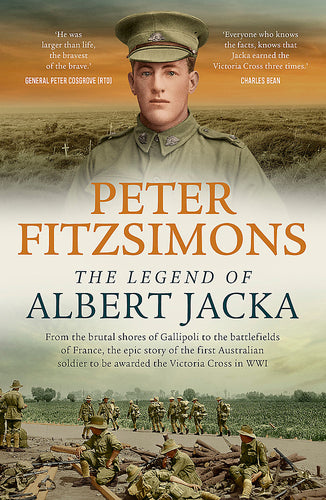
    • Memorial Days’ by Geraldine Brooks [2025]; 
    • The Fallen Woman by Fiona McIntosh [2024];
    • Lyrebird by Jane Caro [2025];
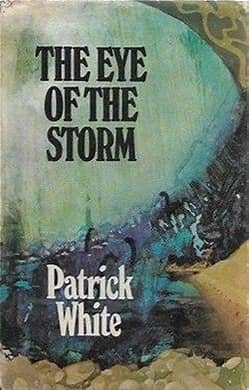
    • The Historian: To you perceptive reader, I bequeath my history,  by Elizabeth Kostova [2005];
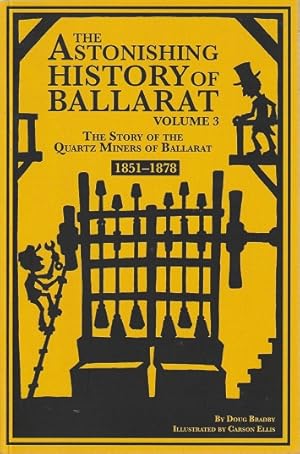
    • The Astonishing History of Ballarat, Volume 3: The Story of the Quartz Miners of Ballarat: 1851-1878  by Doug Bradby [2020];
    • Quarterly Essay No. 98 headed ‘Hard New World: Our Post-American Future’ by Hugh White.

    What is Australia’s place in the new global landscape?

    • ‘Until August’ by Gabriel Garcia Marquez’ [2024]; and,
    • ‘Melaleuca’ by Angie Faye Martin [2025].

    14th March

    Australian Foreign Affairs’ publication, Issue 23 titled ‘Planet Australia: Escaping America’s Orbit’.   

    This 23rd issue of Australian Foreign Affairs  [a publication issued three times a year] explored Australia’s changing fortunes as Donald Trump returns to the White House and threatens to dismantle the diplomatic, economic and defence foundations on which Canberra has long built its security and prosperity. It examines the consequences for Australia as some of its most important friends and partners – including India, Indonesia and the United States – shift towards authoritarianism and illiberalism. Featuring special contributions from our three most recent ambassadors to the United States, Planet Australia looks at how Australian leaders and diplomats should deal with Trump and prepare for looming challenges to the alliance, open trade, and a secure and stable Asia.

    Essays included:

    • James Curran explores Australia’s relationship with the US in the age of Trump. He points to the fact that the America Australia has become accustomed to, is changing.
    • Emma Shortis argues that Canberra should be bold as the global order shifts. Among other things, suggests that Trump does not care about Australia, so why should be cosy up to him, it won’t make Australia any safer.
    • Susan Stone analyses Trump’s economic plan and how Australia might benefit, in a fairly detailed analytical approach to that aspect of the economic relationship.
    • Kim Beazley, Joe Hockey and Arthur Sinodinos discuss the diplomatic challenges facing Australia in Washington DC. An interesting set of views from three former ambassadors. From Beazley – “Trump will be more disruptive and les predictable, but Australia is well placed to protect and advance its own interests’.  Hockey: “No matter what, the United States has [historically] had ‘disruptors in chief’ before. It’s institutions and constitution are robust enough to cope with the strain’.  From Sinodinos: “Swlf-reliance is not a code for appeasing China, we have stood up to China in recent years and weathered the trde and economic coercion  that followed – self-reliance also means putting our own house in order [and] in Trump world, the fate of regional groupings hangs in the balance”.

    Other items included a discussion of Kevin Rudd’s recent book ‘On Xi Jinping: How  Xi’s Marxist Nationalism Is Shaping China and the World’  –   worth a read I feel, although as Rudd himself warns, it is ‘a heavy read’ and parts of it have a deep textual analysis which might defeat the ordinary readers [where I might place myself]. The other interesting book review is of ‘Gret Game On: The Contest for Central Asia and Global Supremacy’ by Geoff Raby.  The reviewer suggests that Raby doesn’t cover in much detail the real states of central Asia – Kazakhstan, Kyrgyz Republic, Tajikistan, Turkmenistan, and Uzbekistan –  those areas or of interest to myself, I’d like to find a book specifically about their history and people, other than through this publication.

    28th March

    Quarterly Essay No. 97:  ‘Losing It. Can we stop violence against women and children

    What will it take to stop gendered violence?  This was a quite disturbing, and worrying essay, extremely well researched by Jess Hill, author of ‘See What You Made Me Do’

    What went wrong? Australian governments promised to end violence against women and children in a single generation. Instead, it is escalating: men have been murdering women at an increased rate, coercive control and sexual violence is becoming more complex and severe, and we see a marked rise in youth-on-youth sexual assault. Why?

    In Losing It, Jess Hill investigates Australia’s National Plan to End Violence Against Women and Children to find out what’s working and what’s not – and what we can do to turn things around. This compassionate, ground-breaking essay lifts the lid on a national crisis.

    “Over several years I often heard the same misgivings from academics, bureaucrats and frontline workers: many believed the [prevention] strategy … was too abstract and disconnected from the front line; that it did not reach the boys and men it needed to, and at worst was actually promoting backlash. Many were – and still are – afraid to say so openly.” – Jess Hill, Losing It.

    20th April

    Tonight, I finished reading ‘Memorial Days’ by Geraldine Brooks, published in 2025, just 207 pages,  a short easily read personal story full of pathos, unbelievable grief, and a reckoning with the inevitability of loss.

    In 2022. The award winning book ‘Horse’ by Geraldine was published, and I made comment on that book in the Coachbuilder’s Column that year.

    She was partway through the writing of that book, when, on Memorial Day in the USA, May 27, 2019, she received a ‘cold’ phone call from the local hospital, to tell her that her much loved husband, Tony Horwitz, had collapsed and died on the street, far from home, in the middle of his own strenuous book tour. The complex tasks required in the face of such a sudden death left her no time to properly grieve for him. Three years later, still feeling broken and bereft, she booked a flight to Flinders Island off the coast of Tasmania [where she and Tony had spent some together]. There, she pondered the ways other cultures deal with mourning and finally seized the time and space she needed for her own grief. Alone on a rugged stretch of coast, she revisited a 35-year marriage filled with risk, adventure, humour and love.

    ‘Memorial Days’ is Geraldine’s story of the loss of her husband and the immediate months that followed, the eventual publication of ‘Horse’, and her healing period of isolation on Flinders Island. A short book, short chapters, alternating between the immediate weeks following Tony’s death, and her time on Flinders Island.

    If readers feel this story might help with their owe loss of whatever nature, I recommend a read, In the meantime, four short quotations from ‘Memorial Days’.

    • [On Flinders Island] – Two of my friends approach, their faces grave. How an earth did they get here? One gently reaches out and touches my shoulder. ‘You said you wished there had been someone there with you, the last time, so we’ve come here to tell you….An immense dread. I wake up, heart pounding. The nightmare expresses my life’s sudden precarity. I absolutely cannot afford to lose anyone else [p.167-168];
    • Night is an even better time to be out here. If the island’s rocks put me in my place, it’s stars do, too. Nature is a remorseless reminder of human insignificance. Daytime, nighttime – there’s no escape from the realization of how little we matter [p. 191];
    •  I have written this because I needed to do it. Part of the treatment for ‘complicated grief’ is to relive the trauma of the death, returning to the moments again and again, striving each time to recall more detail. That’s what I have tried to do. [p.202];
    •  The time on Flinders Island  allowed me to set down one of the bundles in the baggage of my grief.  It’s the grief I’d been carrying for the life I would have had, the life U=I had counted on having.  It was the life with sunset-facing rocking chairs, growing old with Tony beside me, laughing, arguing over the news, revisiting shared memories, and taking pride as our sons moved confidently into manhood. That life is gone, nothing will get it back. I have accepted that.  I have embarked on making the life I have as vivid and consequential as I can. Do your work, said Bader Ginsburg. So, that is what I do [p. 204];

    23rd April

    The Fallen Woman’ by Fiona McIntosh [published in 2024] of 431 pages  –  an English historical fiction novel set in the English countryside, in a forgotten orchard and beneath the ancient spire of Salisbury Cathedral, basically a heart-wrenching story of family betrayal, loss and tragedy, the love of an unwanted  child, and the potential, almost lost through misunderstanding,  of a new previously undreamed of life, about a woman who finds that in her darkest hour, she can harness her greatest strength. The author, an internationally acclaimed best-selling Australian who roams the world for her writing research, and lives between Adelaide [SA] and Wiltshire, England.  An enjoyable read, away from the more serious deep-thinking non-fiction reads of recent times.

    In basic summary – Botanical artist Jane Saville is devastated when her manipulative mother banishes her to the countryside to protect someone else’s honour. Isolated far from home, she is forced to live an impoverished, secretive life to save the family from public shame.

    Guy Attwood is heir to a fortune, but prefers his quiet passion for rare-apple hunting on behalf of Royal Kew Gardens to building the family’s business empire. He sets out to find a critically endangered apple species that he dreams of gifting and re-naming for his friend, the soon-to-be coronated George V.

    When the paths of these people from two very different worlds collide, Jane begins to hope for a different future, but their new friendship is shattered by jealousy, misunderstanding, duty and treachery. A young boy will inspire Jane to defy the powers working against her and prove she is no woman to be outcast.

    Released into the congested Christmas market for 2025, The Fallen Woman went straight into the National Top 10.  Since then, it has consistently been praised as a favourite – if not THE favourite – of McIntosh’s recent historical novels.  It is Fiona’s 44th title.

    23rd April

    Another light read – ‘Lyrebird’ by Jane Caro [published in 2025], of 360 pages.   A modern crime thriller set within the Maitland – Newcastle – Barrington Tops area of NSW, when an ornithology student comes across a lyrebird in the remote Barrington area which she videos as it projects a variety of mimics, one of which is that of a woman screaming in terror, and realising that the lyrebird does not create its own  sounds but mimics those it hears, takes her video to the police, who after a cursory and ‘scornful’ investigation, drop any subsequent searches etc. Despite support from the newly minted detective, Megan Blaxland, with no missing person reported and no body, her evidence is ridiculed and dismissed. 

    Twenty years later, the remains of a woman are found in the area where the student had claimed the screams had been recorded. As well as an original mystery murder thriller, this novel also considers issues of injustice and prejudice, the slavery of the Asian sex-trade, and the vivid description of a major Australian bush fire in which many of story’s participants get caught up in.

    15th May

    I’ve just completed reading ‘The Historian: To you perceptive reader, I bequeath my history’ written by Elizabeth Kostova [published in 2005], of 642 pages. When I began this book, I wondered if I’d get through it, not quite in the mode of novel I generally prefer – the historical aspect of the novel was quite fascinating, but in my eyes, the unreality of what was been depicted went a bit far! However, the further I read, the more I was drawn in and keen to see the novel’s outcome.

    Bram Stoker wrote the novel ‘Dracula’ in 1897, and this was produced in 1992 as an American Gothic horror film. In 1462, Vlad Dracula returns from a victory in his campaign against the Ottoman Empire to find his beloved wife Elisabeta has committed suicide after his enemies falsely reported his death. A priest of the Romanian Orthodox Church tells him that his wife’s soul is damned to Hell for committing suicide. Enraged, Vlad desecrates the chapel and renounces God, declaring he will rise from the grave to avenge Elisabeta with all the powers of darkness. He then drives his sword into the chapel’s stone cross and drinks the blood that pours from it, becoming a vampire.

    Elizabeth Kostova’s novel is based on that story of Dracula, and the repercussions of his curse on a number of scientists and historians some 500 years later and set principally during the post -WWII period in the Communist controlled countries of eastern Europe at that time. It is a novel that blends fact and fiction to create a compelling story. The novel follows an unnamed narrator who accompanies her father, Paul, on a journey across Europe in the early 1970.

    The San Franciso Chronicle described her novel as – ‘The record-breaking phenomenon from Elizabeth Kostova is a celebrated masterpiece that “refashioned the vampire myth into a compelling contemporary novel, and a late-night page turner’. [Though perhaps not a book to read late at night with just oneself as company ☹].

    The novel is best summed up as follows from Kostova’s website

    Late one night, exploring her father’s library, a young woman finds an ancient book and a cache of yellowing letters. The letters are all addressed to “My dear and unfortunate successor,” and they plunge her into a world she never dreamed of, a labyrinth where the secrets of her father’s past and her mother’s mysterious fate connect to an inconceivable evil hidden in the depths of history.

    The letters provide links to one of the darkest powers that humanity has ever known and to a centuries-long quest to find the source of that darkness and wipe it out. It is a quest for the truth about Vlad the Impaler, the medieval ruler whose barbarous reign formed the basis of the legend of Dracula. Generations of historians have risked their reputations, their sanity, and even their lives to learn the truth about Vlad the Impaler and Dracula. Now one young woman must decide whether to take up this quest herself–to follow her father in a hunt that nearly brought him to ruin years ago, when he was a vibrant young scholar and her mother was still alive.

    What does the legend of Vlad the Impaler have to do with the modern world? Is it possible that the Dracula of myth truly existed and that he has lived on, century after century, pursuing his own unknowable ends? The answers to these questions cross time and borders, as first the father and then the daughter search for clues, from dusty Ivy League libraries to Istanbul, Budapest, and the depths of Eastern Europe. In city after city, in monasteries and archives, in letters and in secret conversations, the horrible truth emerges about Vlad the Impaler’s dark reign and about a time-defying pact that may have kept his awful work alive down through the ages.

    Parsing obscure signs and hidden texts, reading codes worked into the fabric of medieval monastic traditions-and evading the unknown adversaries who will go to any lengths to conceal and protect Vlad’s ancient powers-one woman comes ever closer to the secret of her own past and a confrontation with the very definition of evil. Elizabeth Kostova’s debut novel is an adventure of monumental proportions, a relentless tale that blends fact and fantasy, history and the present, with an assurance that is almost unbearably suspenseful-and utterly unforgettable.

    Looking for reviews of the book, we had both sides of extreme reactions – I’ve chosen one which is basically in tune with how I felt about the story but does also highlight some of the reasons why people did not like the story or writing style. One Book Club member wrote:

    “This is actually the second time I’ve read this book. For a first novel, it is outstanding. I was completely engrossed in the story. I really love history and the whole Dracula lore. I thought it was a great mix of both. It added a lot of suspense that made me read it with the lights on. I think I read it in about four days, I just couldn’t put it down. I will say this though, if you are not really into history or researching, I would skip it. If you are wanting to read it just because it has to do with Dracula, I would pick a much smaller book. However, I just love history and research (duh, I work in a library) so it was right up my alley. Actually, I’m doing a little research on it myself. I did read some of the comments on Amazon.com and wasn’t exactly surprised by the comments. It was either a “love it” or “hate it” book. That is why I throw my caution out there. Basically, people who didn’t enjoy it were out for a Dracula story and thought the history was “a drag”. I’m really into history so I thought it was pretty damn good. I will say I did discover a few historical inaccuracies, but I think I’ll let them fly for now. 😉All in all, a good read, especially for a rainy day.”:
    In sharp contrast, amongst many criticisms, but especially with regard to the ‘letters’ which form the basis of the novel, someone wrote – — “Unbelievably detailed letters! Now I have read a number of great books that use the format of letter writing to convey the plot. But this? Ridiculous. Not only are these letters insanely long, but they are insanely detailed as well, creating yet another reason why the book and the characters are completely unbelievable. If that’s how the author wanted to write this, why did she do the letter thing at all? “

    [I have to admit, that at times, it wasn’t always initially clear who was writing which particular letter, although that was eventually recognisable]

    19th May

    Another fascinating little  touch of Ballarat gold-mining history –  the book was titled ‘The Astonishing History of Ballarat’, Volume 3: The Story of the Quartz Miners of Ballarat: 1851-1878  by local author Doug Bradby, published in 2020, of 266 pages, personally signed by the author.  I have read, quite quickly at the time, many of Doug’s historical little books about Ballarat  –  this one I found to be much more technical, with lots of tables, and statistics, with his usual predominance of quotations of newspaper articles, etc –   which is probably why reading was deferred so any times over recent years [since being given to me at the end of 2021] and diverted to other reading material, finally returning to the book recently

    In 1856, at the height of the alluvial goldrush, Ballarat produced 823,334 ounces of gold. By 1878 the figure was a mere 12,984 ounces. Ballarat was ‘on its last legs’. However, in the Black Hill [near my former Ballarat home], Llanberris [where my Saturdays were spent at the subsequent athletics track in the 1960s], Temperance and Imperial mines, miners had developed efficient ways to find and extract gold from quartz.  Ballarat now had a fighting chance  of surviving.  Thank heavens they persevered, comments Doug Bradby. 

    This Astonishing History of Ballarat, Volume Three tells the story of those undervalued, marginalised miners, who from 1851 to 1878, laid the foundations for Ballarat’s transition from alluvial to quartz mining

    Speaking about his book for the Ballarat Times newspaper in July 2020, Bradby, in an article written by Edwina Williams, said “this period was one of great difficulty for miners trying to make a living in Ballarat, with the press describing the local industry as being “on its last legs.” This is when they know the alluvial gold in the buried rivers will run out and they’ll have to make a painful transition to an industrial, complex quartz mining system,” Bradby said. “They know at some point, they’ll have to go back to finding where the quartz came from, smashing it, and getting the gold out.

    “Ballarat in the 1870s was in diabolical trouble, in a depression. They struggle, and struggle and struggle, and by 1878, they haven’t succeeded, although there’s persistence and resilience from four mines that get better and better.”

    He said the three decades were packed full of conflict.

    There’s a big riot in Lydiard Street South, with thousands of men involved, laws are broken and shafts filled in. Another interesting story is a tar and feathering at the Temperance Mine in Little Bendigo.”

    All volumes of The Astonishing History of Ballarat have been timelessly and whimsically illustrated by Carson Ellis, a former history student of Bradby’s at North Tech.

    “He does a fantastic job. The cartoons bring out the seriousness of the situations, instantaneously and affectively summarising what’s going on,” Bradby said.

    7 June

    Quarterly Essay No. 98 headed ‘Hard New World: Our Post-American Future’ by Hugh White.

    What is Australia’s place in the new global landscape?

    Are we ready for our post-American future? In an era of rising danger for all, and dramatic choices for Australia, Hugh White explores how the world is changing and Australia should respond. We confront the world’s deepest and most dangerous international crisis in generations. The old global order faces direct challenge in three crucial regions, including our own. War has already engulfed Eastern Europe and the Middle East, and the risk in East Asia grows. White explores Australia’s responses to these crisis and lays out, in stark terms, the hard choices ahead and explains how we can make our way in a very different world I must day, those ‘stark terms’  were somewhat unsettling, especially with respect to his warnings about the potential use of nuclear weapons as a ‘last’ or ‘accidental’ resort!

    Under Donald Trump, America’s retreat from global leadership has been swift and erratic. China, Russia and India are on the move. White explains the big strategic trends driving the war in Ukraine, and why America has “lost” Asia. He discusses Albanese Labor’s record and its post-election choices, and why complacency about the American alliance – including AUKUS – is no longer an option. This essential essay urges us to make our way in a hard new world with realism and confidence.

    Hugh White breaks his essay up into a number of scenarios including:

    • American revolution;
    • What happens when America steps back from the role which has defined the global order for over three decades?
    • Putin’s gambit;
    • Russia’s invasion of Ukraine has brought nuclear weapons and the threat of nuclear war back to the central position in international politics that they occupied throughout the cold war;
    • Ukraine’s predicament and the future of Europe;
    • The balance of power in Asia;
    • The end of the world as we know it, yet Australia is not acknowledging that fact:  Australia today faces the biggest shift in our international circumstances since Europeans first settled here in 1788.

    A few quotations from the essay highlighting just a  snippet of  points from White’s ‘warnings’ and possible world scenarios, some of which may seem to some readers to be ‘over the top’ and almost scare-mongering, while writing how he sees it!!!

    [1] “The Canberra establishment is shocked by any suggestion that we should walk away from the ANZUS commitments. They think we can and must depend on America more than ever in today’s hard new world. But that misses the vital point. It is America that is walking away from the commitments it made in very different circumstances seventy-five years ago. That was plain enough under Joe Biden. It is crystal clear today under Trump.”—Hugh White, Hard New World

    [2] “But perhaps the most important reason why America and its allies have for so long downplayed the significance of nuclear weapons is that they raise a very awkward question. Is Washington willing to fight a nuclear war to defend the post-Cold War order, as it had been willing to do to contain the Soviets in the Cold War?  This is a question that no one in Washington wanted to consider too carefully, because they suspected the answer would be ‘no’. Now Putin has forced them to confront it, and Joe Biden gave the answer they all feared. Even before the invasion, he promised that, whatever happened, America would not go to war to defend Ukraine because, as he repeatedly said, ‘We will not fight the third world war in Ukraine’. His meaning was very clear, especially to people like him of the Cold War generation to whom the ‘third world war’ means only one thing – a full-scale nuclear conflict…Was he right to fear this?  Was the risk of nuclear war serios enough to deter Washington and its allies from giving Ukraine the only kind of help that would help it to win……………….US intelligence analysts assessed there was a 50 per cent chance that Putin would authorise the use of tactical nuclear weapons to prevent further losses. Putin certainly spoke as if that was so……But the Biden administration took his threats seriously….They were right to do so. A decision to use nuclear weapons would have been unprecedented, but so were the circumstances…[and from Putin’s viewpoint regarding any hint by to Biden to break his promise]….. would Putin have taken Washington’s threats seriously? Would he really have believed that Biden would risk [losing] New York and Washington  to save Ukraine? Or would he have called Biden’s bluff?”

    [3] and briefly on the Middle East tragedies: “It should not have been hard for the Biden administration to work out a response to the tragedy in Gaza that matched its professed commitment to avowed values and international law. The argument is not, after all, so very complex. Israel has a right to exist within secure and internationally recognised borders. The Palestinians have a right to a state in the West Bank and Gaza. Israel has refused to countenance the establishment of such a state. That does not justify Hama’s crimes on and since 7 October 2023. Equally, those crimes do not justify Israel’s assault on Gaza since then. Both sides are deeply in the wrong………..Upon that basis the Biden administration could have constructed a policy that accorded with its claims to global leadership.  Instead, seemingly from sheer moral and political weakness, it went along with the Netanyahu government’s crimes, tacitly adopting the view so neatly described by Tom Stevenson. ‘Any violence committed by Palestinians justifies all violence by Israel, and no violence committed by Israel justifies any by Palestinians.’ That is the opposite of leadership. Trump’s policies on Gaza are, of course, even worse, but they are less hypocritical. He doesn’t pretend to defend universal values, international law and the old vision of US global leadership.  In this respect the most prodigious liar in the history of US politics is more honest than his opponents”.

    20th June

    Tonight, I did indeed finish reading ‘Until August’ by Gabriel Garcia Marquez’ [published in 2024], just 129 pages   – basically, to my mind, a short romance, described by his son in the Preface as ‘not as polished as his greatest books’, none of which to this point in time, I’d sadly not given myself the opportunity to read.

    The reason for that description – little book published 10 years after the author’s death [in 2014] – in the words of his son again  –  “The memory loss our Father suffered in his final years….the way that loss diminished his ability to write with his customary rigor was a source of desperate frustration for him ….’Until August’ was the fruit of one last effort to carry on against all odds. The process was a race between his artistic perfectionism and his vanishing mental faculties” 

    Not long before his death Gabo’s final judgement ‘This book doesn’t work. It must be destroyed’. The family didn’t destroy it but set it aside, and as his family said “In an act of betrayal, we decided to put his readers’ pleasure ahead of all other considerations…it’s possible Gabo might forgive us’.

    Amongst other plaudits the ‘Guardian’ wrote ‘Few writers can be said to have written books that have changed the whole course of literature. Gabriel Garcia Marquez did just that’.

    So, having read Marquez for the first time, through this little book, I would think that description of his literary skills highly over-inflated.  Quite obviously I need to search out some of his original novels, of which there are at least seventeen which I’m assuming the basis of the ‘Guardians’ assessment related to.

    Until August by the Colombian author and  Nobel Prize Winner   –  romantic, sensual, a profound meditation on freedom, regret and the mysteries of love – you can read it at one sit  –  Goodreads, in describing the book as ‘an unexpected gift from one of the greatest writers the world has ever known’ – summarises the story briefly as “Sitting alone beside the languorous blue waters of the lagoon, Ana Magdalena Bach contemplates the men at the hotel bar. She has been happily married for twenty-seven years and has no reason to escape the life she has made with her husband and children. And yet, every August, she travels by ferry here to the island where her mother is buried, and for one night takes a new lover.  Across sultry Caribbean evenings full of salsa and boleros, lotharios and conmen, Ana journeys further each year into the hinterland of her desire and the fear hidden in her heart”.

    Meanwhile, I believe I have some enthralling explorations of Gabo’s literature ahead of me!

    23rd June.

    ‘Melaleuca’ by Angie Faye Martin, published in 2025, of 419 pages.  I think I saw a review of this book in the Ballarat Courier, made a note if it, and later searched it out.

    Easily read, a basic murder mystery set in in a small rural Australian ‘fictional’ township about 200 kms west of Brisbane on the Sturt Highway, which even came with a sketch map of the town which all of it’s major features as referred to in the book. Perhaps Queensland was an apt selection for this book with it’s strong references to Australia’s Indigenous history at the hands of colonisation, and the injustice and racism typical of Australia in those times, and particularly the early squatters and settlers of Queensland, though the setting is in later generations.  Described by one author as ‘A blistering outback noir that doesn’t flinch away from Australia’s Indigenous history at the hands of colonisation’. Meanwhile, the author herself, as someone who grew up in regional Queensland, the places and people of Angie Faye Martin’s Melaleuca are viscerally recognisable. 

    In summary – A country town, a brutal murder, a shameful past, a reckoning to come… The injustices of the past and dangers of the present envelop Aboriginal policewoman Renee Taylor, when her unwilling return to the small outback town of her childhood plunges her into the investigation of a brutal murder.

    Renee Taylor is planning to stay the minimum amount of time in her remote hometown – only as long as her mum needs her, then she is fleeing back to her real life in Brisbane.

    Seconded to the town’s sleepy police station, Renee is pretty sure work will hold nothing more exciting than delivering speeding tickets. Then a murdered woman is found down by the creek on the outskirts of town.

    Leading the investigation, Renee uncovers a perplexing connection to the disappearance of two young women thirty years earlier. As she delves deeper and the mystery unfurls, intergenerational cruelties, endemic racism, and deep corruption show themselves, even as dark and bitter truths about the town and its inhabitants’ past rise up and threaten to overwhelm the present.  Or as described by another author: ‘Powerful First Nations crime noir that interrogates law enforcement and how it intersects with Indigenous victims’.

    While in reading, one can develop one’s own ideas about who the ‘guilty parties’ are, the eventual unexpected revelations may still come as a surprise, which I guess should be the aim behind an authentic crime novel.  If readers like an easily read mystery with a strong connection to historical injustice and not so past social issues, this is the book for you.

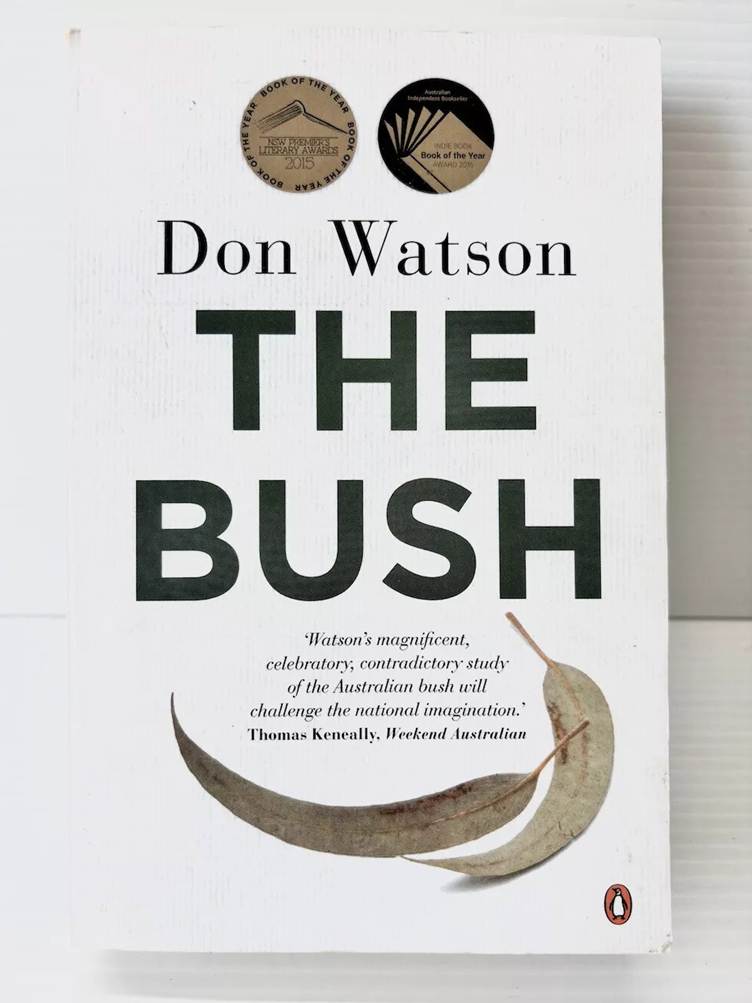
  • The Coachbuilder’s Column: Volume 15: Issue 9: 16th April 2025: some reflections about ‘The Bush’ written by Don Watson.

    ‘A magnificent, celebratory, contradictory study of the Australian bush, which challenged the national imagination’, so wrote Thomas Keneally in the Weekend Australian newspaper, in describing ‘The Bush’ by Don Watson [published in 2014], a Penguin edition of 427 pages, which I completed reading two months after it’s purchase.

    I found this book by Watson, some ten years ago, a fascinating history of Australia taken from a different perspective – yet despite that fascination, it was not an easy 427 pages of reading, mainly because of the depth of detail and broad range of subject matter that Watson included – not just about the ‘bush’ as such, but so many different aspects of life in this country in the early and nor so recent of European settlement. As noted by the reviewer whose opinion I have included later, this book could well be aptly described as a ‘meandering book’.

    A couple of other statements about this book, amongst many, include:

    • A milestone work of memoir, travel writing and history. The Bush takes us on a profoundly revelatory and entertaining journal through the Australian landscape and character [nsw.gov.au];
    • The Bush offers a narrative  that includes Indigenous people, colonists, settlers,  and migrants in a wide-ranging and sophisticated appreciation of our bush heritage [The Newtown Review of Books].

      I list below, some examples of that ‘meandering’ and ‘wide-ranging’ coverage,  though these really only scratch the surface of the full content.

    • about the people in lived in the bush, and either cared for it, or more often  were challenged by the differing environments [compared to what they were perhaps used to] both prior to and after European colonisation [or if you prefer the term, European invasion];
    • the relationship between early towns as they developed from the original bush settlements and farming communities;
    • descriptions of the brutal and generally one-sided clashes between the squatters and early settlers which generally resulted in massacres of hundreds, maybe thousands of the original Indigenous  inhabitants [in Queensland alone, as Mary Durack wrote “it became the view of white people that western Queensland would only be habitable when the last of the blacks was wiped out’ [p.329];
    • the vividly detailed discussions throughout the book,  of the plant, animal and bird  life both before and after European settlement, and the disastrous way often, those elements changed as settlement and changes to the environment took place;
    • the manner in which the native animals and birds were so often considered [and subsequently annihilated] as opponents of what those early settlers wanted to achieve in turning the lands they came across to their own advantage and use [one such ‘pest’, the emu, was virtually wiped out of existence in some areas [for, eg, when speaking of  national emblems of the kangaroo and the emu, Watson notes [on p. 377] that “In 1944 emus were declared vermin and in the next fifteen years the bounty of 4 shillings per beak [and six-pence for eggs] was claimed on 284,704 emus”;
    • the consequences of prolonged droughts, and floods, disease, rabbit and mice plagues, which often resulted in the prolonged deaths of thousands of cattle and sheep [with such outcomes continuing to be a modern day hazard of farming,  as is currently being experienced in parts of Queensland from the effect of floods];
    • Finally, in his closing chapter,  titles ‘Waiting For The Fire’, Watson talks much about the vegetation and wildlife [and how it also has changed] in the area of his current home base – which is Mount Macedon here in Victoria, where is a few kms north of my own home in Sunbury; this includes the manner in which the original trees of the area were gradually by basically ‘imported’ trees, and that environment further changed from the asfter—affects of bushfires, the most recent of course being the tragic Ash Wednesday fires of February 1983.  

    In that chapter, Watson writes on p.365: “A fire will come to Mt. Macedon one day and burn us all out. People will say we should never have been allowed to live here. Too much fuel, they’ll say. Bloody idiots, they’ll say. Don’t know anything about the bush. I’m inclined to agree. Probably our houses should sit on an acre of lawn or gravel surrounded by curtains of poplars and pistachios, fire resistant exotics, which have slowed, stopped or turned bushfires in recent years. We would not be living in the bush of old, but who does?  And even if the surrounding vegetation were nearer to pristine, is it living in the bush to work in the town or the city and spend the evenings in the spa on your entertaining deck….”  

    And much more, going so far beyond what one might expect from simply looking at the book title of ‘The Bush’ However, one generally shared view of this book reveals how misleading that impression is.

    From ‘Goodreads”

    ‘Most Australians live in cities and cling to the coastal fringe, yet our sense of what an Australian is – or should be – is drawn from the vast and varied inland called the bush. But what do we mean by ‘the bush’, and how has it shaped us? Starting with his forebears’ battle to drive back nature and eke a living from the land, Don Watson explores the bush as it was and as it now the triumphs and the ruination, the commonplace and the bizarre, the stories we like to tell about ourselves and the national character, and those we don’t. Via mountain ash and mallee, the birds and the beasts, slaughter, fire, flood and drought, swagmen, sheep and their shepherds, the strange and the familiar, the tragedies and the follies, the crimes and the myths and the hope – here is a journey that only our leading writer of non-fiction could take us on. At once magisterial in scope and alive with telling, wry detail, The Bush lets us see our landscape and its inhabitants afresh, examining what we have made, what we have destroyed, and what we have become in the process. No one who reads it will look at this country the same way again. ‘Nothing he has written quite matches the wonders of The Bush . . .’

    Whilst reading through the book, I highlighted many areas and sections that I wanted to share as an indication of the wide expanse of subjects which Don Watson covered in this highly acclaimed piece of writing. However, as an alternative to my ‘cutting and pasting’, I’ve decided to share an excellent review of ‘The Bush’ as written by Rosemary Sorensen in November 2014 in the ‘Sydney Review of Books’. This is quite lengthy, but worth a read for those who feel that the contents might be of interest for a complete read at some stage, something that Rosemary, right at the beginning suggests is essential for all Australians.  Though I fear most would not bother!!

    From the Sydney Review of Books by Rosemary Sorensen [2014]

    This is a book every Australian should read. The kind of people we are, the kind of nation this is, the big myths and the way they have been forged – these are the stones with which Watson’s builds his book.

    When my stout Sealyham terrier trod on an ant, she yelped so piteously I took her to the vet. A smear of salve on her paw, I headed back to our bush block blaming Don Watson. If his magnificent book The Bush had not included information about the bull ants known as jumping jacks, the sting of which can cause a fatal anaphylactic reaction, I might have rubbed the pooch’s paw, told her to toughen up, and taken her home to another girth-expanding treat, rather than to the vet, where we discussed jumping jacks. The vet said she had come across them when she was a kid and remembered the bite was nasty. We talked too about how many snake bites she had treated already this spring (four, not bad for October). I told her I had been reading Watson, and was trying hard to modify my hatred of the browns and blacks we encounter throughout summer as they hunt bushrats and frogs, turning up when you least expect to see them. As Watson told a gathering in Bendigo Library a few weeks back, more Australian deaths have been caused by horses than snakes, but we don’t take to horses with spades every time we see one.

    The vet had never heard of Don Watson. This is, I think, about as odd as my not knowing, until Watson told me in The Bush, that koalas have a design-fault, due to their being descended from wombats. Their pouches open downwards, but the fortuitous development of a ‘kind of drawstring’ prevents the baby koala falling out. We love our fabulous and unique animals and like to boast about their cuteness or scariness – but not so much that we bother to become educated about them, and certainly not enough to be ashamed about the brutal ways we have found to slaughter them across the years. And to be fair (if that’s the right word), the killing of non-native animals has an equally macabre history. If it moves, chop it up; if it doesn’t, chop it down.

    Brought up on a Gippsland dairy farm and educated at La Trobe University, Watson has lived for the past eight years in the bush at Macedon, 60 kilometres north of Melbourne. My vet, whose practice is in Castlemaine, another 60 kilometres up the Calder Highway towards Bendigo, likes to read and is interested in many things, but in my brisk run-down of Watson’s career, only the reference to his having written many of Paul Keating’s speeches connected. Ah, she said, did Watson write the Redfern speech? Her question would, perhaps, make both Watson and Keating grimace, since Watson’s account of that 1992 speech in his memoir, Recollections of a Bleeding Heart (2002), prompted a public argument between the two men about who had the right to claim authorship.

    The Bush is not likely to enter the popular discussion with nearly as much drama and force as that speech, or that book, or that controversy. But it deserves to. This is a book every Australian should read. The kind of people we are, the kind of nation this is, the big myths and the way they have been forged – these are the stones with which Watson’s builds his book. The Bush is many roomed, with many staircases leading up to attics where junk is stored and down into dark cellars where the bodies are buried, and with balconies overlooking gardens and outhouses. It is time for the ignorance to end. What kind of education leaves out such intriguing facts as the koala’s ingenious pouch, or any of the other information Watson imparts about the fauna of the country we live in? As for the flora, speaking as someone who latterly has become enamoured, if not overwhelmed, by the multitudes of flowering trees and shrubs we live among, what kind of nation not only works hard to remove most of them, but also leaves more than half its plant species unclassified?

    Ignorance of which way a koala’s pouch opens is not a heinous crime, it’s true, but my failure to know supports Watson’s suggestion that there has been, since European arrival and settlement, a general lack of interest – which swerves towards belligerent animosity – in the continent’s natural history, just as there has been a tendency to elide uncomfortable facts about the history of colonisation. Sometimes, as in the complete lack of reference to Indigenous Australians in the Waltzing Matilda museum at Winton, which leaps from the age of the dinosaurs to the arrival of pioneering pastoralist Ernest Henry ‘in a single bound’, this signals what Watson calls ‘cowardice’. He wonders, in his eloquent and sometimes sardonic way, why it is that other countries with vicious and even genocidal pasts can talk about their history and acknowledge what happened in order to understand why, but in Australia we prefer to uphold the bush tradition of pretending certain things never happened, or at least finding euphemisms to neutralise them.

    What happened to Indigenous people when the British turned up is an essential part of the history of the bush, and in his second-last chapter, ironically titled ‘No smallness in it’, Watson uses accounts written by the white settlers themselves to refute claims that ‘dispersal’ did not mean killing and that the numbers do not indicate genocidal intent. He goes on to describe meeting Tom Donovan, a man of Kalkadoon and Irish-Afghan descent, who has scratched out a living in the vast cattle country around Mount Isa. This contemporary portrait sits alongside a description of how the spinifex and brigalow country, like so much land across the continent, has been changed by fire, grazing, development, salinity, clearing and the extraordinarily stupid introduction of weeds and pests. The portrait of Tom, with his no-bullshit attitude and his passion for fossicking, allows Watson to approach his account of frontier violence in a steady and personalised way, a technique he uses beautifully throughout the book, which is balanced between historical accounts, analysis, commentary and challenging inquiry.

    No matter how many times you read first-hand accounts of frontier violence, they never lose their distressing impact. After a description of Tom Donovan’s stoic and suicidal tendency to consider snake bites a part of life, the chapter takes us to Battle Mountain, 100 kilometres north-east of Mount Isa, where in 1880 about 200 Kalkadoon were killed by Inspector Frederick Urquhart’s assault party in reprisal for the killings of several people over a number of years. Watson doesn’t follow up Urquhart’s story, although the Australian Dictionary of Biography, after mentioning the ‘slaughter’ of Kalkadoon at Battle Mountain, tells us Urquhart went on to take charge of the criminal investigation branch of the police force and that, despite his ‘vindictive and tyrannical nature’, he was appointed Queensland’s chief inspector in 1905, with the support of political friends. The Dictionary also tells us he was considered ‘well read’, with a ‘cultivated intelligence’, and apparently wrote a book of verse titled Blood Stains.

    Watson does not treat his readers with anything less than respect. He never overstates the bleeding obvious, such as the cruel logic by which, time and again, a white death was avenged by the deaths of dozens of Indigenous people. Neither does he sell us short; his selection of information is delivered in prose that has the cadence of an elegy, but with a sharp edge:

    In 1883, at Lawn Hill station in the far north-west, a travelling companion of the intrepid Caroline Creaghe told her ‘he saw 40 pairs of blacks’ ears’ nailed around the manager’s walls. The manager, Jack Watson, was notoriously ‘hard on the blacks’. In the east, Korah Halcomb Wills, the first mayor of Bowen, whose daughter married the manager of the Australian Joint Stock Bank, was hard on them too – ‘for the good of the whole civilized world’, he said. For the good of his soul, perhaps, while the rest of a hunting party looked on, he dissected and flayed the flesh from an Aboriginal man and took the skull and bones home in his saddlebags. In his day, the blacks were ‘dispersed in hundreds if not thousands’.

    No underlining of the awful irony is necessary when Watson later quotes from the papers of Sylvester Doig, who justified his murderous ways by pointing out that the Indigenous people did not have ‘any idea of the English law of trespass’.

    Much of the power of these pages comes from the almost casual build-up. Watson, on the road as he has been for much of the book, arrives in a cloud of dust at Hughenden in north-central Queensland. You have seen the inside of the hotel he describes, if not in reality then in one of those popular gothic-horror Australian films about psychopathic bush murderers. ‘No hotel actually being used for the purpose of serving food and drink ever hosted a more miserable scene,’ Watson writes, and adds a few more sentences that circle almost delicately around his distaste:

    One could not be happy in that hotel. If it had any good purpose at all it would be as evidence in the case for hunting and gathering.

    He gathers his strength, controls his anger, and marshalls his powers for what he must go on to write. His next paragraph takes us to the heart of the area’s terrible history, which the people of Hughenden, some of whom can be found slouched at the bar in that dreadful hotel, continue to refuse to acknowledge as terrible:

    Evidence for the case against that way of life can be found a few kilometres east at Skull Creek, one of the many going by the name in Australia. There is another one – Skull Hole Creek, about 220 kilometres south, near Winton. This, the tourist brochure says, ‘was the site of a massacre of aborigines in retaliation for the murder of a teamster’. The hunt ‘climaxed at Skull Hole’, which is a ‘good place for a picnic and bird watching’.

    Watson’s journey in The Bush takes us across land and through time, as well as around ideas. When he tells the stories of people past and present, he lets descriptions of their lives and their own words do much of the work. He tries to understand what kind of people lived and live in what his own family called ‘the country’, rather than the bush. We meet settlers like Robert and Lucy Gray, who were ‘not exactly landed gentry, but through their Queensland enterprise they planned to make enough money to correct this disadvantage’. A bit greedy, wonderfully optimistic and insouciant, unquestioningly racist, and yet self-justifying and patronising, they were your average colonial profiteers. They looked on their time in the colony as an opportunity to make good and, if possible, enjoy themselves. In Lucy’s diaries, we hear her talking about how her husband was ‘out all day after niggers … giving the blacks a lesson … after the blacks’. Unlike many who found themselves in a continent so different to the place they had come from, she rather liked the sky and landscape of Queensland, and was excited by the romance of mustering.

    This almost physical lust for the masculinst ideals at the root of Australia’s mateship myth runs through many of the stories Watson recounts. He pursues the reasons behind simplistic, unchallenged attitudes held by Prime Ministers and poets alike. Watson wants to know what motivated the people who, within the space of a lifetime, damaged the bush so thoroughly it is ludicrous to hope for remediation. He starts out determined not to judge, but it would take a saint to document the tragic lunacy that led to the destruction of irreplaceable landscapes without a shaking of the head or a wagging of the finger. All through The Bush, people are scrutinised without rancour, though you can sense the effort of self-control behind pages which describe particularly nasty or stupid behaviour.

    When Watson spoke to an appreciative audience in Bendigo, he smiled at his propensity for what Keating called ‘returning to the dark to feed’, a wonderful description of someone who refuses easeful ignorance. Predictably, perhaps, a fellow got up at the end of the talk to ‘have a go’ at the writer, saying that humanity’s plague-like numbers have made a return to the ways of the first Australians impossible, so we might as well accept that we will go on impoverishing the land in the name of progress, no matter how short-term the benefits. Watson mildly turned his answer back to the main theme of his book: the disconnect between what we see and what we feel about it. The accusation that Watson is advocating a bleeding-heart return to some pre-European Australian Eden is as wrong-headed as an attempt to control prickly pear by shooting emus. ‘You can’t kill myths,‘ he writes at the end of The Bush, ‘but that doesn’t mean there is no other way of seeing things or that you can’t cultivate something more profound and useful to coexist with them.’ We need to ‘love’ the bush he says, not try to tame it, or punish it for not being like somewhere else, or possess and exploit it to satisfy our pathologies. Indeed, he says, ‘we need to love it as it is and can be, not the way it was and never will be again’.

    Part of what gives The Bush is symphonic quality is that its thematic sweep is constantly undercut by the note of irony. Here is a man jaded by the opinionated chattering of city life turning to the bush for relief, as the pseudo-gentry of nineteenth-century Melbourne did with their estates in the Black Forest. You would have to be mad to think it’s going to be a walk in the park.

    In the chapter ‘A Collision of Cultures’, he describes driving through the Victorian Mallee in 2011, when one of the periodic mouse plagues was in full swing. As he hears and feels the mice under his car wheels, he captures the eerie horror that the bush evokes, which is deep in the national psyche, and examines his objectives:

    Down the floodlit tunnel of death I went, zombie-like, as if in a nightmare that wouldn’t stop. It seemed to be a metaphor for the human, as much as the mouse, condition. But by the time this thought came to me, the horror had passed and I was pretty well immune to the carnage, and this also seemed to be a metaphor for something. For the history of settler colonialism, perhaps; for the frontier where moral immunity issues from the act of possession itself, however egregious the act may be. It might have been a metaphorical way of saying that folly lies at the heart of the search for historical understanding (if that is how the objective of this and many other trips I took might be defined). Why try to recover the unrecoverable and awaken the dead? To blame them, when you know you would have done the same? To punish the living, the good people watching telly by the lights that every now and again I could see faintly on the plains?

    The darkest moments of this account are often followed by glimmers of hope, as though Watson is rallying himself along with his reader. He follows this gruesome scene of rodent carnage with a description of meeting two wonderful Mallee people, Ken and Val Stewart, who have a solid sense of right and wrong, and a clear understanding of the damage done to the land they have lived on all their lives.

    Watson’s questioning of his objectives has less to do with his own misgivings than it does with his investigations into what former Prime Minister John Howard, following Geoffrey Blainey, called ‘black armband’ history. The term is used as a patriotic ticking off of anyone who dares to criticise (‘If you don’t love it, leave’), but it also signals a complex yearning for community that can be easily exploited in cynical ways, and expresses the conviction that we have to stick together, as mates, no matter what. The mateship myth exercises Watson a great deal in The Bush because he believes there is a fundamental dishonesty in its construction and that tracing it to its source in the bush can help us understand why it is held so dear. Here, as in every aspect of this rich book, Watson has prepared his ground with formidable reading, and while he could have included more details about sources and who said what where, there is a joy in reading a text that shares so much information from other works without becoming bogged down. Russel Ward, for example, was just one of a gaggle of authors who wrote with hearty conviction about the Australian ethos being forged in the bush and how this gave rise to an ideal type that was ‘pragmatic, intolerant of authority and class distinction, sceptical and profane, but with a collectivist rather than an individualist faith’ and to men ‘who believed in sticking together, a fair go for all – mateship’.

    ‘Not in our neck of the bush,’ says Watson, who describes the values of the Presbyterian farming community in which he was raised: ‘indolence was unforgivable, along with all forms of ostentation, vanity, immodesty and observable ambition’. The mawkish sentimentality that accompanied the hard steel of intolerance in so many tough bush souls also disguised what Barcroft Boake called the ‘fiend melancholia’, which drove him and others to suicide. ‘As much as the Australian frontier drew folk together,’ writes Watson, ‘both the records and the literature suggest it drove others in on themselves, put a wobble in their psyches – buggered them, they might have said.’ A recent news report about a triple shooting in north-west Victoria included reactions from locals who talked about supporting each other ‘because that’s what country people do’. The same report suggested that the killings were the result of a neighbourhood dispute about dust. The bush might put a wobble in susceptible psyches, but it also attracts psyches that are pretty wobbly to start with.

    One of the big existential questions Watson asks is: what might be the effect on those who make often heroic efforts to crash their way into and through the bush? The history of clearing and unsustainable land use is one of mistakes and failures. These can be discussed relatively dispassionately so that we might, perhaps, do better in the future. But there is another way to think about, for example, the story of the annihilation of the northern New South Wales ‘Big Scrub’, with its majestic red cedars, now all gone; or of the many ‘first-rate forests destroyed for second-rate farms’, as a forestry department boss declared back in the 1920s. In the chapter entitled ‘Striving to Stay in Existence’, Watson writes about the essence of trees, their spiritual significance throughout history, and the way in which, perversely, some of those who felled trees with a religious sense of purpose were convinced they were doing God’s work: ‘The sooner they clear the trees, the sooner God’s sight can be restored and His kingdom on earth realised.’ Against this, he sets our own sight: what we cannot fail to see when we look at trees, ‘not as an impediment or a utility’, but as a powerful presence:

    The colour, light, movement and sound it generates; the vigour, strength, fecundity, the life force. The moods, the terror and the wonder it excites. Trees provoke the imagination and enliven the senses; they suggest mystery, remind us of freedom, lift our spirits, and carry us, if unconsciously and only for an instant, back to nature and in proportion to it. … We plant trees for their many practical uses but also to affirm life and commemorate birth and death. The power exerted by trees on our minds, and the strength of our relationship to them, may exist quite independently of their vast utility to our species.

    Such musings will not appeal to those who prefer to compartmentalise their reading into fact and fiction, poetry and philosophy, science and art. But for those who admire the unfolding and beckoning richness of W. G. Sebald, say, or enjoy falling in to the viscous depths of an Alice Munro story, the moments in The Bush when Watson lifts his head to the sky to ask simple but huge questions are mesmerising. If trees are so important for human well-being, in not just practical but also spiritual ways, what can it mean for someone to ‘fell, ringbark, poison, root out or in some other way bring about the death of trees’? In a recent memoir, quoted by Watson, Lyle Courtney wrote that his father’s part in helping to ‘destroy for farmland perhaps the best hardwood forest the world has ever seen’ caused such guilt that he was haunted by it all his life. Courtney’s dad acquired a ‘deep repentant understanding and mateship with nature’. I suppose some would call that a black armband view.

    Like Courtney’s father, Watson yearns for this new kind of mateship, one that learns from the undeniable mess made of the bush over the last 200 years and commits to doing better. Surveying the slashed, bludgeoned and burnt Mallee, Watson recalls one Reverend Sutherland, who ‘saw God in the mallee roots’ because of their ability to spring back to life after sustaining so much damage. Trying once again to find hope beneath smothering religious fanaticism and avidity, Watson wants to know if ‘men wreak havoc on the natural world because it is in their nature to do so or because they imagine their existence depends on it’. Whatever the answer to that question, he says, ‘hope seems to rest on their willingness to look upon the other parts of nature with the same reverence that they look upon the part that is themselves’.

    When Watson visits the busy and impressive Michael O’Brien, who practises no-till chemical farming in the black soil-plains around Walgett, he comes away sceptical, perhaps because he does not perceive reverence or love in this trail-blazing farmer’s ambition and success. Yet stories like O’Brien’s, and that of Tammy Atze, who farms saltbush near Waikerie, are examples of what is being done with new knowledge about the bush and its relationship with human society. Watson has ‘a little rush of faith’ when he meets people such as David Millson, who has a ‘dream’ for his property at Mount Hope (fair dinkum) in Victoria that will restore native vegetation on the wasteland it had become. Millson’s dream is pretty simple: he wants to ensure that the land can still be farmed in another twenty or 50 or 100 years – a hope that was not part of the equation for the pioneer settlers, pastoralists and farmers.

    That is where Watson’s journey through the bush takes us. In the final chapter (which is not quite the final chapter, as it is followed by an appendix in the form of an essay about the two animals on our coat of arms), he returns to his home in the so-called Black Forest at the tail-end of the Great Dividing Range. He wanders around his ‘bit of bush’ with all his collected knowledge to see if he can come up with, if not a new approach to old problems, then at least a better understanding of what the problems are.

    But it is a bit like the never-ending nightmare of the squashed mice: the Black Forest, renowned for its mighty trees and glorious autumnal colours, is a mishmash of regrowth in the wake of fire and clearing, like every other bush landscape Watson has visited. He recalls William Ferguson, who was appointed Victorian Inspector of Forests in 1872, and who ‘with great assiduousness’ established a state nursery at Macedon by clearing native regrowth and planting Himalayan and Californian trees: 27 species of conifer, firs, pines, cypresses and cedars. What a relief, the Inspector of Forests declared, from the ‘dismal appearance’ of native forests.

    Watson is not fanatical, like one of my neighbours, who has crowded his modest bush block with so many ‘local’ plants, each one wrapped in a green plastic sleeve, that it looks overstocked and unnatural. Grass cutting is a bourgeois affectation, apparently, so the cheek-by-jowl acacias and grevilleas have to compete with feathery grasses turning sere for the fire season. Watson’s nurseryman is a purist too, selling only plants endemic to the region. There is a lot of interest in this kind of thinking and Watson is in two minds, because he knows how quickly Australian plants from other regions can take over and destroy locals, but he also has ‘confused and contradictory affections’ for the kind of landscape created by European oaks and maples. As he contemplates what it means to be pulled in two directions, practically and emotionally, he draws together once more the broad boundaries of his arguments to make the point that what we do with the bush, how we behave in it, is as much about saving ourselves as it is about saving the planet.

    Quoting the historian W. K. Hancock writing in the 1930s, Watson notes that people destroyed the bush ‘with the best of themselves, not the worst’. They sought ‘a romance of the spirit, a fulfilment of the soul’. But if ‘much that is good in us comes from the bush’, it is also the case that turning away from the past, refusing to face its consequences, perpetuates the false Australian identity Watson identifies. It continues the violence inflicted on both the landscape and our souls. ‘So long as the narcissistic myth endures and we go on looking at the bush for flattering images of ourselves, we must remain to some degree unacquainted with both parties.’

    When Watson sums up his meandering book, we are asked as many questions as are answered for us. He is uncomfortable as a campaigner, preferring to persuade by thoroughness of argumentation rather than brow-beating. Although The Bush has a graceful fluency, he must have found some of the writing difficult, particularly when grappling with mythical and spiritual ideas. His loathing of imprecise and dishonest language – the ‘weasel words’ favoured by advertisers and governments – has made him a guru of plain-speaking. But can plain-speaking cope with such a magnificent expanse of a topic as the bush? Yes indeed: Watson’s final pages move from a prognosis of the likelihood that things will change, to an analysis of what it would take to initiate change, to a suggestion of how we might proceed if we were to undertake such a change. In the bush, he says, we can know ourselves, and that can be as beneficial for us as it is for the bush.

    It is (or perhaps should be) difficult to say ‘we’ when Australians are so diverse. But we go on doing it. This ‘we’, which Watson shows depends on our bush myths, has some peculiar characteristics. He returns often to his point about how strongly the ideal of mateship is identified with the ‘boy / man from the bush’ mythic type. This is despite the fact that established country people came to consider themselves a different breed from the bush hicks who preceded them. The celebration of bush identity is selective. People visit the Waltzing Matilda museum in Winton in search of ‘authenticity’, or linger in Jerilderie, a town which ‘leverages’ the Ned Kelly myth by plastering images of the gun-toting bushranger in his helmet everywhere (despite the fact the bank in that town was robbed without armour). Watson points out that John Monash has much more to do with Jerilderie than the ‘ironclad sociopath’, but Monash doesn’t provide the kitsch interest of Ned Kelly, he decides.

    Open The Bush at any page and there are observations and considerations that lead to ideas about what it means to be Australian. Such ideas were, for a while, much debated, but they are now increasingly subsumed beneath reactive debates. Watson challenges ‘us’ to change social and national values that are a higgledy-piggledy compendium of received wisdom, often wrong-headed and self-justifying. By showing how Victorian values shaped the bush and our image of it, Watson makes us wonder what might have been, if a different people had colonised the continent at a different period of history – or if it hadn’t been colonised at all. It can be sensible to regret, but it is not useful if it only fosters nostalgia, and Watson cautions against the ‘regressive spirit’ of a nation that resorts to clichés about the bush rather than taking pride in production, research or manufacturing skills: ‘So long as we believe that some part of us is a sort of stringybark-and-greenhide, natural-born bushie or woodland elf, we spare ourselves the effort to excel in more sophisticated things.’

  • The Coachbuilder’s Column: Volume 15: Issue 8: 10th April 2025: the sharing of two opinion pieces -politics and literature.

    In this edition of the Coachbuilder’s Column, I’m wanting a couple of recent articles on two very different subjects – on international politics by former Australian prime minister, Malcolm Turnbull – and a literary article published by the State Library of Victoria concerning a new publication about the life of Australian author, Miles Franklin.

    1. FROM AUSTRALIAN FOREIGN AFFAIRS MONTHLY – VOICES FROM ASIA:  AFA Monthly [12/3/2025] – Voices from Asia  –  ‘What Albanese should do about Trump’ by Malcolm Turnbull

    Every day Australians’ news is dominated by Donald Trump, and every day we are reminded that the United States, under his leadership, is no longer committed to the values that our nations used to share.

    Australians used to fret that the United States would not come to our aid in times of peril. We have always gone to great lengths to remind the Americans of what compliant allies we have been, joining them in every war – even the most ill-conceived, like Vietnam and Iraq.

    But now the United States has a president who does not even pretend to care about alliances. He has threatened to pull out of NATO; he has threatened a NATO ally, Denmark, with sanctions if it does not hand over Greenland; and he has bullied and threatened Canada, a neighbour, calling on it to become the fifty-first American state.

    Trump has always admired Russian president Vladimir Putin. I saw that up close when I was in their company at G20 meetings. But now he has, effectively, switched sides and is doing everything he can to force Ukraine to submit to Russian domination. He humiliated Volodymyr Zelensky in the Oval Office on 28 February, then suspended both military supplies to and intelligence sharing with Ukraine. In doing so, he made it much easier for Putin to kill Ukrainians and much harder for Ukrainians to fight back.

    Trump believes might is right: that American power should be used not to protect ideals such as democracy but simply to extort the best possible deal for itself. The more dependent a country is on the United States, the greater the opportunity for exploitation – as Ukraine, Canada and Denmark can each attest.

    What has been the response of our leaders? In a chorus of bipartisan gaslighting, we are assured that nothing has changed and the US alliance is as strong as ever. Behind the scenes it’s not much better: the consensus decision within government appears to be to hide under the doona, try not to attract the attention of this thin-skinned and vindictive president, and hope that in four years there is a return to normalcy.

    In 2016 Donald Trump did not expect to win and was not prepared to govern. He filled key posts with qualified people, such as Jim Mattis as Secretary of Defense, who sought to steer him towards more conventional policies. This time he is surrounded by people chosen for their loyalty and who share his ‘MAGA’ vision. Moreover, he now controls the Republican Party. There is no reason to assume that at the end of Trump’s second term (assuming he does not try to run for a third), the system will snap back to a conventional style of administration.

    Prime Minister Anthony Albanese, to his credit, has said he is open to Australian troops participating in a peacekeeping force in Ukraine, expressing solidarity with the European initiative led by British prime minister Keir Starmer and French president Emmanuel Macron. This at least represents a subtle divergence from Trump – which is more than can be said for Opposition leader Peter Dutton.

    But neither has acknowledged that Trump’s dramatic foreign-policy shifts have real implications for Australia and raise big questions.

    How should we defend ourselves if we cannot rely on the Americans?

    How should we advance our national interests in a ‘might is right’ world in which the United States’ foreign policy seems more aligned with Russia’s than with ours or our allies’?

    How can we best support friends and allies such as Canada when they are threatened and bullied?

    What are we to do with AUKUS? What is our plan B if, or when, the promised submarines do not turn up?

    In short, how do we stand up for Australia?

    Throughout his time in office, Albanese has been ultra-cautious – an approach that, coupled with his often, underwhelming advocacy, has created the impression that he is weak. To project strength, he needs to have something to say that shows Australia will not be bullied. What should he do?

    First, he should stop the gaslighting. He doesn’t have to criticise Trump or try to change him. But he should at least acknowledge what all of us can see: the United States is no longer committed to its allies, or to our foundational values of democracy and the rule of law. The United States no longer shares our commitment to the international rules-based order, which ensures that the strong cannot simply do as they wish while the weak suffer.

    Second, we need to review every aspect of our alliance with the Americans, and in particular AUKUS. Like the Europeans, we must start to make ourselves self-reliant. Albanese should make it clear that we must prepare to defend this country by ourselves. While we can always hope that the United States and other allies will come to our aid, we cannot assume they will. We should invest more in our defence, focusing on capabilities built in Australia; if that is impossible, we should at least ensure we have absolute sovereign control over them. In other words, they must be deployable without any other country’s consent.

    The government’s claim that the AUKUS submarines (if they ever appear) will be entirely sovereign assets is not credible. The much less complex F-16s operated by Ukraine have been, effectively, disabled by Trump’s withdrawal of technical and intelligence support. Even the United Kingdom’s nuclear fleet, and nuclear deterrent, cannot be operated without US concurrence.

    Third, Albanese should accelerate our advocacy for our values and interests with like-minded middle countries such as the United Kingdom, Japan and Indonesia. The Comprehensive and Progressive Agreement for Trans-Pacific Partnership is a good model. But we have to stop seeing our relationships as a series of spokes leading to the hub of Washington DC; rather, they should be a mesh of alignments, especially in our region. That was my agenda as prime minister, but regrettably Scott Morrison reversed this and made Australia far more dependent on America, right at the time it was becoming less dependable. Albanese, fearing a political wedge on national security, adopted Morrison’s policies.

    Will a more independent Australia offend the United States? Will it result in tariffs, or in scornful social media blasts and patronising lectures from J.D. Vance? Well, it might. But what’s the alternative? Trump has made it very clear that the more dependent and vulnerable you are, the more he will exploit you. He is not an altruist. His slogan is ‘America First’.

    Above all we need to have an open and honest conversation about these issues. Right now, too many Australians – and not just politicians – are biting their tongues for fear of incurring the wrath of Trump.

    Immediately following an interview I gave on Bloomberg on Tuesday, Trump posted on Truth Social that I was weak and ineffectual and didn’t know anything about China – among other disparaging comments. He was apparently upset that I had made the obvious point that Trump’s chaotic bullying style of government creates an opportunity for China to be the reverse – consistent where he is erratic, respectful where he is abusive, constructive where he is combative. This would be a change from the approach that China took in the first Trump administration and would cause many countries which are not as closely aligned to the US as Australia is to move closer to China.

    This may be regarded as a penetrating glimpse of the obvious and is something I have said many times before, but Trump apparently saw it and fired back his personal abuse. That was surprising, but less surprising than the reaction from NewsCorp whose publications promptly said I had, by daring to speak my mind, torpedoed any exemption from steel and aluminium tariffs. It was disappointing to see the ABC taking the same line, effectively asking me why I didn’t self-censor for fear of offending the thin-skinned President.

    It’s time for our leaders, and all of us, to put Australia first.

     [Malcolm Turnbull was Prime Minister of Australia from 2015 to 2018].

    • From The Conversation: Books & Ideas, 14th March 2025

    Friday essay: Miles Franklin’s other brilliant career – her year as an undercover servant [by Kerrie Davies – Senior Lecturer, School of the Arts & Media, UNSW Sydney], published 14th March 2025

    In the Miles Franklin archive in the State Library of New South Wales there are two brown, cloth-bound volumes, titled, “When I was Mary-Anne, A Slavey”. The thick, handwritten pages are amended with glued paper inserts copied from the missing diary the author of My Brilliant Career kept for roughly a year between April 1903 and April 1904. In an accompanying summary, on which Franklin based her 1904 letter to the Bulletin about the experience, she wrote:

    Some people wonder what domestic servants have to complain about […] No one could understand the depth of the silent feud between mistress and maid without, in their own person, testing the matter …

    There is a picture of Franklin in the archive too, dressed in her “get up”: a black-and-white tunic and apron, with a lacy parlour cap pinned atop her piled-up brunette hair. The photograph, taken in a studio in Melbourne, is captioned “yr little mary-anne”. She beckons you into her impersonation.

    Along with the letters Franklin wrote or received during the year, the summary and photo authenticate her little known upstairs–downstairs experiment in Sydney and Melbourne, which she details in the manuscript. She cooked in flammable kitchens, plunged her hands into steaming washing up, and swept the dust that scattered behind her employers’ shoes.

    In today’s Instagram culture, it is improbable that a celebrity like Franklin could work incognito and not be recognised. But this was the Edwardian era of the early 1900s, when a photograph was a special occasion and names were known more widely than faces. Franklin loved that a lady she’d once met at a government reception unknowingly flung her coat at her when she opened the door, and that she stoked the fire while guests discussed My Brilliant Career.

    Aged 21, Franklin dazzled Australia with her debut novel. Published in 1901, My Brilliant Career inspired young women to write to her about their own frustrations and dreams. She denied her novel was autobiographical, to little effect. She was compared to novelist Charlotte Bronte and to Marie Bashkirtseff, the Russian–Parisian teen artist who declared in her memoir, “I am my own heroine”.


    Despite Franklin’s later fervent wish that My Brilliant Career’s heroine, Sybylla Melvyn, would be forgotten, the book endured. It became a feminist literary classic, and in 1979 a film, produced by Margaret Fink and directed by Gillian Armstrong. Today, her cultural touchstone continues with her bequest of the Miles Franklin Literary Award and recent stage adaptations of My Brilliant Career. The Stella literary prize is named in her honour, after her first given name, Stella Maria Sarah Miles Franklin.

    Franklin’s iconic success is, however, misleading. Like many authors, she experienced fame and acclaim, but minimal royalties, in part due to an unfair contract for colonial authors with her Edinburgh publisher, William Blackwood and Sons. Books were also a luxury during the punishing Federation drought, which lasted from 1895 to 1902.

    Franklin could have married. Her grandmother took every opportunity to remind her she was expected to wed. “Have you found anyone you like better than yourself?” she archly asked.

    Instead, she disappeared into undercover journalism.

    Franklin was likely inspired by the “gonzo” women journalists known as “girl stunt reporters”, who disrupted male-dominated journalism in the late 19th and early 20th centuries.

    To prove their journalistic chops, they risked their safety and health to go undercover and expose factory exploitation and illegal abortion clinics. Most famously, New York reporter Nellie Bly feigned hysteria to gain admission to the city’s public women’s mental health institution for ten days in 1887. Their stories captivated audiences, as much as their daring.

    American journalist Elizabeth Banks transported the trend to London, where she worked as a servant, leaving her poodle, Judge, with a friend. Her reports in “In Cap and Apron” for the Weekly Sun caused a sensation, and Banks’ memoir Autobiography of a Newspaper Girl was reviewed in Australia in late 1902 and early 1903.

    Apart from Catherine Hay Thomson’s investigation of Kew Asylum and Melbourne Hospital in 1886, the “stunt girl reporter” only noticeably appeared in Australia in 1903.

    That year, the fledgling New Idea magazine published a series of undercover articles, including about experiences such as working in a tobacco factory and applying for domestic service at an employment agency. Unlike Franklin, the New Idea journalist stopped there, while Franklin spent a full, gruelling year as a servant.

    The “servant question” was an ideal local investigation. The newly federated Australia was growing due to the wool industry – “on the sheep’s back”. But in the cities, factories were an alternative engine for young women’s employment rather than domestic service. Fretting “mistresses” complained about the dearth of remaining girls available.

    Servants retorted that if they were treated better, perhaps they would stay. One suggested scandalously that mistresses should give references about how they treat servants to prospective hires, pre-dating contemporary suggestions that owners and agencies should prove their fitness as landlords to tenants.

    The debate around “the servant question” exposed Australia’s myth of equality. Franklin’s family was no exception. While drought drove her parents off their farm, Stillwater, to a plot in Penrith (then a rural town outside Sydney), they were cultured and educated. Franklin’s wealthy grandmother ran a station in the Snowy Mountains, on which Franklin based the elegant homestead, Caddagat, in My Brilliant Career. A governess or nurse was acceptable, she wrote in her accompanying summary to her manuscript, but “a servant raised considerable horror among my circle”.

    Franklin was undeterred. As well as a new writing project, she needed money and a roof if she wanted to live in the city rather than at home. Suffragette Rose Scott, who called Franklin her “spirit child”, invited her to stay. But while Franklin appreciated the support, at times Rose was suffocating.

    Revealing the independent streak that would define her life, Franklin wrote, “it was imperative I get work to sustain myself”.

    Franklin’s real servant pseudonym was “Sarah Frankling”, a play on her middle name and her surname. “Mary-Anne”, at the time a well known slang name for servants, was only used for the manuscript, to hide identities.

    Franklin’s live-in domestic servant positions included kitchen maid, parlour maid and “general” servant. She worked in a terrace she dubbed a “cubby house”, an upmarket boarding house, a harbourside villa, a wealthy merchant home, and mansions in Sydney and Melbourne. Franklin stayed a maximum of two months at each post for a year in total, after which she planned to write.

    Senator and High Court judge Richard Edward O’Connor and his large family were her most high-profile employer. Their mansion, Keston, which is close to the prime minister’s Sydney residence, Kirribilli House, and the boarding house around the corner survive, as does the terrace, near Bronte in the city’s eastern suburbs. All are now apartment buildings.

    In the manuscript, Franklin recounts that she rapidly lost weight and felt her spirit become “suppressed” by the monotony and tiring nature of servant work. Depending on the number of staff and her duties, she hand-rolled heavy, wet clothes through a washing mangle; served pre-breakfast tea and toast in bed, which she thought was an obscene indulgence; cooked and served full hot breakfasts and dinners daily; waited on guests in the boarding house’s dining room, nicknamed “the zoo”; cleaned the guest rooms and parlours; and helped at high-society balls. She kept fires burning in winter and sweated through heavy housework and cooking in summer.

    The hours were brutal. She usually woke at dawn, and only finished after the evening dinners were served, or if she was a kitchen maid, after she cleaned the mess away. Not all her employers offered a luxurious whole afternoon off per week. She worked through burns sustained on the job, and was brought to tears by a mistress who ordered her to change her carefully arranged hair. The house’s Irish cook opined that the mistress was threatened by Franklin’s “toy figure” and “fairy face”.

    As the months passed at different employers, fatigue turned to anger, and loneliness to friendships with fellow servants. It is heartening to see a snobby young Franklin mature and change as she rubbed tired elbows with those she previously saw as beneath her status. She cheekily flirted with a lovestruck tradie, just as she traded Shakespearian quips with an intrigued young naval officer staying at the posh boarding house.

    When Scott learned Franklin was working as a servant, she chided her for not refusing the conditions as an example to others. However, Franklin knew any insolence or objection meant instant dismissal, ruining her research and current livelihood.

    Scott also misread Franklin’s long-term goal – writing the servant book. In her diary, Franklin recorded what she could not say out loud. She cynically noted that “to be sensitive would be unfortunate” for a servant. “The maid must not want for pleasure,” Franklin warned, “because she will have no time to gratify it”. Be presentable but not too pretty, she advised; be polite but not so fancy or fussy to refuse tiny, “ill-aired” servant quarters next to the laundry.

    The servant year confirmed her lifelong views of marriage as stifling. Echoing My Brilliant Career, Franklin vented her feminist frustration in the diary entries. She wrote of the terrace’s “Mistress”: “sooth, when a woman of ordinary intelligence gives the whole of her time, brain and energy to the running of a miniature establishment”.

    As for the husband, an irritated Franklin wrote that he was “boss of his own backyard and lord of his little suburban dining room”.

    Biographies of Miles Franklin have largely followed the traditional “cradle to grave” of her life, in which the critical servant year has been brushed over like a quick sweep of the biographical floor. One of Franklin’s first biographers, Marjorie Barnard, dismissed Mary-Anne as of little interest.

    Jill Roe, author of the epic biography Stella Miles Franklin, read the existing Mary-Anne draft manuscript, describing it in her book as Franklin’s “social experiment”. Yet even Roe is succinct about Mary-Anne, compared to other years in Franklin’s eventful life. Roe lists Franklin’s known servant employers, admires her pluck and commiserates over it not being published due to concerns she had defamed her employers. (Franklin’s pseudonyms for her employers were chiffon thin, so easily identifiable.)

    There were other intractable problems too with the manuscript, though Franklin may have edited another draft before submitting it for publication. The existing draft is overlong, unwieldy and inconsistent in its point of view. Franklin switches between “I” and later, “Mary-Anne”, as if she fully collapses into her servant life.

    Despite her failure to find a publisher for her manuscript, Franklin continued her journalism. She began writing for the Sydney Morning Herald, which suited her fast writing style, and helped her earn money with a pen.

    In 1908, Franklin joined the women’s trade union movement and advocated for working women, all the while working on her own novel, writing and resisting the status quo of the Edwardian era. She finally returned to literary acclaim with the award-winning All That Swagger in 1936, a colonial saga of a pioneering family, and another historical series she wrote under the pseudonym “Brent of Bin Bin”.

    Upon her death in 1954, tributes reported that “Australian literature lost one of its great figures”.

    Franklin’s investigation of the servant question now seems quaint. Appliances have changed from washing mangles and melting iceboxes to sleek stainless steel and glossy white machines that beep and hum in the background.

    Yet demand for service remains. “Servants” are still in our lives; they just answer to an app rather than a bell. They clean our houses while we are out, or they are chefs on call who cook meals delivered by mobile waiters on electric bikes and scooters who brave traffic as they dash to door to door. Uber and Dido chauffeurs compete to pick us up from wherever we happen to be.

    The exploitation remains, too. At the extreme, the Sri Lankan Embassy in Canberra has been ordered to pay $117,000 in back wages to its domestic servant, paid 90 cents an hour. More broadly, Fair Work last year moved to protect gig workers in the share economy, recognising its endemic lack of rights and risks.

    Since Franklin’s Mary-Anne, low-wage service work has been revisited periodically by writers interested in social justice. In 1933, inspired by Jack London, George Orwell chronicled the months he spent impoverished and doing menial jobs in Down and Out in Paris and London.

    In 2001, Barbara Ehrenreich published the acclaimed Nickel and Dimed, about working and living on minimum wage. Elisabeth Wynhausen wrote an Australian version, Dirt Cheap: Life at the wrong end of the job market in 2005. Alexandrea J. Ravenelle brought the history full circle in 2019 with her collected stories of 80 gig economy workers in her book, Hustle and Gig. All these authors had similar conclusions to Franklin: low-wage service work is grinding and exploitative.

    At its core, the servant question hasn’t changed at all since Franklin’s investigation over a hundred years ago.


    Miles Franklin Undercover by Kerrie Davies is published by Allen & Unwin

  • The Coachbuilder’s Column: Volume 15: Issue 7: 12th March 2025: Comment on ‘Boy Swallows Universe’ by Trent Dalton, published in 2018

    Overnight, I finished reading ‘Boy Swallows Universe’ by Trent Dalton, my edition published in 2024, of 500 pages – I had read various reviews, mostly favourable, about this book, but for some reason it didn’t appeal to me, perhaps the title alone suggested something for much younger readers. Anyway, the other day in my favourite book shop, there it was on the shelf at a reasonable price, and curiosity got the better of me. This was intended as a brief posting, but for those who read through, I apologise for it’s unintended length 😊

    Right at the beginning, praise for the book from at least four sources was encouragement enough for me to proceed!

    • From The Sydney Morning Herald: ‘The best Australian novel I have read in more than a decade….’

    • From The Guardian: ‘One of the best Australian novels I’ve ever read’;

    • Goodreads writes “““A story of brotherhood, true love and the most unlikely of friendships, Boy Swallows Universe will be the most heartbreaking, joyous and exhilarating novel you will read all year. Trent Dalton writes for the award-winning The Weekend Australian Magazine”. , and,

    • The Washington Post ‘Hypnotizes you with wonder, and then hammers you with heartbreak’,

    At about page 60, I was beginning to doubt the sanity of those reviews – crude people, language, violence, criminal association, drugs – by then I’d decided I was not enjoying this story, not the kind of novel I get much pleasure from in my vintage years – but, going back to the SMH review where I read on “The last 100 pages of Boy Swallows Universe propel you like an express train to a conclusion that is profound and complex and unashamedly commercial…A rollicking ride, rich in philosophy, wit, truth and pathos’.

    So, with 440 pages to go, and deciding not to ignore a world of favourable reviews, I read on. And yes, it was all of those descriptions above – reminded me, near the end, of some of the Stephen King or Dean Koontz novels that I read three or four decades ago. And yes again, difficult to put aside over the last 100, even 200 pages. I won’t reveal the plot here [that will appear in a future Coschbuilder’s Column], but one interesting method used by the author – the numerous chapters throughout the book all begin with the word ‘Boy’, for example, Boy writes words; Boy loses luck; Boy stirs monster; Boy sees vision; Boy bites spider; and so on, with one exception, the final chapter – Girl saves boy!

    Wikipedia describes the book as Dalton’s semi-autobiographical coming-of-age novel, and if you read his reasons for writing the book, below, you will understand why.

    There is a movie version which I’ve not seen [would have had no appeal prior to reading the book] so some readers may be quite familiar with the storyline I’ve not illustrated here.

    And a brief summary to wet the reading appetite:

    An utterly wonderful novel of love, crime, magic, fate and coming of age, set in Brisbane’s violent working-class suburban fringe – Brisbane, 1983: A lost father, a mute brother, a mum in jail, a heroin dealer for a stepfather and a notorious crim for a babysitter. It’s not as if Eli’s life isn’t complicated enough already. He’s just trying to follow his heart, learning what it takes to be a good man, but life just keeps throwing obstacles in the way – not least of which is Tytus Broz, legendary Brisbane drug dealer.

    But Eli’s life is about to get a whole lot more serious. He’s about to fall in love. And, oh yeah, he has to break into Boggo Road Gaol on Christmas Day, to save his mum.

    Meanwhile, amongst the many Reviews I came across of this book, I decided to share just one with the readers – written in 2019, by a reviewer named Theresa Smith, who at the beginning, expresses similar doubts about the book, in the manner in which I began this contribution!!

    Smith writes:

    I wasn’t going to read this book on account of all the hype. But then I thought I’d better read it after all, because of, well, you know, all the hype. I’ve been burned by hyped up books in the past, the type of burns you never recover from – eg. Girl on the Train; I’m still scarred. I was most definitely not burned by this one though. Boy Swallows Universe more than lives up to all of its hype. It surpasses it and then some. It’s wholly unique, filled with so much about so many things. Could I be more vague? I’ll try my best to tell you why I loved this book so much without giving anything away because the less you know going in, the better.

    Is it a true story? Bits and pieces, no doubt. Many who have heard Trent Dalton speak since its publication have heard a lot about what’s true and what’s not. I haven’t heard anything; I live in the back of beyond where no one comes to speak about anything and then of course I wasn’t planning on reading it, so I deliberately didn’t read any articles either. Until last week when I read this really beautiful piece on the Booktopia blog written by Trent himself called, ‘Why I Wrote Boy Swallows Universe.’ After reading this article, I immediately unearthed my copy from my mountainous tbr, which instantly gives me away, because despite deciding not to read it, I had a copy on hand – because sometimes I like to challenge myself and buy a book I’m not intending to read just to see how long I can hold out. But this article was so moving, it reached me, and I knew I needed to read the book. Cut through the hype and judge for myself. Lucky I had that copy! (I held out for about eight months, by the way). It’s important to not get too caught up in what’s true in the book and what’s not. It’s a work of fiction, inspired largely by the author’s early life, but it’s not an autobiography. This separation of the author from the work enabled me to fully appreciate what Trent has done. I’ve read a few reviews that seemed to have trouble with this separation, even going so far as to call it Trent’s life story; autobiographical fiction (no such thing exists) that was too far-fetched to be believed. This is a work of fiction. That it’s heavily inspired by Trent’s early life certainly enhances it, but it doesn’t define it.

    Anyone who grew up rough will find the familiar within these pages. For those who didn’t, the book may or may not work for you, it probably all depends on how you approach it and what your tolerance levels for the nastier side of life are. For me, reading Boy Swallows Universe was a deeply personal journey back into my own early life; the good, and the not so good. I related to the story, as well as to Eli and Gus, on so many levels. The story was in turn blisteringly funny and achingly sad. It’s ultimately an adventure, a crime story, a family drama, solid gold Aussie, and in essence, it really reminded me of the Australian film, Two Hands, with its coming of age/standing at a crossroads vibe. Anyone who grew up in the 1980s, that tragic yet golden heyday, will be immersed in the nostalgic atmosphere. While I wouldn’t touch one now with a barge pole, back in the day, a devon and sauce sandwich always hit the spot. And those KT26’s; oh my goodness, we were all wearing them while walking around in the blazing sun without hats on sucking on Sunny Boys. And 80s TV shows. All those great shows Eli and Gus were growing up to. Kids today are learning their values from American MA15+ rated video games instead of cheesy, yet wholesome, American PG rated family sitcoms. The tragedy is very real. The 1980s just springs to life in this book. It’s a brilliant trip down memory lane; but it was also a difficult one. Because there are other parts of the 1980s that weren’t so great: domestic violence was nobody’s business, you probably asked for it; child protection was of little importance; welfare was rife in certain parts of Australia and for some, the dole was a career goal; QLD didn’t even sell mid-strength beer until later in the decade, exacerbating the violence that stemmed from pay day binge drinking; having a mental illness meant you were crazy and thus judged and ostracised accordingly; weapons were frequently brought to school and used in the playground; smoking was cool, those who didn’t do it were not; the police were not to be trusted, at least, not by the people in my neighbourhood. Nostalgia can work both ways, and it does so very well in this book.

    Ultimately, I took away a lot from reading Boy Swallows Universe, but there are a few things, take home messages I suppose, for want of a different way of putting it, that I particularly appreciated:

    1. At some point, everyone is faced with a choice: go this way, the same as everyone around me, or go that way, forge a new path. The cycle can be broken. You can go your own way. It’s not easy, but it is possible.

    2. Love is messy, particularly when it comes to family. You can hate what someone does, but still love them fiercely. You can be deeply ashamed of your family, but still love them wholly.

    3. There are shades of grey in all of us. Good people can do bad things. Bad people can do good things. Sometimes it’s not about the labels, but more about the moment of action.

    4. People make mistakes. People can be bad parents but still love their kids.

    5. Forgiveness can be as much for yourself as for the person you are forgiving.

    Trent Dalton’s reasons for writing the novel – it’s lengthy but I’ve decided to copy his comments in full to conclude this contribution.

    Dalton wrote:

    About three summers ago on a blazing hot Boxing Day in South-east Queensland I was standing at the back of a small blue Holden Barina with my mum. The boot hatchback door was up and I was helping my mum load a bunch of Christmas gifts and cooking equipment into her car. We’d all just enjoyed a good family catch-up in a shared Bribie Island holiday unit, one of those nice peaceful Christmases where nobody argues about who was supposed to make the coleslaw, and my mum was distracted for a moment by my daughter – she must have been about seven then – doing one of her impromptu interpretive dances through an avenue of coastal paperbark trees. I followed her eyes and was, naturally, also quickly ensnared in this vision… my girl’s hair blowing in the wind, her bare feet making ballet leaps between those trees, a stick in her hand acting as a wand…

    Then out of nowhere and for no apparent reason – not moving her eyes for a second away from my daughter – Mum said something beautiful. ‘I wouldn’t change any of it,’ Mum said. It sounds cheesy, I know, but that’s what she said. ‘I wouldn’t change any of it. If I had to go through it all again to get to this, I would do it. I wouldn’t change any of it.’

    I’m a journalist who has written thousands of words about the most harrowing stories about Australian life in the suburbs… tragedy, violence, trauma, upheaval, betrayal, death, destruction, families, abandonment, drugs, crime, hope and healing, no hope, no healing … and I’m often reminded by my gut that kicks from the inside sometimes how my own mother’s life story remains the most harrowing story I’ve ever had the strange and often unsettling honour of being a significant part of.

    She’s the one. ‘Who’s the most interesting person you’ve ever spoken to?’ people ask. Nah, not the Dalai Lama, nah, not John Howard or Bob Hawke or Priscilla flipping Presley or Heath Ledger or Matt Damon. Nah, it’s my Mum, by a damn sight. You’ll know why, when you read the book.

    Though to be honest, the book doesn’t say a tenth of what’s she’s been through and, in turn, my admiration for her, for coming out the other side of those things, for getting to the point one day three summers ago where she’s looking at her granddaughter dancing and she comes to the realisation that it was all heading somewhere – all the pain, all the social suffering, all the madness, all the longing, all the loss, all those bad choices and all those good choices – they were all leading to a girl she loves more than life itself dancing between some swaying trees. So that’s where the book started, by that boot of mum’s Holden Barina. It took a year to write between the hours of 8pm and 10pm after work, and it took my whole life to write. The research was really remembrance. Remembering all those years when the world around my small family crumbled. When people we loved were being taken away. When things we thought true were being turned false. Heads were being slammed into fibro walls. Dangerous people were knocking on doors at daytime. And when that world of ours crumbled – the world of prisons and small-time suburban crime – and my brothers and I went to live with my father who I never knew, that world we knew was replaced with a new world of a Brisbane Housing Commission cluster swirling with a hundred social issues – alcoholism, unemployment, domestic violence, generational social curses – all of which I would later write about as a journalist.

    All of me is in here. Everything I’ve ever seen. Everything I’ve ever done. Every girl I ever kissed on a wagged school day, every punch I ever threw, every tooth I ever lost in a Housing Commission street scrap and every flawed, conflicted, sometimes even dangerous Queenslander I’ve ever come across, as the son of two of the most incredible and beautiful and sometimes troubled parents a kid could ever be born to.

    The key characters all draw on the people I love most in the world. The most beautiful and complex people I’ve ever known, and I never even had to walk out the door of my house to find them. I just wanted to give the world a story. To turn all these crazy and sad and tragic and beautiful things I’ve seen into a crazy, sad, tragic and beautiful story.

    Love, above all else, is threaded through this novel. I wanted to write about how it is possible to love someone who has killed. How it is possible to love someone who has hurt you deeply. How love is the closest thing we have to the truly profound. The kid in the book is feeling love like he’s feeling the edge of the universe, and it’s so big and beyond him he can only see it in colours and explosions in the cosmos. He can explain those things he sees in his mind – even the things he might hear in his head – with about as much clarity as anyone can truly give the mysteries of true love. He can only feel these things.

    Ultimately, it’s a love story.

    All I think I’ve done as a journalist over 17 years, if I’m being really honest with myself, is process all the baggage of my life through the stories of thousands of Australians who tell me their deepest darkest secrets in the sacred spaces of their living rooms, and I take these secrets and turn them as respectfully as possible into magazine stories, and these stories help me learn and know and sometimes even heal … Boy Swallows Universe is me taking all my own secrets this time and turning them as respectfully as possible into a novel.

    This book is for the never believers and the believers and the dreamers. This book is for anyone around the world who has been 13 years old. This book is for a generation of Australians who were promised by their parents they would be told all the answers as soon as they were old enough. Well, now you’re old enough.

    Here are my answers:

    1. Every lost soul can be found again. Fates can be changed. Bad can become good.

    2. True love conquers all.

    3. There is a fine line between magic and madness and all should be encouraged in moderation.

    4. Australian suburbia is a dark and brutal place.

    5. Australian suburbia is a beautiful and magical place.

    6. Home is always the first and final poem.

    In conclusion, two quotations direct from the book where in [1],  the boys’ father is arguing against the fear that his boys are going to be taking away from him, and [2] the reaction of the non-speaking brother to school room teasing

    [1] ‘You think you’re serving your profession so nobly, so compassionately,’ Dad says. ‘You’ll take those boys from me and you’ll split ‘em up and you’ll strip ‘em bare of the only thing that keeps ‘em going, each other, and you’ll tell your friends over a bottle of chardonnay from Margaret River how you saved two boys from their monster dad who nearly killed them once and they’ll bounce from foster home to foster home until they find each other again at the gate of your house with a can of petrol and they’ll thank you for sticking your nose into our business as they’re burning your house down.

    [2] ‘Every now and then some unfortunate kid in August’s class makes fun of August and his refusal to speak. His reaction is always the same: he walks up to that month’s particularly foul-mouthed bully who is dangerously unaware of August’s hidden streak of psychopathic rage and, blessed by his inability to explain his actions, he simply attacks the boy’s unblemished jaw, nose and ribs with one of three sixteen-punch boxing combinations my mum’s long-time boyfriend, Lyle, has tirelessly taught us both across endless winter weekends with an old brown leather punching bag in the backyard shed. Lyle doesn’t believe in much, but he believes in the circumstance-shifting power of a broken nose.’

  • The Coachbuilder’s Column: Volume 15: Issue 6: 26th February 2025:  ‘the belburd’ by Nardi Simpson, a 2024 release

    I purchased this book from QBD in Melton a few days ago – “The Belburd’ by Nardi Simpson, published in 2024, of 310 pages, a very different piece of reading in terms of my reading diet!

    Described in a way which was unlikely to attract me to this book initially – as a lyrical and masterfully woven novel about women, creation, belonging and the precious fragility of a life – yet something about the promotional material written about it and the author herself prompted a purchase a few days ago when I was seeking out something lighter. Yes, it was that, read in a few hours over a couple of days, though still not sure if I can say I actually enjoyed it!!
    Another description applied to this book – ‘the belburd is a powerful story that shows us we are all connected from before we began to long after we begin again’.
    Let’s examine the basic storyline first – Ginny Dilboong is a young poet, fierce and deadly. She’s making sense of the world and her place in it, grappling with love, family and the spaces in which to create her art. Like powerful women before her, Ginny hugs the edges of waterways, and though she is a daughter of Country, the place that shapes her is not hers. Determined and brave, Ginny seeks to protect the truth of others while learning her own. The question is how? And, all the while, others are watching. Some old, some new. They are the sound of the belburd as it echoes through the world; the sound of cars and trucks and trains. They are in trees and paper and the shape of ideas. They are the builder and the built. Everything, even Ginny, is because of them.

    What does that actually tell us? As a young Indigenous poet, Ginny writes her poems, then sprinkles the paper on which they are written with water [from a bottle she usually carries with her or from any other sources of dampness she can find at the time] and then buries the poem on which they are written in soil or under a rock etc – and those various locations are her publishing house, which off the cuff when asked, she called ‘Dreamtime Books’.
    The second ‘description’ mentioned above – well that forms the basis of the other part of this story which are supposedly connected – yet I found it difficult to describe both that connection, and the actual nature of that other part of the book? Books + Publishing says – ‘’The most beautiful montage of life and death . . . The Belburd will leave you with a lasting appreciation of place, nature and life itself’ – while other promotors, book sellers, etc write – ‘The Belburd is a powerful story that shows us we are all connected from before we began to long after we begin again’.

    I found a review in the Arts Hub internet site summary to be the best way to place the foregoing into some kind of perspective: From November 2024. Barrina South writes:
    “The Belburd is the long-awaited second novel for celebrated Yuwaalaraay author and musician, Nardi Simpson. The novel explores what it means to belong, and is told through two story threads that loop and twist throughout. The first thread is when we are introduced to Ginny, an inner Sydney Blak poet. The second is a more universal story exploring life – from birth to death.
    Ginny’s story focuses on what it is to connect with Country that isn’t yours, how to navigate life after a broken relationship, plus the day-to-day challenges of being Blak. Her narrative also touches on the deep sadness Aboriginal people feel when we witness the impact of the urban sprawl on Country and the cultural responsibility to take care of it.
    The second story focuses on Sprite, an egg, who is waiting to be placed by Eel Mother, to be born. Sprite’s wish eventually comes true and, when transplanted, Sprite spends the gestation period pondering on what both birth and life will be like.
    Sprite and Ginny share a common story – to become what they want to be and to feel a sense of belonging.
    Simpson is a lyrical, magical weaver of words who encourages the reader to read with not only their eyes, but with their whole body. This is evident when introduced to Eel Mother. The visceral imagery of this character will make you feel as though you too are safe and protected in her folds, cradled on the moving currents and captivated by her shimmering colours.
    In part three, ‘The Ground’ contrasts with the world of Sprite and Eel Mother, moving as it does, to the New South Wales colony and into the present. It is in this section we learn the fate of Dilboong (the Eora word for Manorina melanophrys – the bellbird) and that of her mother, Barangaroo. Here the reader reflects on the impact of building a city like Sydney, which causes injuries and wounds to Country, disrupting a sense of place.
    [South has a couple of criticisms too, which I had to agree in particular with the connection factor]
    There were times reading The Belburd where I didn’t feel sufficiently guided by the author through complex themes with confidence. By the end the two stories felt jarring, unravelling from each other. The novel would have also benefited from the inclusion of images of Dilboong, and both Barangaroo and Bennelong, two seminal figures in the history of the NSW colony, and one of the first black love stories of modern Australia. A map to point out key places mentioned in the stories also would have been useful, especially for those not familiar with Sydney.
    A slightly more revealing review comes from ‘Readings’ Teddy Peak where he writes:
    “The Belburd is a story of The Dreaming and of dreaming, of creation and of motherhood. Nardi Simpson weaves together two threads of experience: the story of Ginny, a blak poet recovering from loss, who is trying to contend with poetry, publishing, storytelling and tradition; and, second, of being and non-being, the experiences from before you’re born and after you die. Here, Simpson’s focus is both universal and localised, considering the infinite nature of being, both within and outside a human life.
    Despite this metaphysicality, The Belburd is deeply grounded, deeply relatable. Ginny lives on Gadigal land, a familiar landscape with familiar people. She goes to poetry readings and is affronted by university students who tell her to post the event on social media for likes, she goes to garage sales and meets her neighbours for the first time after years of living next to each other, she goes to her local café and simplifies her name for the barista.
    The other being, whom we know as ‘Sprite’ and as ‘Splat’ and a series of other names, also has universal experiences, even if they are not ones we remember – Sprite waits with the ‘Eel mother’ to be conceived, then spends months in their mother’s uterus imagining what it will be like to be born. Both Sprite and Ginny are trying to become people, become themselves, unbecome the parts of themselves they do not like.
    With a lyrical mastery only further cultivated since her debut, Song of the Crocodile, Simpson finds the sublime in the quotidian, elevating experiences (as base as being born or dying, as complex as grief or motherhood) to an art form. She shows that life is a series of becomings, experienced by humans and animals and the world alike – we all become together”
    To me, a final intriguing end to the second aspect of the story – the ‘baby’ Sprite describes her experience as she is born [and borne] through her mother’s birth canal – which sequence we return to a few months later, where Sprite [and also her mother it seems] has died, and she now describes that phase of death as her body disintegrates into ash and nothingness, in the soil of her grave, intermingles with various insects, and then various building materials etc, as a bridge is constructed over the river in which we first met her – reading from page 295 in Chapter 41:

    “The me that was fashioned into an arch is so deep a grey that I appear black. My darkness sparkles with winks of silver, as if a million stars are trapped inside my colour. And of course they are. Stars and paint and melted rock and rust. I am all of it. Stardust and steel……Being made into a bridge and painstakingly pierced together over the great waterway means I can see it all. I look through my foundations and cradle time in my hands. Just as I easily peer into future sunrises. My view from here is endless………………All I loved are in my breath and I am in theirs. When they eat at their fires, I am with them in the flames and the smouldering coals that embrace them. I am in the water they drink and the words they speak, and the dreams they make at night. And not just theirs. I am in everything, old and new. I am the sound of the belburd as it rings through the world. I am the cars and trucks and trains. I am the birds with jet engines. I am trams and sand that has been heated into the glass of your windows and computer screens and mobile phones. I am the concrete and metal of all the new pathways, bridges and overpasses, tunnels and causeways, and I am the rock that is moved and sold to make them. I am in trees and paper and the shape of ideas. I am words and ink and have been waiting so that you should know. No longer am I a sprite. Or a spit or splat. Or a scatter of ash. I am heiress. Your mistress. The builder and built. Everything you have and see in this place is because of me. I am the universe, the belburd. Everything, even you, is because of me”.

    As Books + Publishing states “The Belburd will leave you with a lasting appreciation of place, nature and life itself: – I’m still struggling to get my head around that!!
    .

  • The Coachbuilder’s Column: Volume 15: Issue 5: 18th February 2025:  some comments on Peter FitzSimons’ new book ‘The Legend of Albert Jacka’.

    As has been his practice over recent years, this author has produced another non-fiction contribution to the world of books and literature.  ‘The Legend of Albert Jacka’ by Peter FitzSimons, published in 2024, of 463 pages, including some substantial section of Notes, References, etc. This book is the story of the first Australian soldier to be awarded the VC [Victoria Cross] in World War One – that award arising from his actions in Gallipoli, and later earning many accolades for his efforts on the various battlefields of France, actions which in the opinion of many [but not his seniors] should have earned him further VC’s.

    As with past contributions from FitzSimons, I found this a fascinating historical depiction of those years, though written in his inevitable style of the novel format. I must admit however, that after having already read many depictions of some of those crucial battles on the Western front in France during WWI, and now moving through  FitzSimons’ vivid up-front descriptions of those campaigns which cost so many thousands of lives, often with little reward for these human tragedies, many of which could have been avoided with more competent British leadership, I’m thinking I might desist from reading about that war for the time being. Though it does seem to have been a favoured topic for the author over recent years!!

    From the broadly accepted summary of the book, we read thus:

    ‘Our heroes can come from the most ordinary of places. As a shy lad growing up in country Victoria, no one in the district had any idea the man Albert Jacka would become.
    Albert ‘Bert’ Jacka was 21 when Britain declared war on Germany in August 1914. Bert soon enlisted in the Australian Imperial Force and the young private was assigned to 14th Battalion D Company. By the time they shipped out to Egypt he’d been made a Lance Corporal.
    On 26 April 1915, 14th Battalion landed at Gallipoli under the command of Brigadier General Monash’s 4th Infantry Brigade. It was here, on 20 May, that Lance Corporal Albert Jacka proved he was ‘the bravest of the brave’. The Turks were gaining ground with a full-scale frontal attack and as his comrades lay dead or dying in the trenches around him, Jacka single-handedly held off the enemy onslaught. The Turks retreated.
    Jacka’s extraordinary efforts saw him awarded the Victoria Cross, the first for an Australian soldier in World War I. He was a national hero, but Jacka’s wartime exploits had him moving on to France, where he battled the Germans at Pozières, earning a Military Cross for what historian Charles Bean called ‘the most dramatic and effective act of individual audacity in the history of the AIF’. Then at Bullecourt, his efforts would again turn the tide against the enemy. There would be more accolades and adventures before a sniper’s bullet and then gassing at Villers-Bretonneux sent Bert home’.

    And that ‘war injury’ in particular the gas injury which basically ended Jacka’s service in the field, though didn’t stop him from seeing out the war in other relevant areas, would see him return to Australia, but be dead by the age of 39 years.

    As for the horror and human waste of that time – well FitzSimons warns readers right at the beginning of this book as he introduces as to Jacka  “Starting out on this book, I already had a fair idea  of the sheer horror he had endured and triumphed over, given the books I had done  on Gallipoli, and the battles of Fromelles and Pozieres, together with the battles of Villers-Bretonneux and Hamel. It was fascinating to research and write as I kept discovering detail that put flesh on the bones of the story and showed it in all its gory glory, its wonder, its desperation and inspiration…………Allow me to say how much I came to like and admire Jacka the deeper I went – and how amazed I was that he managed to survive, given the risks he took and the furious fire he faced. He was an extraordinary soldier……”

    Meanwhile, the author and Jacka himself, back in Australia at war’s end, didn’t forget that other famous Australian military leader, Sir John Monash. While it is suggested in many quarters that Jacka did not receive additional awards of recognition for his courage and achievements under fire because he had so often being too ‘outspoken’ against some of his superiors; similarly with Monash, upon returning to Australia, he was overlooked for many roles that it was felt he had earned, and again some quarters would suggest that his Jewish background was used against him.   As FitzSimons put it  – “Jacka is dismayed at the lack of acclaim for the man who had saved more lives than any other Australian officer. Monash gained the eternal respect of his men simply by caring for them, and pursuing tactics that did not involve thoughtless slaughter as a starting point’ [page 380].

    About Jacka, FitzSimons writes: “Happily, as I uncovered ever more about what he had accomplished, and how he had not only overcome amazing odds in battle to triumph, but also against efforts that were made against his attempts to rise in a system ill-disposed to allow a man with strong opinions on how things should be run on the battlefield to prosper” [page xiv]’

    Jacka had a very similar attitude to those he served with and as a leader in the 14th Battalion  –  this attitude is perhaps reflected in the post-War years by  the following description by FitzSimons.

    [page 379] – ‘Activities with the RSL inevitably bring Jacka back into contact with Sir John Monash, which includes the two of them marching side by side every year in the annual Anzac Day marches down Collins Street. [In strict contrast to Jacko’s growing closeness to Monash is his public disdain for the likes of General James McCay, the Butcher of Fromelles as he is known, who had not only ordered his men over the top in that disastrous battle, but refused a truce with the Germans the following day that might have saved hundreds of Australian lives. When the two find themselves on the same stage for a fundraiser for the RSL, Jacka refuses to shake McCay’s hand].’

    Of course there is both praise and ridicule of FitzSimon’s books,  some of the latter quite harsh, for eg, two very contrasting opinions I noted recently among a series of reviews on the Goodreads website.

    [1] – Peter Fitzsimons is just so good at identifying a great story, especially his books covering Australians at war, and delivering an offering that can’t be put down, brings tears to your eyes, intense pride and raises the hairs on the back of your neck. Usually simultaneously.

    [2] – Sadly, a worthy subject and a life worth knowing has been let down by a writer who delights in mangling puns and similar juvenile comic effects. Rather than a proper biography it reads as an overblown piece from a weekend tabloid.

    The latter writer also points out numerous factual errors that appear in Jacka – whether they can be totally blamed on the author, or more correctly on the editor/publisher, etc, remains at issue.

    In a recent review within the November 2024 edition of the Australian Book Review, Robin Gerster reviews Peter Stanley’s book ‘Beyond the Broken Years: Australian military history in 1000 books’.  Speaking of FitzSimons, he writes “One theme, however binds the discussion: [t]he chasm between the more astringent academic approach and the bombastic nationalism of popular writers’. Stanley is disdainful of the so-called ‘storians’, the term coined by the ubiquitous Peter FitzSimons, whose steady stream of bloated blockbusters, including Kokoda [2004], Tobruk [2006], and Gallipoli [2014], pursues a familiar nationalist itinerary. FitzSimons seeks to put the ‘story’ in war history, by writing it in the manner of a novelist and taking liberties with mere facts. That may be all right if you are Leo Tolstoy. FitzSimons is an obvious target of derision; that his brick-size books [and here’s the rub] sell so well is a trickier issue to consider”.

    I guess I am one of those buyers who deserves to be a target of derision, based on Stanley’s viewpoint. So be it – while occasionally FitzSimon’s style of writing may seem a bit over-cooked, for myself, the stories depicted are a source of education which perhaps I find an easier way to ‘learn’ about events in preference to ploughing through a detailed historical analysis, which incidentally, I still do from time to time. Those of you who have read some of my past book reviews will note the range and variety of ‘historical novels’ I read ‘because’ they usually educate the reader about historical events, albeit written in the ‘manner of a novelist’ as described by Stanley.

    In any case as with all genres of books – the worth of a book on any subject is in the eyes of the reader.  Despite the criticism, I recommend ‘The Legend of Albert Jacka’ by Peter FitzSimons, and form your own opinion.

    As for Jacka, we conclude with the words of Charles Bean [famed journalist, and later the Official Australian Historian who was embedded with the AIF during WWI] when he wrote:

    ‘Jacka should have come out of the war the most decorated man in the A.I.F. One does not usually comment on the giving of decorations, but this was an instance in which something obviously went wrong. Everyone who knows the facts, knows that Jacka earned the Victoria Cross three times’

  • Introductory greetings to billsspacebooksand comment

    As can be seen from past postings from an earlier wordpress account, the postings that will appear on my page will relate to but not be restricted to the following. If any readers would like to get some idea of what I’ve written about in the past – well there are a number of years of contributions now imported to this site, as is perhaps indicated by the heading of my most recent contribution, dated 31 January 2025 – the Coachbuilder’s Column Vol 15 Issue 5, with the 15 representing the 15th year of contributions. In any case, the following is a brief summary of what you can generally expect!! 🙂

    1. Regular reviews of books and/or articles I have read, incorporating my opinion and the reviews of more professional commentators, as acknowledged; in recent years, this area has been the prime focus of my contributions, I’m an avid book reader on a wide variety of book genres, and I like to share the nature of what I’ve read for all so interested.
    2. Comments of my own or shared from writers on a range of social, political and environment issues, at all times, hopefully attempting to incorporate both viewpoints of an issue in question.
    3. Comment on items of a specific ‘Australian’ related nature be that society, sport, music, art and so on.
    4. I always welcome feedback on my contributions, though generally prefer not to get bogged down into ‘aggressive’ debate on a subject – happy to share different opinions, and leave it at that.

    I’m currently working on my first contribution under my new blog setup. Happy to hear from anyone.

    Bill.

    Incidentally, my home is the township of Sunbury, which is about 40 kms northwest of Victoria’s capital city Melbourne, in the State of Victoria, Australia.

  • The Coachbuilder’s Column: Volume 15: Issue 4:  some early reading in the opening month of 2025.

    This selection includes the following publications.

    • ‘The Life and Times of King George VI’ [1895-1952] [pub. 1950s], and, Royalty Annual, No. 5 [pub circa 1956/57];
    • Watsonia: A Writing Life by Don Watson [2020];
    • The Ghosts of August, by Peter Watt [2024]; and,
    • On the Beach’ by Nevil Shute [1957].

    January

    This month, a couple of royalty books that have been sitting on my book shelves for decades, so I finally decided to have a proper read,  whilst trying to maintain a touch of fitness on the exercise bike!!

    ‘The Life and Times of King George VI’ [1895-1952], 160 pages, and up to 200 black & white photographs, set up and printed in Australia by The Herald and Weekly Times Ltd. The year of publication is uncertain, although I’m assuming it was in the middle to late 1950’s following the King’s death and the succession of Queen Elizabeth, his eldest daughter to the throne.

    I can’t recall how I came across this book which I’ve had in my possession for many years. I can only assume it was passed down to me at some stage by my grandmother prior to her death in 1980.  The book was actually a gift to one of the sisters of her father – Mrs Alice Rodgers [nee Jenkin] from a Howard Reed. Alice died at the age of 96 years, in 1969, so obviously she received the book most likely in the 1950s/1960s period.  I’ve been unable to find reference to this precise book on the internet, but basically, it is described as a pictorial record of the years of one who was a much-loved monarch in his time.  Within the 160 pages, every phase of the King’s life over 56 momentous years, is mirrored with nearly 200 vivid, photographs which were supplemented  by descriptive captions. One Internet Archive I came across, which appears to have the same ‘Appreciation’ of 6 pages at the beginning of the book, suggest it was published in 1946, which cannot of course be correct, with the King’s death and funeral in 1952 fully covered. I was not yet 6 years of age at that time, and cannot admit to any recalled knowledge of those events.

    In any case after the section entitled ‘An Appreciation’ written by a Malcom Thomson, the book is then introduced by a tribute by the then Prime Minister of the United Kingdom, The Rt Hon. Winston S. Churchill, O.M, C.H., M.P.

    The book cover leaflet provides the following description.

    ‘Here are scenes from King George’s childhood and early manhood, his years as Duke of York, world traveller, sportsman, devoted husband and father, happy Royal family pictures, memories of the funeral of King George V, the Coronation, Royal tour of Canada and USA, the war years, visits to blitzed cities, visits to war zones, Victory celebrations, Royal tour of South Africa, Princess Elizabeth’s wedding, Royal Silver Wedding, the Royal grandchildren, opening of the Festival of Britain. Finally, there are the impressive scenes of the lying in State and of the Royal funeral, including some of the most remarkable camera studies of our day. It is, in truth, a book to treasure for a lifetime’.

    So this book has lasted in my possession for a large part of my lifetime, and I can only hope that someone following me will regard it in that way, basically as a family treasure. I have a few books of that nature, including of course the Family Bible passed down through my grandmother’s family, and I do admittedly have concerns as to what will become of that and others of similar nature!!

    Royalty Annual No. 5:  published in 1957:  a gift from my father’s sister back in the 1950’s or thereabouts, the British Royal family of that time being much more highly regarded than is the case in 2024.  This was apparently the 5th such annual published since the start of the reign of Queen Elizabeth II in February 1952, basically a summary of royal occasions, family life etc during that period of around July 1955 to June 1956, filled with news about the British royal family, Queen Elizabeth, in particular, and the first chapter is titled, “Christmas at Sandringham. 

    The copy I have consist of 128 pages, with an original dust jacket, which is slightly damaged, though otherwise, the book is in good condition, the cover printed in Red cloth material with gilt lettering. It contains black and white photographic plates, and has detailed summaries of the many Royal activities, ceremonies, family lives and individuals over the period referred to. It was written and produced by Godfrey Talbot and Wynford Vaughan Thomas and printed by London Andrews Dakers Ltd. This particular edition is currently available on many of the relevant sites for around $AUS42.00.

    Amongst some of the topics covered are:

    • Homes and hobbies and historic public engagements of the Queen and the Duke of Edinburgh and their relatives;
    • Tour of Nigeria & other travels;
    • Royal theatre-going, film and book tastes, and fashions;
    • The great houses of Windsor, Osborne and Sandringham;
    • Princess Margaret;
    • Trooping the Colour;
    • Royal Wales;
    • Educating Prince Charles;
    • Queen and Parliament;
    • Europe’s Royal families;
    • Her Majesty’s horses;
    • A Royal Duke at home; and so much more.

    The introductory paragraph on page 3 reads as follows.

    “Our fifth Royalty Annual appears in the fifth year of the reign of Her Majesty Queen Elizabeth the Second. In our first edition we reflected the confidence of the nation that our new Sovereign would maintain the tradition of devoted service to the State which was the driving force in the life of her father, King George VI. The whole world now knows how nobly the nation’s hopes have been fulfilled. Her Majesty has not been content merely to continue in the paths already laid down for her – admirable though they be.  She has struck out on her own policy and made a fresh appraisal of the relationship between the Crown and the People……She has travelled more widely and more swiftly than any other ruler in our history. She has put the stamp of her own vigorous personality on the new Elizabethan Age. That age now appears as one of speedy and exciting social and constitutional change….:

    22nd January

    Watsonia: A Writing Life’ by Don Watson [published in 2020 a Black Inc pub], 561 pages.

    This book was a collection of essays, columns, op-eds, and occasional addresses by Don Watson, basically over the 40 years from 1980. Indeed, a wide Range of topics and subject matters included in quite an extensive collection. I purchased the book recently from a second-hand bookshop in Daylesford, Central Victoria.

    As Black Inc relate:

    Watsonia gathers the fruits of a writing life. It covers everything from Australian humour to America gone berserk; from Don Bradman to Oscar Wilde; from birds and horses to history and politics. Wherever Don Watson turns his incisive gaze, the results are as illuminating as they are enjoyable.

    Watsonia displays the many sides of Don Watson: historian, speechwriter, social critic, humourist, biographer and lover of nature and sports. Replete with wit, wisdom and diverse pleasures, this comprehensive collection includes a wide-ranging introduction by the author and several previously unpublished pieces. No other writer has journeyed further into the soul of Australia and returned to tell the tale.

    Rather ironic that one of the major articles [in fact a Quarterly Essay contribution] dealing with politics in the USA was discussing the pre-election campaigning for the 2016 election [Trump versus Hilary Clinton], ironic because we have just seen Trump re-elected, in 2025.

    The collection also included a very interesting piece about the US writer, Mark Twain.

    Artfully arranged, Watsonia showcases the many sides of Don Watson- historian, speechwriter, commentator, humourist, nature writer and biographer. It also features, as mentioned,  several previously unpublished lectures and a wide-ranging introduction by the author. This comprehensive anthology – replete with wit, wisdom and diverse pleasures – is essential reading [for a small minority I guess, I thoroughly enjoyed the variety of subjects in any case!!]

    Don Watson is the author of many acclaimed books, including Caledonia AustraliaRecollections of a Bleeding HeartAmerican JourneysThe BushWatsonia and The Story of Australia.

    28th January 2025

    ‘The Ghosts of August’ by Peter Watt, published in 2024, 401 pages, another great contribution from Watt, at times a very moving and almost, emotional piece of reading! This was another inspiring and fast-moving contribution by Watt who has been publishing since about 1999, and who personally signed for me, one of his releases in 2008 at the Sunbury Library. The story [an ongoing one of the generations of the Steele family] is centred around the years of World War I, an historical novel, with fictional characters in the main, involved in factual events.

    Watt reminds us that while most attention on WWI for Australia revolves around Gallipoli or the Charge of the Light Horse Brigade at Beersheba, he, through his novels draws attention to events generally overlooked or forgotten aspects of our military history.  As he writes in his notes for example “…most are ignorant that a mere matter of weeks after war was declared in August 1914, we also undertook a coastal landing to our north. It was not a campaign on behalf of the British Empire but a pre-emptive  strike to defend our own eastern shores against the possibility of a German naval bombardment, as outlined in a prewar operational plan by the German Imperial Navy…..I have attempted to briefly describe what might be considered a skirmish, but it did cost the lives of Australian soldiers and sailors and the loss of an Australian submarine, the AE1, which was only recently discovered with its crew still entombed”.

    And further he writes: “An overlooked campaign fought in the deserts of Egypt and Palestine by the Australian Light Horse in company with the New Zealand Mounted Infantry and the British Yeomanry mounted troopers was critical to the eventual victory by the Allied forces, and yet most Australians only know about a charge at Beersheba”.

    Certainly, this book reminds us of the horrors of war as fought at Gallipoli, the western front, and in the deserts, and often doesn’t make for pleasant reading, as I guess the truth seldom does!. Peter Watt, amongst other sources, uses the direct experiences of Australian author Ion Idriess [whose many books I inherited from my late father] where Idriess recorded his personal experiences at Gallipoli and Palestine in his book ‘The Desert Column’, and Watt uses these experiences as told through the lives of his fictional characters.  Incidentally, Ion Idriess was wounded twice, once at Gallipoli and again in Palestine before he was discharged after the war.

    30th January

    Probably, as an after-thought, I should have avoided doing so, but I followed Watt’s book up with a quick read of Nevil Shute’s 1957 classic ‘On the Beach’ [a paperback edition by Pan Books of 267 pages] which was subsequently made into a movie in 1959, principally centred in Melbourne, and starring Gregory Peck, Ava Gardner, Fred Astaire and Anthony Perkins and directed by Stanley Kramer.

    Basically, as per the novel, in 1964, World War III has devastated the Northern Hemisphere, killing all humans there. Air currents are slowly carrying the radio-active fallout to the Southern Hemisphere where the occupants of Melbourne, Australia, will be the last major city on Earth to perish. The story covers the final few months in the lives of five people in particular as the final weeks and days are counted down. As suggested, in retrospect, in view of current world conflicts, etc, it might have been wiser to put this book aside, as the very nature of the topic was somewhat depressing, though not unexpected as I have watched the movie on a few occasions.

    A Wikipedia summary of the ‘film’ plot [in which there are subtle differences to the book, and my bracketed comments refer to some of those discrepancies] – however, this summary is a fairly succinct outline of the story, so I’ve copied that  version here.

    The American nuclear submarine USS Sawfish, commanded by Capt. Dwight Towers, arrives in Melbourne and is placed under Royal Australian Navy command. Peter Holmes, a young Australian Naval officer with a wife and infant child, is assigned to be Towers’ liaison. Holmes invites Towers to his home for a party, where Towers meets Julian Osborn, a depressive nuclear scientist who helped build the bombs, and Moira Davidson, a lonely alcoholic with whom Towers develops a tentative attraction. Although Davidson falls in love with Towers, he finds himself unable to return her feelings, because he can’t bring himself to admit his wife and children in the United States are dead.

    Meanwhile, a new scientific theory postulates that radiation levels in the Northern Hemisphere might have fallen faster than anticipated, suggesting radiation may disperse before reaching the Southern Hemisphere, or at least leaving Antarctica habitable [this theory is quickly discounted as misleading in the book version]. Soon after, the Australians also detect an incomprehensible continuous Morse code signal coming from the West Coast of the United States, where there should be nobody alive to send it. Towers is ordered to take the Sawfish, with Peter and Julian, to investigate.

    Arriving at Point Barrow, Alaska, the sub crew discovers that the radiation levels are not only highly lethal but higher than in the mid-Pacific Ocean, meaning the dispersal theory is incorrect. There will be no salvation from the radiation. Stopping next in San Francisco, Sawfish finds the city devoid of life. A crew member with family in the city deserts and swims ashore, so he can die at home.

    The submarine next stops at a refinery near San Diego, which has been pinpointed as the source of the mysterious Morse signals. A crew member discovers the power source is still running on automatic control. Nearby, a telegraph key has become entangled in a window shade’s pull cord and a half-full Coca-Cola bottle, and is being randomly pulled by an ocean breeze, causing the radio signals.

    Sawfish returns to Australia to await the inevitable. Towers is reunited with Davidson at her father’s farm. He learns that all US Navy personnel in Brisbane are dead and he has been given command of all remaining US Naval forces. Osborn, having bought the fastest Ferrari in Australia, wins the Australian Grand Prix [during the final weekend as the radiation begins to infiltrate the Melbourne area] in which many racers, with nothing left to lose, die in fiery crashes.

    Fulfilling Towers’ wish, Davidson has used her connections to get the trout season opened early. Towers and Davidson go on a fishing trip to the country. As drunken revelers sing “Waltzing Matilda” in the hotel bar, Towers and Davidson make love in their room [a bit of film levity here, with the book revealing no true intimacy between the two, as Towers remains true to his US family to the end , intending to ‘return home, and having purchased gifts for his wife and children with the support of Davidson]. ’Returning to Melbourne, Towers learns the first of his crew members has radiation sickness. There is little time left. Towers takes a vote among his crew [some of whom] decide they want to ‘ return to the United States’ to die. Osborn shuts himself in a garage with his Ferrari and starts the engine, to end his life by carbon monoxide poisoning. Others queue to receive government-issued suicide pills. Before they take their pills, Peter and Mary reminisce about the day they met, “on the beach.”

    Towers says farewell to Davidson at the docks. Choosing duty over love, he takes the Sawfish back to sea. Heartbroken, Davidson watches from a cliff as the Sawfish submerges. It is implied that Towers and Davidson ended their lives shortly afterward, although their deaths are not depicted onscreen. [In fact, Towers intends to sink Sawfish in Bass Strait just beyond the Heads, taking himself and his willing crew members down with the ship, while Davidson has driven at breakneck speed to reach the clifftops at Barwon Heads so that she can ‘be with Towers’ and ‘die with him’  – he had earlier refused her request to go with him on the Sawfish because it was against naval regulations]

    Within a few days, the streets of Melbourne are empty, silent, desolate and without any sign of motor vehicles, animal or human life.  A Salvation Army street banner, seen several times before in the film, reads: “There is still time .. Brother”.

    [Bill Kirk 31/1/2025]

  • The Coachbuilder’s Column: Volume 15: Issue 3:  26th January 2025: Some essential Australia Day reads as recommended by historians.

    The following article came from ‘The Conversation: Books and Ideas’ [a weekly online newsletter], dated the 24th January 2025, and provided the suggestions of various writers as to the most appropriate and essential reading recommended for Australia Day. I thought I’d like to share those ideas on this day.

    The Conversation asked some of our leading historians to choose an essential Australia Day read. Here are the works they consider crucial to understanding our culture and history.

    The Australian Legend – Russel Ward

    Russel Ward’s The Australian Legend (1958) has had some bad press over the years. Based on a PhD thesis about bush ballads, the book was a brief study of a figure Ward called “the typical Australian”. While Ward believed convicts, Irish, bush-rangers and gold miners had contributed something to the national image, he thought the pastoral worker, especially the shearer, was the quintessential national type. A white bushman as “the typical Australian” and mateship as his creed. Oh, dear!

    Needless to say, such arguments formed a handy target for critics as the 1960s and 1970s unfolded. Surely Australia was one of the most urbanised countries in the world, so what about city people? What about women? And what of Indigenous Australians? Were they simply to be written out of the national story by Ward, as they had been so often by previous historians? And wasn’t his bushman also hostile to Asians?

    Ward explained that he was exploring a national image, a stereotype, but one that had influenced how people actually behaved and how they thought of themselves. For that reason, the book remains essential reading for anyone wishing to understand this country. The image Ward examined remains alive within Australia, and perhaps especially beyond it as a resilient global image.

    [by] Frank Bongiorno, Professor of History, Australian National University; Distinguished Fellow, Whitlam Institute, Western Sydney University

    Näku Dhäruk: The Bark Petitions – Clare Wright

    For a book that challenges and deepens your understanding of Australia I would turn to Clare Wright’s new, compelling history of the Yirrkala Bark Petitions, Ṉäku Dhäruk. This is pacy, epic storytelling about beautiful bilingual documents formally presented by the Yolngu people of north-eastern Arnhem Land to the Commonwealth Parliament in 1963. The dramatic narrative unfolds month by month throughout one year; the book is cinematic in its evocation of land, weather, seasons, politics and people.

    How did the Australian government receive this respectful and deeply spiritual petition from a people who have always remained on their land and never ceded it to the invaders? I think readers know the answer, but as we reflect on our nation’s history, let’s consider paths not taken as well as opportunities that still beckon. Australia is a continental constellation of sovereign peoples whose histories deepen and enrich any understanding of the modern nation. This book takes you on a roller-coaster ride into another world, an Australia most of us hardly know.

    [by] Tom Griffiths, Emeritus Professor of History, Australian National University

    Truth: the third pillar, alongside Voice and Treaty, of the Uluru Statement from the Heart. We historians have been truth telling about colonisation for decades, and there’s no shortage of books that illuminate why 26 January is better known as Invasion Day.

    For this year’s dose of truth, I’d recommend a new release: Clare Wright’s Näku Dhäruk: The Bark Petitions, the third book in her Democracy Trilogy. In this rollicking read, Wright tells how the people of Yirrkala asserted their sovereignty against mining interests and birthed the modern land-rights movement. It’s a tale of resistance and survival in the face of dispossession, but also an extraordinary glimpse into the sophistication of Yolŋu culture and governance. We settlers should be so lucky to live alongside such wisdom.

    Yet the true history of this continent is not only contained in history books. Truth telling is sometimes more potent in the creative arts, and I have found First Nations poetry especially affecting. Two personal favourites are Natalie Harkin’s Archival-Poetics and Ambelin Kwaymullina’s Living on Stolen Land. Both remind us that the past isn’t past and – as Kwaymullina puts it – “there is no space of innocence”. Having reckoned with that fact, what will we each do next?

    [by] Yves Rees, Senior Lecturer in History, La Trobe University

    Mixed Relations: Asian-Aboriginal contact in north Australia – Regina Ganter

    This beautiful book (with contributions also from Julia Martinez and Gary Lee) turns the map upside-down, to examine the continent’s entanglement with Asia starting centuries before the arrival of the British. Looking north, it begins with Macassan trepang (sea cucumber) fishermen travelling south from Sulawesi each year to trade with First Nations Australians along the coast, from Western Australia to the Gulf of Carpentaria.

    Exploring the rich cosmopolitan exchange between Japanese, Chinese, Filipino, Malay and Afghan people across the country’s north, Mixed Relations is based on more than 100 interviews combined with extensive historical research. It explores topics such as pearling in the north of Western Australia, government “protection” of Aboriginal people from Asians, and the Asian culture of Darwin.

    These are stories that should be central to our national history. And especially precious to me is that Mixed Relations overflows with gorgeous images, bringing this past to life.

    [by] Jane Lydon, Wesfarmers Chair of Australian History, The University of Western Australia

    Words to Sing the World Alive: Celebrating First Nations Languages, edited by Jasmin McGaughey and The Poet’s Voice

    When Captain Arthur Phillip raised the flag of Great Britain at Warrane (Sydney Cove) on 26 January 1788, the invading nation dispossessed the original owners of more than their property. We often hear that the vast majority of the 250 Indigenous languages spoken prior to 1788 were “lost”.

    As those First Nations’ elders, writers and artists now engaged in the arduous, vital process of language revitalisation are at pains to point out, language wasn’t clumsily lost, like a set of car keys down the back of the couch. Language, like land, was stolen.

    Words to Sing the World Alive, is more than simply “a celebration of First Nations Languages”, as this beautiful, moving, important book humbly claims in its subtitle. It is a timely and necessary intervention into Australia’s exceptionally and stubbornly monolingual national culture.

    It shows us that if history is the lock, language is the key.

    [by] Clare Wright, Professor of History and Professor of Public Engagement, La Trobe University

    Winners and Losers – Stuart Macintyre

    In Winners and Losers: The Pursuit of Social Justice in Australian History (1985), Stuart Macintyre offers a thematic single-volume history of Australia since the British government established a penal settlement at Port Jackson. His theme is inequality – what inequalities people noticed and cared about, and what they did to overcome them.

    Macintyre devotes chapters to the struggles of convicts, small settlers, wage-earners, the unemployed, those not supported by wage labour, the school-aged, women and Aboriginal people.

    There has been no single agenda of social justice. Rather, in each of the chapters Macintyre discusses a particular set of reformers, each advancing a particular conception of a more equal Australia. Each movement shaped the state and established common expectations of what governments, if they are serious about a “fair go”, must do.

    The result is a compact, readable, evolutionary account of what Australians have come to expect a state to do for those it governs.

    [by] Tim Rowse, Emeritus Professor, Institute for Culture and Society, Western Sydney University

    Deep Time Dreaming: Uncovering Ancient Australia – Billy Griffiths

    I first read Billy Griffiths’ Deep Time Dreaming: Uncovering Ancient Australia when it came out in 2018, and loved how it charts the recognition of Australia’s ancient history. It’s a story of how settler colonial Australia slowly realised that the continent’s human history didn’t begin with colonisation, but stretched over millennia, reaching into an expanse of time that seems almost unimaginable. “The New World had become Old”, he explains.

    When I returned to study last year, I read Deep Time Dreaming again and it was even better second time around. Griffiths’ book isn’t simply about ancientness, but about the nature of Deep Time itself, patiently explained by First Nations Knowledge Holders, he acknowledges, shared by communities, measured by science and humanities, and held in archives on Country. “Beneath a thin veneer, the evidence of ancient Australia is everywhere, a pulsing presence”, Griffiths writes. This is a book I’ll keep returning to and hope others do, too, on this significant weekend.

    [by] Anna Clark, Professor of Public History, University of Technology Sydney

    Australia – W.K. Hancock

    Although it was published in 1930, W.K. Hancock’s Australia remains essential reading for anyone interested in the dynamics that established Australian politics, economics and culture.

    Hancock dissects the key developments of early 20th century Australia, what he terms elsewhere the “settled polices”: White Australia, industry protection, and Australia’s unique system of industrial arbitration, all of them the product of Deakinite liberalism, established with the support of the Labor Party.

    These policies were inspired by a radical spirit and were meant to create a better Australia. They ultimately failed because they had unintended consequences, and because the “idealism” of Australians did not take account of the realities of the wider world. Protectionism led to industries becoming increasingly unviable without government support. The industrial system threatened productivity because it linked wage increases to rises in the cost of living, rather than increasing output. As for White Australia, Hancock commented that Australians put up barriers because they could not trust themselves to be just to people different to themselves; they believed that homogeneity was a precondition for a just society.

    Hancock’s Australia is still relevant today because it explains how a particular form of “cultural patterning” shaped Australia for a large part of the 20th century. Moreover, it is a wonderfully written book, full of wit, and a model for how to write good history.

    [by] Greg Melleuish, Professor of History and Politics, School of Humanities and Social Inquiry, University of Wollongong

    Ecstasy and Economics: American Essays for John Forbes – Meaghan Morris

    History has always been the glamour discipline of the Australian humanities. In this country, we have history wars, not criticism wars or philosophy wars. Our public intellectuals tend to be historians; works of history are the ones most likely to find readers beyond academia; the scholarly debates that erupt into public awareness are generally historical.

    History’s stature is evident in the ease with which one could fill a bookshelf with landmark volumes of Australian history – books that have changed how large and diverse readerships think about Australia’s past, and so understand its present and imagine its future.

    But by both professional training and personal inclination, I’m a particular fan of books that approach history more indirectly: books that look to artworks of one kind or another as what Theodor Adorno once called “the unconscious historiography of their epoch”. And here pickings are slimmer.

    One stand-out text that delivers on the promise of this approach is Meaghan Morris’s Ecstasy and Economics: American Essays for John Forbes, an extended reading of two poems by Forbes. When it was first published in 1992, it provided a singularly acute historical analysis of the Keating revolution and its implications for Australia’s place in the world. Three decades on, it offers an unparalleled insight into the libidinal machinations of neoliberalism – an era which, globally, appears now to have ended. Five stars.

    [by] Thomas H. Ford, Senior Lecturer in English, La Trobe University

    People Power: How Australian referendums are lost and won – George Williams and David Hume

    Australia has changed dramatically since 1901, but the constitution still reflects the 19th century language and ideas of its authors. In People Power, George Williams and David Hume have managed to turn referendum history into a page turner. Republished following the defeat of the Voice to Parliament in last year’s referendum, it is a fascinating account of why our current system makes it so easy for popular ideas to be defeated.

    The Voice in 2023, a republic in 1999, 4-year terms in 1988, these are all ideas most Australians supported, but a lack of bipartisanship followed by similar negative campaigns, unchecked disinformation, and the age old appeal to ignorance – if you don’t know vote no – saw each of them fail.

    This book reminds us that hope is not lost. Free of legal jargon, it offers practical measures that can return referendums to public ownership and make it more likely that good ideas will prevail over bad politics. Australia Day is an ideal time to consider what we want out democracy to look like.

    [by] Benjamin T. Jones, Senior Lecturer in History, CQUniversity Australia

    Finally, when asked to nominate a book I consider essential to understanding Australian history, a few come to mind. Clarrie Cameron’s Elephants in the Bush and Other Yamatji YarnsBusted Out Laughing: Dot Collard’s Story, and Robert Merritt’s The Cake Man show the gentle strength and beauty of Aboriginal thought and language in the face of recent brutality. David Burramurra’s Oceanal Man: An Aboriginal View of Himself – an article rather than a book – shows the depth of history of the continent.

    The list of people continuing the storytelling tradition is long. You can’t go wrong reading the stories of Bill Neidjie or Charlie McAdam.

    I would nominate Why Warriors Lie Down and Die: Djambatj Mala by Richard Trudgen as essential to understanding how we got to where we are. The book clearly explains why resurgence is still possible. It is an outstanding representation of Aboriginal voices, and an example of the compelling storytelling that is still emerging from the ancient oral traditions of this place.

    [by] Lawrence Bamblett, Senior Lecturer, Australian Centre for Indigenous History, Australian National University

  • The Coachbuilder’s Column: Volume 15: Issue 2:  25th January 2025: the Australian of the Year Awards.

    The Australian of the Year Awards were announced in a traditional 25th January ceremony [on the eve of Australia Day] in our national Capital, Canberra this evening. As usual, there were four categories of Awards, and the respective nominations for each of those were:

    Australian of the Year:

    • Northern Territory: Grant Ngulmiya Nundhirribala:  internationally recognised musician and cultural leader, 
    • South Australia: Professor Leigh Bromfield: Director and Chair of the Australian Centre for Child Protection;
    • ACT: Megan Gilmour: after her son survived a traumatic illness, the ACT’s nominee vowed to support the 1.2 million children at risk of missing school due to chronic conditions., and co-founded MIssingSchool;
    • Tasmania: Sam Elson: led the way in commercialising a new way to reduce methane emissions, a key climate change contributor;
    • Western Australia:  Dianne and Ian Haggerty: Natural Intelligence Farming founders Dianne and Ian Haggerty have pioneered modern farming practises;
    • NSW: Kath Koschel: A former professional cricketer and ironman competitor, Kath Koschel has faced unimaginable hurdles. Ms Koschel was told in her 20s that she would never walk again and in 2015 founded the Kindness Factory, which teaches the “power of kindness” to kids.
    • Queensland:  Geoffrey Smith: is addressing a skills shortage in the technology industry by tapping into the potential of neurodivergent people, and is co-founder  Australian Spatial Analytics, where 80% of employees are neurodivergent;
    • Victoria:  Neale Daniher: is a co-founder of FightMND, a charity that has raised $115m into research to find a cure for motor neurone disease.

    Senior Australian of the Year

    • ACT: Peter and Marilyn Ralston: have made it possible for people with vision impairment or other disabilities in the ACT to walk or run at mainstream events and enjoy the benefits of an active lifestyle.
    • NSW: Dr Karl Kruszelnicki, Australia’s lovably eccentric science enthusiast and educator;
    • Northern Territory:  Michael Foley: dedicated most of his life to giving back to his community: for more than 40 years community volunteer and founder of Seniors Of Excellence NT Michael Foley OAM has been contributing to the recognition of senior citizens in our communities and their mental wellbeing.
    • Queensland: Dr Bronwyn Herbert: Social worker and scholar, she completed a Bachelor of Social Work at the age of 40, her master’s at age 61, and was awarded her PhD last year at the age of 90.
    • South Australia: Charles Jackson: Indigenous advocate and knowledge holder Charles Jackson OAM’s passion has been working with Indigenous Australians for more than 50 years.
    • Tasmania: Associate Professor Penelope Blomfield, women’s cancer specialist: as a Gynaecological oncologist her life’s work has been dedicated to improving the quality and longevity of life for her patients and others affected by gynaecological cancers;
    • Victoria: Dr. Peter Brukner: Sports medicine leader and health campaigner Dr Peter Brukner OAM profoundly inspired a generation of sports medicine practitioners as the co-author of the widely used textbook, Clinical Sports Medicine.
    • Western Australia: Brother Thomas Oliver Pickett: Brother Thomas Oliver (Olly) Pickett AM co-founded Wheelchairs For Kids in 1996 to provide adjustable wheelchairs and occupational therapy expertise for children in developing countries, free of charge. Since then, more than 60,000 custom-built wheelchairs have been given to children in over 80 countries.

    Young Australian of the Year

    • Northern Territory:  Nilesh (Nil) Dilushan: community service leader, she inspires and unites young people from diverse backgrounds to serve their community: as co-founder of two not-for-profit organisations, the 29-year-old fosters youth-driven initiatives for social change;
    • ACT: Daniel Bartholomaeus:  is a 21-year-old artist with an innate ability to inspire and motivate others, especially within the neurodivergent community;
    • NSW: Maddison O’Grsdey-Lee:  mental health advocate and researcher, she aims to improve the measurement of mental ill-health for Aboriginal and Torres Strait Islander young people through her PhD;
    • Queensland: Dr Katrina Wruck: her scientific research is giving back to remote communities: based on her research, Katrina has set up a profit for-purpose business, Nguki Kula Green Labs, which is poised to transform the consumer goods sector by harnessing the power of green chemistry, while inspiring others to step into STEM;
    • South Australia: Amber Brock-Fabel: is ensuring youth voices are heard:  Amber founded the South Australian Youth Forum in 2021 at just 17 years old: it empowers those aged 14 to 18 to discuss critical issues such as climate change, period poverty, gender equality and youth loneliness: the insights gathered – including surveys and models of engagement – are then presented to lawmakers and relevant organisations.
    • Tasmania: Ariane Titmus: swimming legend: with her quiet strength and determination, the 24-year-old has become a role model for young swimmers but she has also enjoyed inspiring young people beyond her sport;
    • Victoria: Aishwarya Kansakar, who taught herself computing amid the Nepalese civil war: she is a globally renowned AI and automation entrepreneur, not-for-profit executive, STEM education innovator and an automation engineer who speaks six languages.
    • Western Australia:  Jack Anderson:  at the age of 24, the extent of Elucidate Educationco-founder Jack Anderson’s achievements in the education space and beyond are impressive; he is a keynote speaker, documentary maker, author and a Harvard University Teaching Fellow and scholarship recipient, through which he is pursuing a Master of Education:   Jack founded ThrivEd when he was only 18. The student-run charity produced educational materials and donated them to disadvantaged schools; ThrivEd later merged with another charity to become Elucidate Education, encompassing some 70 volunteers and expanding its reach to tens of thousands of students in Australia and globally

    Local Hero of 2025

    • ACT: Vanessa Brettell & Hannah Costello: are harnessing the power of hospitality  to lift and empower those most vulnerable in their community, through their business Café Stepping Stone;
    • NSW: Martha Jabour: helped establish the Homicide Victims Support Group in 1993 to care for families and friends of homicide victims in NSW; but especially native wildlife
    • Northern Territory: Mignon McHendrie: for over 30 years, she has brought compassion and education to her community, rescuing and caring  for the NT’s unique wildlife;
    • Queensland:  Claire Smith; Wildlife Rescue Sunshine Coast founder, is a fierce protector of all living things;
    • South Australia: Sobia & Irfan Hashmi: for more than 20 years, this pair of pharmacists and migrant community leaders have transformed healthcare in remote and rural communities in SA;
    • Tasmania: Keren Franks: has first hand experience of the power of inclusion for people living with disability and those around them;
    • Victoria: Jasmine Hirst: over the past 15 years, she has given hundreds of girls and women the opportunity to play soccer, and giving females  access to scarce local facilities, grounds and equipment; 
    • Western Australia: Dr. Jacinta Vu: uses her considerable specialist skill in dentistry and oral health to generously give back to others, and played a large role in the operations of Healing Smiles, an organisation to assist women escaping domestic violence with their oral and dental health.

    During the Ceremony in Canberra tonight at the National Arboretum, Prime Minister Anthony Albanese  announced the 2025 Australian of the Year, Senior Australian of the Year, Young Australian of the Year and Local Hero,  and the following four Winners were presented with their Award by Mr Albanese.

    All of the nominees in each category listed above were fully deserving of being similarly recognised as the winners listed below.

    Australian of the Year for 2025

    Neale Daniher [Victoria]: is a co-founder of FightMND, a charity that has raised $115m into research to find a cure for motor neurone disease. Since his diagnosis in 2013, Neale and his family  have been battling the effects of the disease, but he remains a tireless campaigner for a cure and is always raising awareness of MND. With amazing courage and relentless, he’s dedicated his life to helping prevent the suffering of those who’ll be diagnosed in the future.

    The average time between diagnosis and death in MND is three years, with only 10 per cent of those diagnosed surviving beyond eight years, according to the Royal Australian College of General Practitioners.
    “When Neale was diagnosed, he was told to just tick off his bucket list. But the type of person that he is, he decided that he wanted to do something with the time he had left,” his wife Jan said after her husband was awarded the 2025 Victorian Australian of the Year.

    Senior Australian for 2025

    Brother Thomas Oliver Pickett: Brother Thomas Oliver (Olly) Pickett AM co-founded Wheelchairs For Kids in 1996 to provide adjustable wheelchairs and occupational therapy expertise for children in developing countries, free of charge. Since then, more than 60,000 custom-built wheelchairs have been given to children in over 80 countries.

    With over 250 retiree workshop volunteers, Wheelchairs For Kids is one of Western Australia’s largest (and with an average age of 74, one of Australia’s oldest) volunteer-led charities. A further 550 people from aged care and community groups sew covers for wheelchair soft supports, and crochet rugs and soft toys. 

    Thomas also spearheaded the development of an innovative, low-cost wheelchair design to World Health Organization standards that grows as the children do – a world first.  Wheelchairs For Kids is just one way that Thomas has improved the lives of others. For 26 continuous years, his life-changing community service has ignited a ripple effect of kindness and generosity.   

    Young Australian for 2025

    Dr Katrina Wruck [Qld]: her scientific research is giving back to remote communities: based on her research, Katrina has set up a profit for-purpose business, Nguki Kula Green Labs, which is poised to transform the consumer goods sector by harnessing the power of green chemistry, while inspiring others to step into STEM;

    Her career in chemistry has focused on giving back to remote communities by transforming mining by-products into usable non-toxic materials like laundry detergent. Wruck is a proud Mabuigilaig and Goemulgal woman, who has advocated for First Nations knowledge and participated in community engagement programs. 

    Local Hero for 2025

    Vanessa Brettell & Hannah Costello [from the ACT[: are harnessing the power of hospitality  to lift and empower those most vulnerable in their community, through their business Café Stepping Stone; this business operates as a social enterprise, employing women mostly from migrant and refugee backgrounds and others who have experienced significant barriers to employment. The sustainable vegetarian café has two locations which offer culturally and linguistically diverse women employment pathways, on-the-job training and qualifications through partnerships with registered training organisations.